
From Zora Neale Hurston to Jennifer Doudna, winners of the prestigious Guggenheim Fellowship are known for artistic creations, scientific discoveries and groundbreaking scholarship that fundamentally transform our world.
This year, four UC Berkeley faculty are joining this illustrious group.
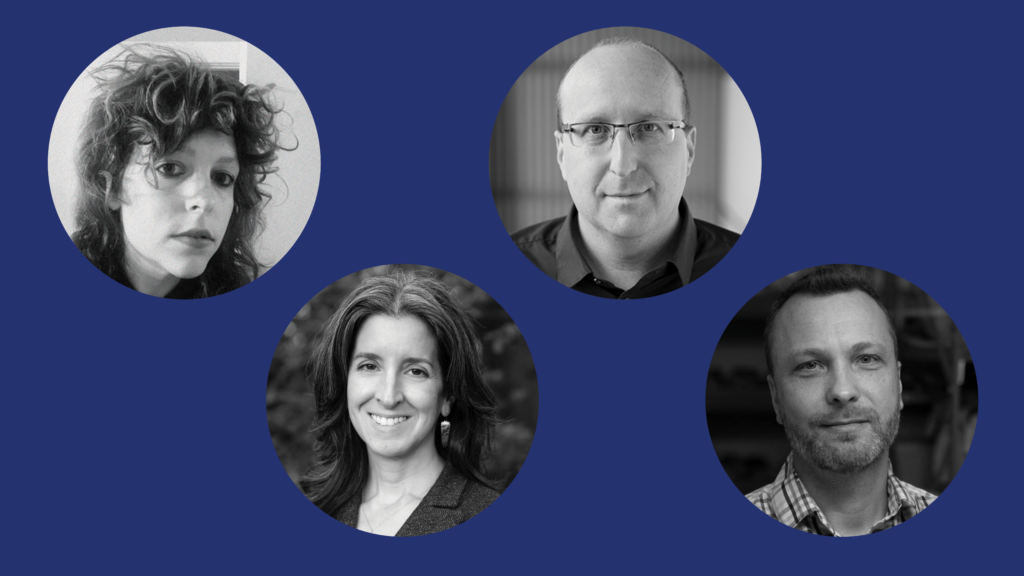
The Guggenheim Foundation announced this week that Berkeley historians Elena Conis and Hannah Zeavin, biologist Rasmus Nielsen, and bioengineer and neuroscientist Michael Yartsev are among the 101st class of Fellows.
Chosen through a rigorous application and peer-review process from a pool of nearly 5,000 applicants, the Class of 2026 Guggenheim Fellows was tapped based on both prior career achievement and exceptional promise. Each fellow receives a monetary stipend to pursue independent work at the highest level under “the freest possible conditions.”
“Our new class of Guggenheim Fellows is representative of the world’s best thinkers, innovators, and creators in art, science and scholarship,” said Edward Hirsch, award-winning poet and president of the Guggenheim Foundation.
Read more about Berkeley’s newest Guggenheim Fellows below:
Elena Conis recently served as the interim dean of the School of Journalism and holds a history professorship. She’s written about the history of vaccines and American attitudes about them, the pesticide DDT and other intersections of medicine and culture. During her time as a Guggenheim fellow, she’ll work on a book about the history of measles and the public health debates surrounding it — a subject that has gained new urgency with the disease’s recent resurgence in the U.S.
Rasmus Nielsen is a professor of integrative biology and of statistics. His laboratory works on the development and application of statistical and computational methods for analyzing genomic data in the context of evolutionary genetics, population genetics and medical genetics.
Hannah Zeavin, an associate professor of history who is associated with the Berkeley Center for New Media, specializes in the history of behavioral science, technology and media. In past books, she’s chronicled the advent of teletherapy as well as how media and new technologies have influenced attitudes about motherhood. The fellowship will support Zeavin’s upcoming book All Freud’s Children, which investigates the development of psychoanalysis by centering the offspring of the field’s founding practitioners.
Michael Yartsev is a professor of neuroscience and bioengineering and a Howard Hughes Medical Institute Investigator. Yartsev’s lab has created new technologies to record the brain activity in freely flying bats, giving them unprecedented insight into the neural mechanisms behind natural behaviors like socializing and communication. The fellowship will support his continued work to uncover into the fundamental principles of how the brain generates adaptive behavior in realistic settings.