
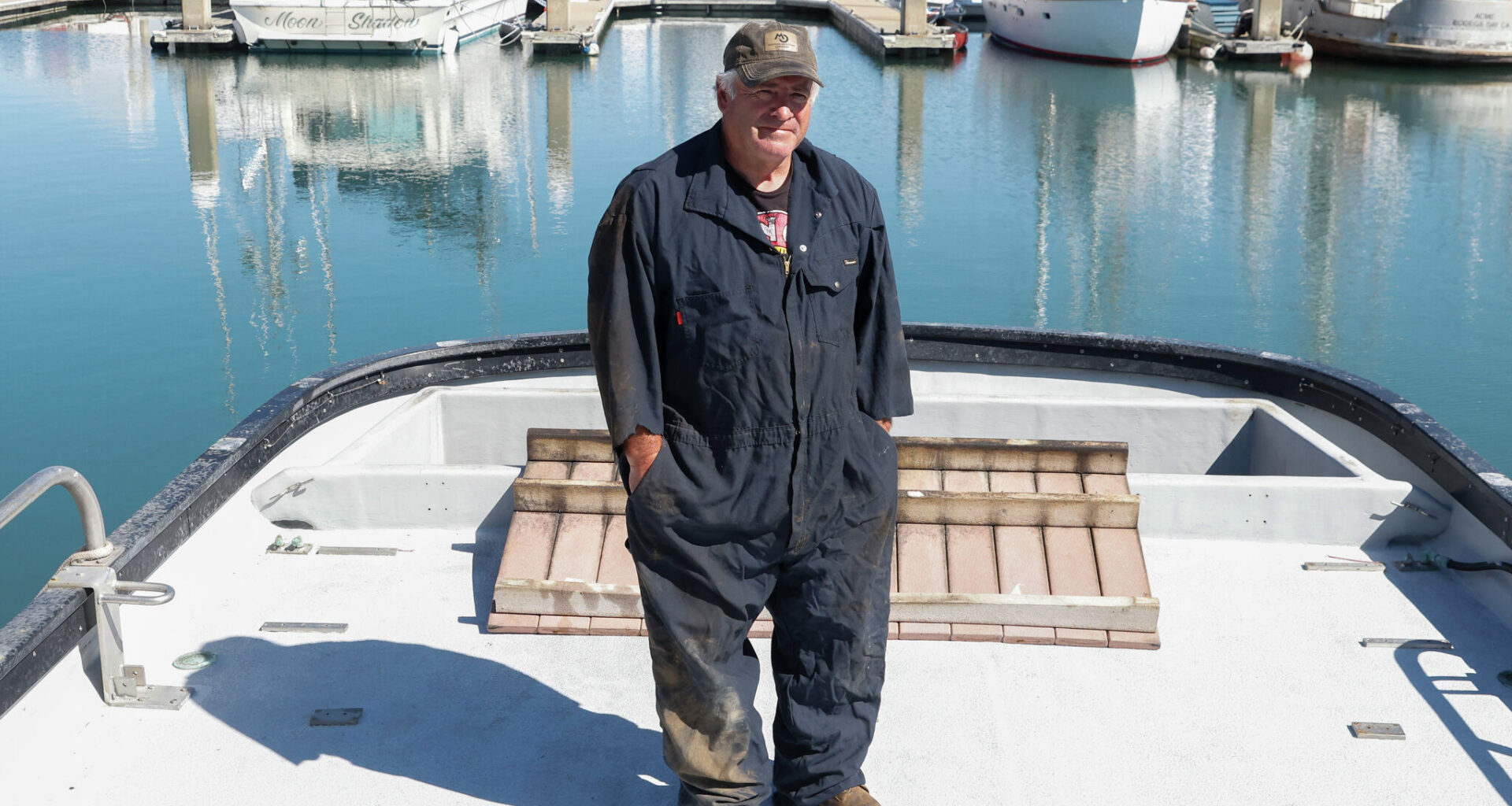
Fisherman Chris Lawson, on his boat Seaward at Spud Point Marina in Bodega Bay on Friday, is looking forward to catching salmon when the season opens next month.
Jessica Christian/S.F. ChronicleCalifornia’s commercial king salmon fishing season will reopen in May after a three-year closure, with strict quotas and limited fishing days.Commercial boats will be capped at 160 salmon per trip through August and 100 per trip in September, with a total season limit of 103,000 fish.Bay Area restaurants and markets expect limited supplies and high prices but are preparing to feature local king salmon for the first time in years.
Local king salmon will be on menus in California for the first time in four years after federal fishery managers voted this week to reopen the state’s coastal waters to salmon fishing.
Since 2022, commercial fishing fleets have been barred from catching the celebrated fish in the state because of a frightening plunge in their numbers. A forecasted bump in the population prompted federal regulators to change course this year, albeit cautiously: They approved a limited commercial season, which begins in May.
Article continues below this ad
With strict quotas, restricted fishing days and certain ocean waters kept off limits, salmon fishermen worry that the season may leave them with little to show for financially, a concern that is heightened by losses during the three years with no catch. Restaurants and supermarkets, meanwhile, expect limited quantities of salmon — and likely high prices. Still, many in the business are just happy to see the fish return to the docks.
“We haven’t had a wild salmon season in so long you almost forgot we have our own king salmon in California,” said Shelley Lindgren, wine director and co-owner of San Francisco’s distinguished A16 restaurant as well as board member at the Golden Gate Restaurant Association. “The minute we can get it, we will have it on the menu.”
Fisherman Chris Lawson stands with his boat Seaward in Bodega Bay on Friday. He’s cautiously optimistic about the upcoming salmon season.
Jessica Christian/S.F. Chronicle
Salmon, which are born in freshwater rivers and swim to sea for three or so years before returning inland to spawn, have been in decline for decades. Scientists pin the plight on a combination of dammed rivers, too much water drawn off for cities and farms, climate shifts such as intensifying droughts and warming temperatures, and increasingly unfavorable ocean conditions.
San Francisco Chronicle Logo
Make us a Preferred Source to get more of our news when you search.
Add Preferred Source
During the drought of 2020 to 2022, amid immense competition for water, the population of Chinook salmon (or king salmon), which are the mainstay of California’s commercial fishery, slipped to near-record lows. The three-year closure of the commercial season that ensued was the longest-ever shutdown, topping the two-year closure in 2008 and 2009.
Article continues below this ad
In the winter of 2022-23, California’s weather turned extraordinarily wet, erasing the drought and prompting a bumper crop of young Chinook salmon that this year represent the bulk of the fish returning to spawn. Federal fishery managers project 392,349 fall-run Chinook salmon in the Sacramento River and 176,233 fall-run Chinook in the Klamath River — a fraction of the historical numbers but a significant increase over prior years.
Chris Lawson, a longtime fisherman who keeps a boat in Bodega Bay, is looking forward to heading out for the salmon season next month, though he’s keeping his expectations in check.
“We’re going to give it a shot,” he said. “We’ll fish and see what it looks like and then figure it out after that.”
Lawson remains concerned that the fishing restrictions this year, alongside high fuel prices amid the war in Iran, will make it hard to turn a profit, something that’s particularly important after three years without the cash flow from salmon season.
Like others in California, Lawson has tried to weather the economic toll by heading elsewhere to catch salmon, such as Oregon, as well as falling back on crab and other fish. He’s also spent more time managing his family’s cattle ranch in Dillon Beach.
Article continues below this ad
“We’re happy to get a season this year, but it’s kind of a shadow of its former self,” he said.
Under the rules set by the Pacific Fishery Management Council, commercial fishermen will have a string of three- to seven-day windows between May and September to catch fish in specified areas between Monterey Bay and Mendocino County.
Boats will be limited to 160 salmon in each of the windows through August, with the cumulative catch over the period restricted to 83,000 fish. In September, boats will be restricted to 100 fish per outing, with the cumulative catch capped at 20,000 fish.
Federal fishery managers also approved a recreational salmon season this year, with limitations; that season has already begun. Like commercial fishing, sport fishing was banned over the past three years, with the exception of six days in 2025.
The regulations adopted last weekend by the Pacific Fishery Management Council are not technically on the books until the National Marine Fisheries Service signs off, which is expected any day.
Article continues below this ad
Boats sit in their slips at Spud Point Marina in Bodega Bay on Friday. Many of the vessels will be piloted to sea when the salmon season opens next month.
Jessica Christian/S.F. Chronicle
Vance Staplin, executive director of the industry’s Golden State Salmon Association, said the council’s vessel-based trip quotas and harvest limits are a first for California’s commercial fishermen, in terms of regulation, and will be tough to navigate financially.
“Everyone’s doing a big dance that we’re fishing, and that’s cool,” he said. “But these commercial guys are going to be struggling, the bigger boats especially because of the overhead.”
Going forward, Staplin worries that warm, dry weather this year, on top of recent commitments by the Trump and Newsom administrations to supply more water to people and agriculture, will bring back problems for salmon. He blames aggressive water policies, more than anything, for their decline.
“Whenever we go into a year where we don’t have much water, these fisheries are taking a hit,” he said. “What’s going on is we’re nowhere near where we need to be to get a healthy (salmon) fishery.”
Article continues below this ad
While Gov. Gavin Newsom has sought to increase pumping from rivers and creeks, his administration has also launched river restoration projects for salmon and continued hatchery programs to boost fish numbers, all of which the governor credited for helping revive salmon fishing this year.
“We’re seeing progress because of the work we’re doing together,” Newsom said in a statement. “Salmon aren’t just an important part of our ecosystem; they’re part of who we are as Californians.”
Lindgren, at A16, is already thinking about how her restaurant will prepare the local fish, once they get it: as a crudo, for bruschetta, in Acqua Pazza and as an entrée braised with pine nuts and olives. Even the bones, she says, will be used for broth.
Lindgren describes California salmon as a brighter orange than other salmon and generally much leaner.
“It’s really a joy to offer,” she said. “We love having the seafood coming from right out our back door… super exciting.”