
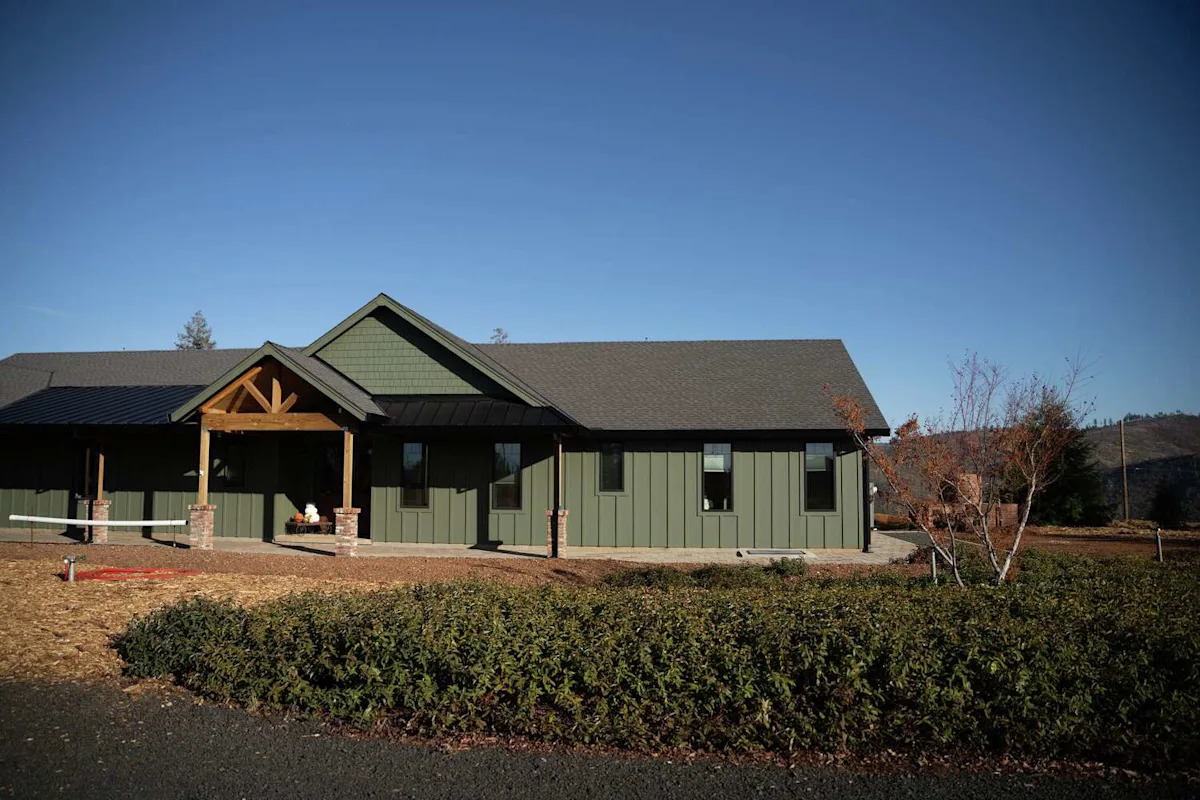
Wildfires have destroyed nearly 60,000 homes and other buildings across California in the past decade, uprooting tens of thousands of people and sending the insurance industry into a costly tailspin that has worsened housing affordability.
And for nearly six years, as the wildfire crisis continued to unfold, a little-known state agency has been trying to roll out rules meant to make homes safer – and potentially transform the look and feel of neighborhoods in the most fire-prone areas of California.
Called Zone Zero, the sweeping regulations were meant to create a buffer within 5 feet of structures where wildfire embers could safely land and extinguish in a zone where all combustible materials – such as mulch, wood piles, sheds, and all plants – had been removed.
But early drafts of the regulations drew broad concern, especially in Southern California, because they would require that property owners clear not only mulch, wood piles, fences, sheds and barbecues but also nearly all plants – from succulents to woody bushes and even small trees – within that first 5 feet.
On Friday, the California Board of Forestry and Fire Protection released a new proposal for Zone Zero regulations that would allow for some plants, including small trees, within 5 feet of homes – striking a compromise to address concerns that the regulations went too far.
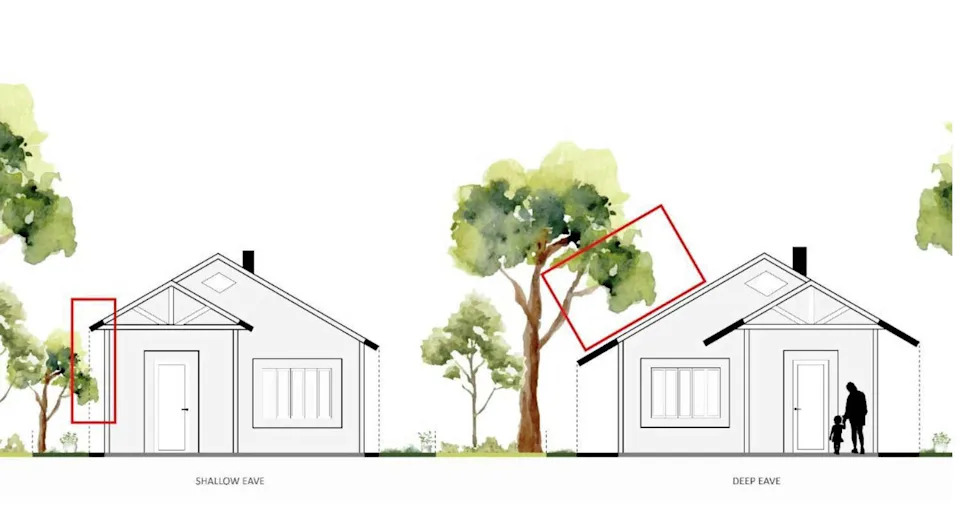
California’s Zone Zero landscape proposal creates buffers of protection within 5 feet of homes. (California Board of Forestry and Fire Protection)
Terry O’Brien, who chairs the forestry board, said in a statement that the agency took “a thoughtful, science-based approach” to the revisions “that will meaningfully reduce risk while still being practical for homeowners.”
The plan would roll out regulations in two phases across five years and allow for local jurisdictions to tailor rules given unique neighborhood factors, such as topography and lot size.
The first phase would require that, within three years, property owners remove all combustible items including firewood, dead leaves, branches, mulch and wood chips within the first 5 feet of structures, and maintain that clearance. That would include cleaning gutters and trimming trees of low-lying branches or ones that hang too close to chimneys.
The second phase creates a safety zone based on the width of a building’s eaves – the section of a roof that extends past the exterior wall – and gives local jurisdictions latitude to fine-tune precise rules within a five-year time period.
Property owners would be required to remove combustible materials – such as wood fencing and gates, as well as woody plants – below the eaves. But whereas earlier versions required that thousands of Californians rip out all plants within 5 feet and allowed only 10 small potted plants near homes, the new version offers more leeway.
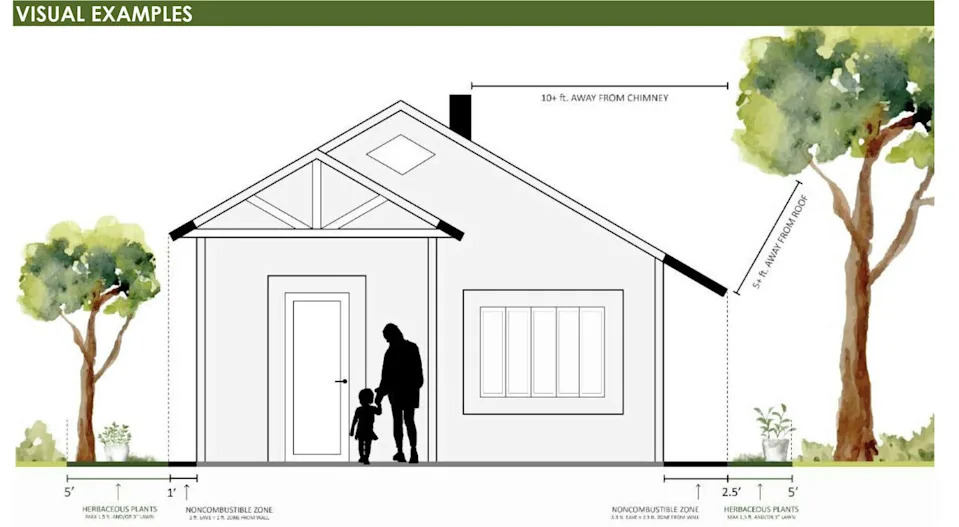
California’s Zone Zero landscape proposal creates buffers of protection within 5 feet of homes. (California Board of Forestry and Fire Protection)
Grass and well-maintained herbaceous plants and flowers are allowed within 5 feet but outside that immediate eave buffer. Trees, including small ones, are also allowed, but they must be maintained with dead and lower branches removed.
Local jurisdictions, typically fire agencies, can tailor the rules for their communities as long as they still offer a meaningful safety buffer.
Zone Zero rules date back to 2020, when state lawmakers passed Assembly Bill 3074 to require the board of forestry to create a protective zone within the first 5 feet of homes. Subsequent legislation in 2024 and 2025 fine-tuned the state mandate, and in January 2025, after the Los Angeles County wildfires, Gov. Gavin Newsom issued an executive order directing the board of forestry to hasten its work.
The proposal builds on long-standing defensible space rules already in place for the first 30 and 100 feet surrounding structures in fire-prone districts. Zone Zero creates a new defensible space area – also called an ember-resistant zone – within the first 5 feet of the structure.
The new rules wouldn’t impact all California properties – only buildings in areas overseen by Cal Fire and those deemed to be at especially high risk of wildfire.
The state board of forestry will discuss the latest draft at its Thursday meeting held online and in Calabasas (Los Angeles County).
This article originally published at California eases plan to ban most plants within 5 feet of homes in wildfire zones.