
Republicans are ramping up claims of fraud in government programs at the federal, state and local levels in Democratic-controlled jurisdictions ahead of this year’s midterm elections.
It would seem they have a lot to work with.
Evidence of fraud in Minnesota child care programs triggered a nationwide trend of activists examining whether social services are actually being provided for the reimbursements proprietors receive, including in San Diego.
Arrests in the Los Angeles area on charges related to bilking the government out of more than $250 million that was supposed to be targeted for hospice centers have further fueled the fraud focus.
Somewhat distant, but still serious, are the charges filed in San Diego against a former nonprofit executive accused of misappropriating more than $200,000 in public funds. That led county supervisors to commission a review of contracting procedures and an examination of whether other fraudulent behavior could have been missed.
Though there are plenty of legitimate problems that need to be investigated and likely prosecuted, some critics contend broad accusations are overblown, unsubstantiated and, in many cases, targeted at immigrants.
The administration recently acknowledged errors in the figures it used to justify a Medicaid probe in New York, undercutting the credibility of its anti-fraud campaign, according to The Associated Press.
In the realm of hard-eyed politics, there’s the question of to what degree, if any, this will help Republicans in an election year in which polls show most trends and issues seem to be going against them, largely because of unfavorable views of President Donald Trump’s performance.
Had Trump followed through on key promises, GOP candidates would seemingly have lots to run on: improved cost of living keyed to plummeting gas prices and lower inflation, and no U.S. wars abroad.
So far, the reverse is happening as, among other things, sweeping budget cuts have increased health care costs and reduced services that people, particularly at lower income levels, have come to rely on.
Republicans last week promoted what were billed as more generous tax refunds, which turned out to be smaller than expected and offset by higher prices.
Recently, the president appeared to reverse himself on another campaign promise for more assistance for child care, which had bipartisan support to ease what has become a big financial burden for families, according to The Washington Post.
“We can’t take care of day care,” Trump said at an Easter lunch on April 1, according to a video the White House posted online and later removed. “We’re a big country, we have 50 states. We have all these other people, we’re fighting wars. We can’t take care of day care.”
His aides told the Post that despite Trump’s broad language, the president was just referring to allegations of fraudulent payments for child care centers in Minnesota.
The notion that elevating fraud as a campaign issue can overcome, or at least distract from, all of that seems a long shot. But the GOP is trying.
The administration has attempted to withhold billions of dollars in grants for child care centers in four Democratic states, including California, but was blocked by a federal judge in February.
Last month, Trump named Vice President JD Vance the head of a new task force to uncover fraud in various programs, including Medicaid and SNAP, the federal food stamp program.
In Congress, House committees have launched their own investigations into what states are doing to protect against fraud, including California and its hospice industry.
In response, at least Minnesota and California have pointed to ongoing investigations, executive action and legislation related to alleged fraud prior to the recent arrests and White House focus.
Meanwhile, the Minnesota fraud allegations, many against child care program run by Somalis, were almost overshadowed by the federal immigration response: an aggressive, military-like sweep resulting in violent confrontations and the shooting deaths of two protesters by federal agents.
Following an intense public backlash, the administration toned down its immigration enforcement tactics, though deportations continue at a high level.
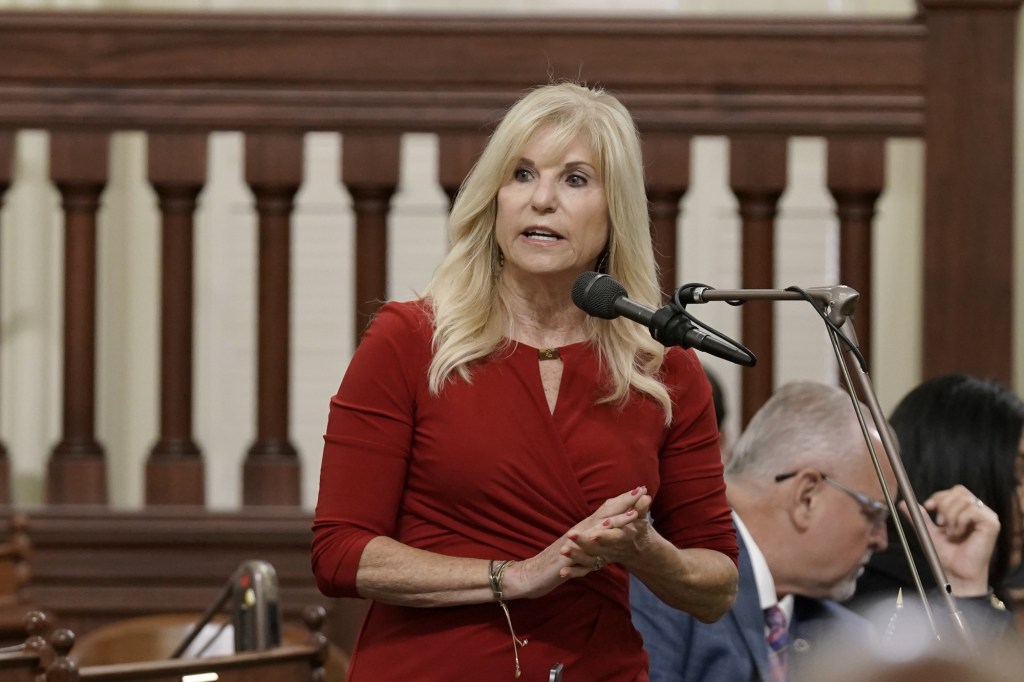
In Sacramento, numerous Republican state lawmakers are calling for a special legislative session on fraud. Among them are Assemblymembers Carl DeMaio of San Diego and Laurie Davies, who represents portions of San Diego and Orange counties. So far, Democratic Gov. Gavin Newsom has shown no interest in holding one.
California Republicans are trying to at least chip away at Democratic dominance in the state Capitol. Meanwhile, they’re trying to fend off a Democratic push to flip enough congressional districts to take over the U.S. House majority from Republicans. The GOP is engaged in similar rearguard action in other states.
San Diego County Supervisor Jim Desmond, a congressional candidate, in February asked for a staff presentation on county safeguards against fraud in social services programs. In his request, he cited the Minnesota revelations and other allegations of fraud.
At about the same time, however, Amy Knox, a top executive at the Harm Reduction Coalition of San Diego, was charged with taking public funds for personal use — money that was supposed to go toward the organization’s goal of preventing drug overdoses.
Rooting out fraud certainly has public appeal, though the mantra of combating “waste, fraud, abuse and mismanagement” has become white noise in politics over the years. There’s skepticism even within the GOP about whether a focus on fraud will translate into votes.
“Cracking down on fraud can help Republicans reinforce a message of accountability and stewardship, but it’s not a substitute for addressing what voters care most about — crushing health costs,” Joel White, a GOP health strategist and president of Horizon Government Affairs, said, according to Politico. “Unless it’s paired with a clear plan to lower costs, anti-fraud efforts are unlikely to outweigh those concerns in 2026.”
Other Republicans told Politico that polling suggests the fraud crackdown could appeal to Trump voters who aren’t likely to turn out in a midterm election when the president is not on the ballot. They further contend a reduction in fraudulent spending could result in lower costs, eventually.
But in trying to turn out that segment of the base, the GOP may risk alienating other swing voters who may be turned off by highlighting Trump policies that, in the name of fraud, are part of a broad dismantling of otherwise popular social programs.
What they said
Dan Walters (@DanCALmatters), columnist at CalMatters.
“Right-wing media claim that Democratic Party engineered Eric Swalwell’s departure from (the) race for governor to lessen chances of 1-2 primary finish by 2 Reps. I doubt whether state Dems could plan a birthday party much less an elaborate political conspiracy. Swalwell did himself in.”