
California State Association of Counties warn key services are at risk | California Politics 360
Graham, thank you so much for being with us. Great to be here. So HR 1, I know the California State Association of Counties has been studying the impacts really the last several months. What exactly do counties need to deal with the financial blow really that people are expecting? Well, first we have to look at what it did, which is nearly $9.5 billion in costs shifted to counties from the federal government every year. So this is *** massive structural issue that needs to be solved by the state budget and so that’s what we’re asking to occur because nearly 1.5 million Californians are likely to lose health coverage and nearly 600,000 are likely struggling families are likely to lose food support, and we find that unacceptable and the vast majority of them are working even though there are work requirements. There’s just *** bunch of new bureaucracy that gets in the way. In the beginning of the year, Governor Newsom said that, or I should say that his Department of Finance said that they were still trying to understand the impacts of HR 1. I know now that months have passed since then. We really still haven’t gotten an update. I know the governor in May will present his state spending plan, but at this moment, are you hearing from lawmakers? Are you hearing from the governor’s office on specific ways to deal with that I mean $9.5 billion hole that you’re expecting? Yes, I mean it’s been discussed in *** number of budget hearings. We’re having lots of conversations with folks. Uh, and we had an education day where we, where we sought to inform lawmakers and the governor’s office on what the impacts are on communities because ultimately counties only provide the services that the state funds us to provide. We’re their arm of the state, so um we’re happy to do that when we have the resources to do so, but we’re really concerned about what’s going to happen in our communities. The potential for us to have to severely gut public safety, elections, homelessness is very, very high if we don’t have *** robust partnership with the state. So what are the services at the county level that are most at risk? It’s public safety. That’s where the vast majority of county general fund goes. It is homelessness related funding. The progress we’ve seen over the last few years would be eviscerated. It’s elections, it’s fire response, these are the core areas where county general fund goes, and. They’re going to be cut substantially if we are forced to redirect that money to fund new services and absorb cost shifts, but the federal dollars that were helping counties, that was for health related services, mostly like mental health services, I mean money in that space. Yes, what HR 1 did is it essentially it’s the federal government leaving communities to figure it out on their own. For families that are struggling, so 1.4 million Californians will lose health coverage, 600,000 families that are struggling will lose food support, and we are the provider of last resort in California on behalf of the state. And so for the first time in more than 12 years we will need to have to create *** system to help those that are indigent because we’re required to. And that’s not free. It’s billions of dollars. And so of the $9.5 billion in annual costs that are shifted to us, nearly 5.5% of that is just related to indigent care for so many Californians who are losing health coverage. Just taking *** step back, California’s state spending plan, if Governor Newsom’s Department of Finance ends up being right, is about $350 billion. 9.5 billion is *** significant number, but it certainly, I mean, mathematically seems like it could fit in there. I understand that’s not what the California State Association of Counties expects to get the full 9.5 billion, but do you think it’s at least possible for the state to make *** dent in this? I think it’s both possible and it’s expected by those in California. There’s *** fundamental choice here, which is, will California continue to lead the way in the way that it has for those that are most vulnerable, or will it walk away? And we’re hopeful that California will continue to lead the way as it has for years for those that are most vulnerable, and that’s true. For this governor and legislature, it’s going to be true for the next governor and legislature. There’s *** fundamental test right here as to what we will do with those who are most vulnerable, and we’re not asking for $9.5 billion. We’re asking for *** harm reduction proposal to mitigate what is devastating impacts on our communities. So immediately what’s the ask? Immediately the ask is $1.9 billion. And then it grows in the 2nd year when there’s *** full scale that is in place and in *** budget where the revenues are going up that exceeds $300 billion where budgets are *** reflection of priorities, that seems like *** pretty reasonable ask for those in our communities who are suffering. The budget will be, I mean, we’ll see the talks ramp up in May. It’s supposed to be done at the end of June, be in effect by July. Can counties wait until July for *** solution? Counties have to have balanced budgets that are approved before July 1st. And so some decisions will have to be made now and some decisions may have to change between July 1 and sometime after the state adopts its budget. And so counties are going through that process right now. We are hopeful that we don’t end up having to gut really important services in our community and public safety doesn’t suffer, but we also have to be mindful that. Hospitals are on the brink of closing as *** result of HR 1, and when and if that happens, they close to everyone. It doesn’t just close to those who lose health coverage. It closes to your neighbor down the street. It closes to us, and that’s unacceptable, and we see the state as the critical partner to avoid that happening. So to your point then, I mean just to clarify the question, should there be early budget action like The governor and state lawmakers gave Planned Parenthood millions of dollars in an emergency situation because they had lost funding as *** result of cuts from the Trump administration. Should the governor and state lawmakers essentially do the same for the situation? We certainly support early action. We support on time action. We support action at any point in which the state continues to lead the way and assist those who are most vulnerable. And so we’re ready to be *** partner with the state today. We’ll be ready June 30th. We’ll be ready August 1st. And so that will not, uh, that will not go away. And so sure, absolutely early action would be great, but responsible action. That is comprehensive in its approach to protect communities is what’s most important. Is there anything else that’s at risk if you don’t get that immediate 1.5 million? I know I think there’s *** 4.5 million ask in the year after just 4.5 billion I should say, what is, you know what else is at risk if that doesn’t happen. There are no services and there are no communities that will not be severely negatively impacted if this does not come to fruition. There’s no question about that. And so response times to fire. Ensure that we have democratically strong elections, ensuring that we have sufficient public safety in our communities so that our residents are safe, those will all suffer greatly. Watching the homelessness progress that’s been made in the state of California go right out the door almost immediately, that’s all going to happen. Without *** strong partnership with the state, so we need this critically for our communities. Like this isn’t about us. This is about those we’re serving on behalf of the state, and we want the state to stand with us and continue to lead. All right, Graham, is there anything else you think we should know before we let you go? We should always begin with where did, where did this come from? The federal government made *** decision to walk away from those who are most vulnerable. Counties deliver services on behalf of the state, and this is an opportunity for the state to continue to lead or to walk away, and we invite them to lead with us. All right, Graham, thank you so much. Thank you for your time. Appreciate it.
California State Association of Counties warn key services are at risk | California Politics 360

Updated: 8:25 AM PDT Apr 19, 2026
The leader of the California State Association of Counties is warning key services including those related to emergencies and elections could be at risk if local governments are forced to shoulder the federal cuts from what’s known as H.R.1 or “the big beautiful bill.”In an interview on California Politics 360, Graham Knaus, the association’s president and CEO, said state lawmakers and the governors must step in to help. Knaus warned the cuts could translate to $9.5 billion total per year statewide and could mean 1.5 million Californians could lose their health coverage. Public safety, homelessness, elections, and fire-related funds could be cut if counties have to redirect county dollars to help fund new healthcare services and food assistance programs, Knaus said. “We are the provider of last resort on behalf of the state so for the first time in 12 years we’ll have to create a system to help those that are indigent because we’re required to and that’s not free,” Knaus said, referring to people who require low-cost or free care. Democrats in the State Senate officially proposed a new tax last week on major corporations to help with health care costs. The interview with Knaus happened hours before the proposal was made public. The association’s spokesman told California Politics 360 the group is encouraged by the proposal and looks forward to working with lawmakers on addressing the indigent care issue. KCRA 3 Political Director Ashley Zavala reports in-depth coverage of top California politics and policy issues. She is also the host of “California Politics 360.” Get informed each Sunday at 8:30 a.m. on KCRA 3.
The leader of the California State Association of Counties is warning key services including those related to emergencies and elections could be at risk if local governments are forced to shoulder the federal cuts from what’s known as H.R.1 or “the big beautiful bill.”
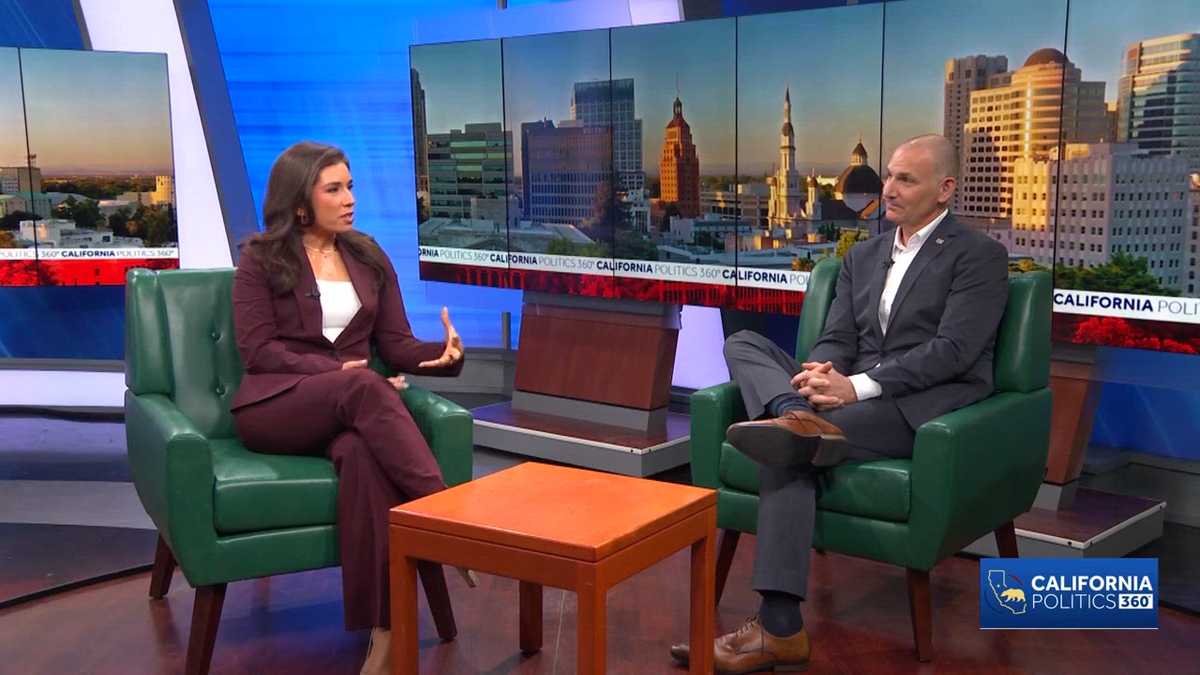
In an interview on California Politics 360, Graham Knaus, the association’s president and CEO, said state lawmakers and the governors must step in to help.
Knaus warned the cuts could translate to $9.5 billion total per year statewide and could mean 1.5 million Californians could lose their health coverage.
Public safety, homelessness, elections, and fire-related funds could be cut if counties have to redirect county dollars to help fund new healthcare services and food assistance programs, Knaus said.
“We are the provider of last resort on behalf of the state so for the first time in 12 years we’ll have to create a system to help those that are indigent because we’re required to and that’s not free,” Knaus said, referring to people who require low-cost or free care.
Democrats in the State Senate officially proposed a new tax last week on major corporations to help with health care costs. The interview with Knaus happened hours before the proposal was made public.
The association’s spokesman told California Politics 360 the group is encouraged by the proposal and looks forward to working with lawmakers on addressing the indigent care issue.
KCRA 3 Political Director Ashley Zavala reports in-depth coverage of top California politics and policy issues. She is also the host of “California Politics 360.” Get informed each Sunday at 8:30 a.m. on KCRA 3.