
Grade: 5.0/5.0
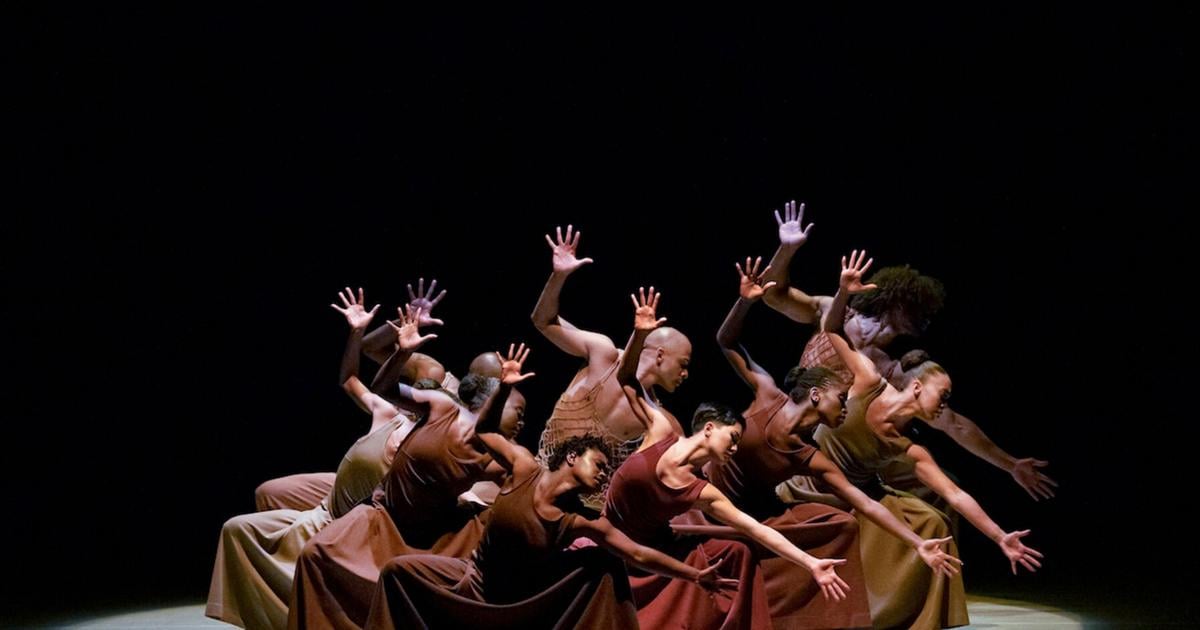
On April 8, Alvin Ailey American Dance Theater made its way to Zellerbach Hall in Berkeley. Hosted by a world-renowned company reputable for its innovation and cultural impact, the tour comes at a time of passionate online discourse surrounding the relevance of ballet in a new digital age, sparked by a claim from Timothée Chalamet that “no one cares about this anymore.” Ballet is a centuries-old tradition, revered around the world and across cultures. The art of ballet is foundational to many other styles of dance and is a craft passed down through generations, through ever-changing art and media landscapes. Though we may be in a new age of digital technology when arts like ballet may feel less culturally relevant than they once were, Alvin Ailey American Dance Theater is a testament to ballet’s ability to evolve with the world.
Alvin Ailey Theater features primarily Black ballerinas, delivering a refreshing edge to the dance. The traditional image of ballet tends to be that of a thin, white ballerina dancing to music by white composers and orchestras, entertaining an audience of the white elite, thriving on exclusion. This production demonstrates that Blackness and ballet need not have friction with each other. Instead, combining Blackness with ballet elevates the style entirely.
Conventions of Black art were interwoven with ballet traditions throughout the show. Rather than conventional classical music, the composition worked in horns and percussion that expertly welcomed the sounds of jazz and African music. The music brought dynamic warmth to the production, precisely punctuating intensity while also delicately drawing out moments of softness.
The choreography was extraordinarily inventive without feeling abstract. The dancing remained authentic to the look of ballet — clean, fluid and classic — while also working in elements of more contemporary styles, just as the music did. Some of the choreography, especially that of one character who played a goddess-like role, was danced in a way that blended ballet with African dance movements. This specific choreography highlighted the character’s vibrancy as an ethereal, mothering figure to the leading ballerina, who finds herself in conflict within her love life. Her foil was a mysterious, conniving man, who seemed to possess dark, magical powers to control people. When they danced together, they represented a push-and-pull between good and evil in guiding the leading woman’s decisions in love. Their styles were innately contrasting, moving uniquely as they confronted each other, while also moving in cohesion when the man attempted to sway the will of the woman.
Other choreography performed by the rest of the cast often took on a jazz form that also added vibrancy throughout the story. The dancers all told expressive stories using only their bodies. The way they moved represented a skilled artfulness through appreciation of culture and expression.
The costuming was equally stunning and diverse, referencing Black style across time. The goddess figure was dressed in an opulent blue and purple gown with an African headpiece. Presenting like royalty, she moved about the stage with remarkable grace. The mysterious man contrasted her in shadowy black leather with a top hat. Others’ costuming mostly consisted of simpler dresses and suits, at times referencing Black dandyism.
When people think of ballet, they may think of something more “traditional” — an exclusively white space with Eurocentric storytelling. This production shows that ballet is not a monolith. Black artists took on the foundations of ballet and transformed them, curating an intensely captivating story with textured visual appeal that pulled from artistic styles across time and culture.
Most importantly, the show emphasizes that Blackness, too, is not a monolith. Black art can be mixed and molded, utilizing old forms to make something new. Blackness has a place in ballet and, if anything, has an innate ability to refresh a genre that some may see as dying. Alvin Ailey Theater is the breath ballet needs to survive in this new phase of arts and entertainment. In consideration of “tradition,” this company does the important work of ensuring the soul of this dance style is not lost, but instead finds its new life.