
Emily Leach is the opinion editor of the Daily Titan. All opinions expressed in this article are those of the author and do not reflect the opinions of the Daily Titan as a whole.
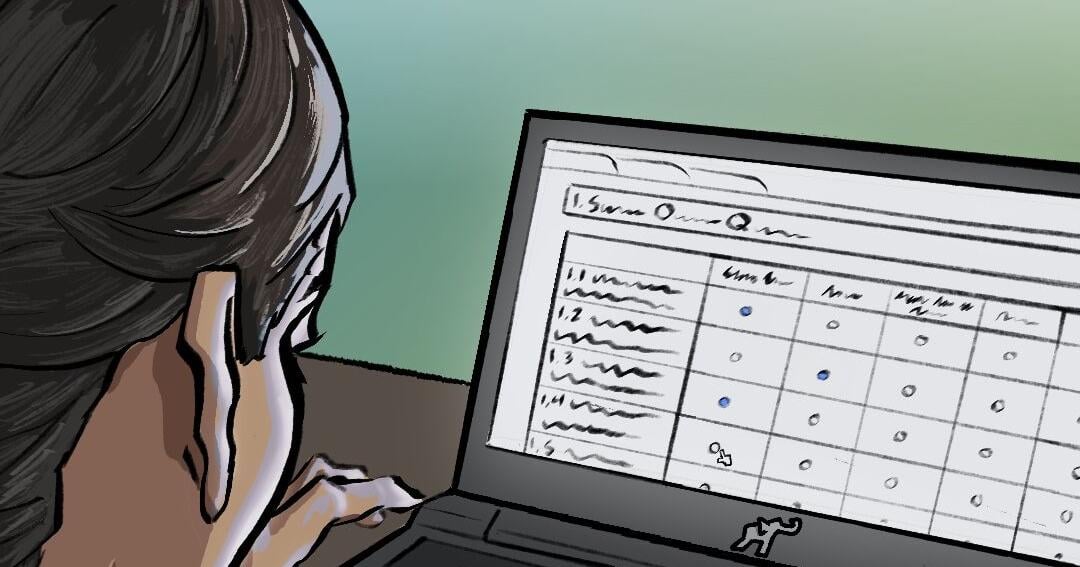
As weeks 12 and 14 of the fall and spring semesters roll around, Canvas notifies students of the beginning of the Student Opinion Questionnaire (SOQ) season, marking the biannual window for students to provide feedback regarding their professors.
Although the prospect of completing these surveys each semester may seem tedious, the feedback they provide is essential in ensuring Titans receive a high-quality education. For their opinions to be reflected in action that benefits the student body, Titans must prioritize SOQs over public platforms like RateMyProfessors or Reddit.
CSUF’s SOQs are mandated by University Policy Statement 220.000 and serves as an opportunity for students to provide anonymous course evaluations and commented feedback to their professors. These surveys play a significant role in CSUF professors’ periodic evaluation.
“Students, they have a really good sense of how they experience a class, and they describe it well when they write their SOQs,” said Irena Praitis, a full-time professor and the Department Chair of English, Comparative Literature and Linguistics. “So that is one piece of many pieces that’s part of a faculty evaluation.”
CSUF students’ ability to influence faculty evaluations underscores the importance of intentional completion. An increased response rate to SOQs can ensure that instructors are held accountable when necessary, maintaining CSUF’s high standards of academic excellence.
The belief that these questionnaires do not serve as an effective medium for change can hinder students’ willingness to set aside time in their busy schedules to complete them.
“Students kind of feel like they’re not really getting anything from it (SOQs) or their voices aren’t going to get heard from something that short, because obviously it’s, like, ‘Fill in the dots and write a paragraph,’” said Joanna Liu, a second-year business administration major. “To some students, it feels like, ‘Oh, it’s not really going to do anything. What’s the point?’”
If students feel their voices are not being heard, they will ultimately be demotivated to contribute to the university’s overall educational improvement.
By increasing Titans’ understanding of the impact of completing SOQs thoughtfully each semester, the completion rate of these surveys will likely increase, resulting in greater student-faculty harmony during class time.
Rather than filling out these semesterly evaluations, many students turn to online forums such as RateMyProfessors to share their grievances about professors and classes they took during a given semester.
Though this website can provide some helpful guidance in choosing a professor to enroll with, the unofficial nature of these evaluation methods often leads to increased biased reviews against teachers of specific demographics — such as women or people of color — and an uptick of unreliable information.
“For an SOQ, it’s really from the student to the instructor. So, you’re saying how you felt, you’re saying things in a way that, you know, no one else is gonna hear it,” said Edward Watson, an associate professor of sociology. “If we think the opposite of this, if I’m saying things in a way where I know anyone could see it, then I might say things that might be more for the audience and not for the instructor.”
Because websites like RateMyProfessors and Reddit act as social-media-esque public forums, there is an inherent pressure to perform or to draw attention — resulting in inflammatory comments that misrepresent instructors’ actual teaching methods for the sake of making a point.
Student satisfaction levels cannot be enhanced if feedback is not provided through mechanisms such as university-mandated SOQs, which give instructors a genuine opportunity to change. Though the forum will continue to remain popular, balancing its often unproductive complaints with informed evaluations vetted by a committee to discern student bias can provide instructors with actionable feedback to improve their instruction.
Direct student feedback is a primary method of classroom improvement, offering a firsthand perspective on how specific educational approaches impact learning.
The necessity of high-quality student feedback lies in its ability to bridge the gap between curriculum design and the student experience, enabling intentional adjustments that make the educational process more effective as a whole.
“I can think of some times of feedback that, like, maybe I’m talking too fast or I’m going through things too quickly,” Watson said. “I’ve tried to take that feedback and…make sure that the students are getting a better opportunity to learn something from it.”
When educators and students take these evaluations seriously, collaborative efforts can facilitate faculty improvement in their ability to accommodate student needs. By providing constructive feedback on the necessary areas of improvement, CSUF’s faculty serves as a guiding light in maintaining high levels of Titan academic success.
Detailed evaluation within the SOQs ultimately serves a purpose beyond individual benefit, extending to future Titans preparing to take classes assessed by students during semesters prior. The completion of these surveys serves not only as a record of personal experience but as a resource that contributes to the university’s collective growth.
“This is one of those times when your perspective and your insights and what you offer contribute to a larger community,” Praitis said. “It’s a way for you to sort of do your part on behalf of not just your own experience, but the experience of other students, both in the present and the future.”