
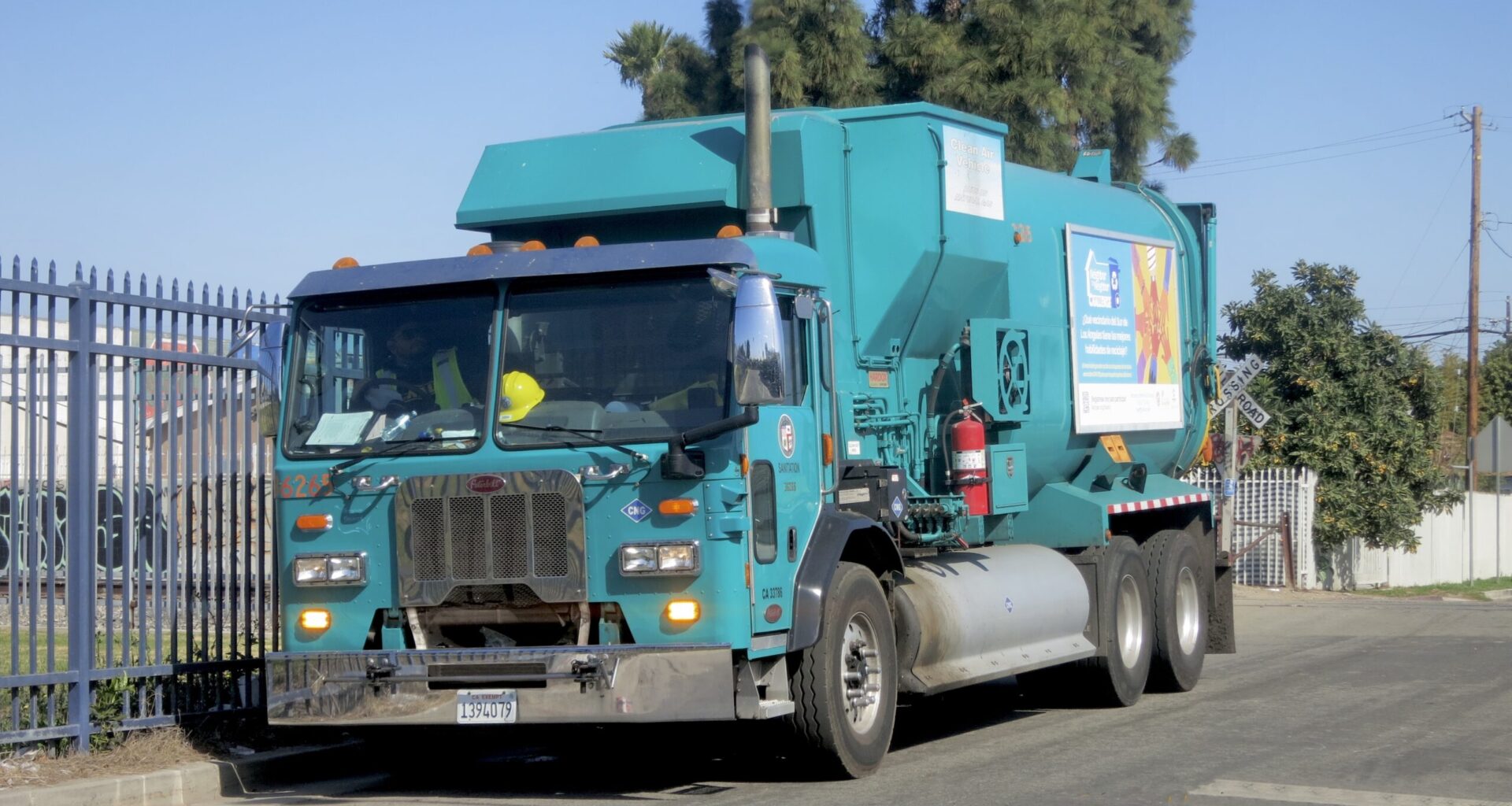
Free garbage truck photo ops all over the city start May 2
This week, Angelenos of all stripes will celebrate Earth Day by planting trees and picking up trash. If that ignites an interest in where trash comes from and where it goes, the Los Angeles Department of Sanitation is planning a series of open house events.
Thousands attended last year’s free extravaganza, and this time around they’re offering photo ops at sanitation department yards with garbage trucks, free food and drinks, and a DJ. Since it’s a zero-waste event (which seems counterintuitive for an outfit that makes its living off of garbage) I’m guessing you may leave with a pocket full of food wrappers.
On May 2, the West Valley District Yard in Northridge is open, and there’s a party in Watts on May 30. The West L.A. site is available on June 6, and those in the South Bay can visit the Harbor District Yard in San Pedro on June 20.
 Former Mayor Eric Garcetti presented the Civic Innovation Award to the Department of Sanitation in 2014Credit: Office of Mayor Eric Garcetti/Flickr
How did we get here?
At the turn of the 20th century, tons and tons of slop collected from restaurants, hotels and homes were loaded onto electric streetcars and rolled east some 30 miles to the San Gabriel Valley, where it was repurposed as livestock feed. Fifteen thousand animals, later sold to slaughterhouses, were disposing of L.A.’s trash.
As early as 1911, there were complaints: “These hogs are fed on garbage exclusively that is rotten when it reaches the hog pens,” the Los Angeles Times reported that summer. “Throwing off a bad stench.”
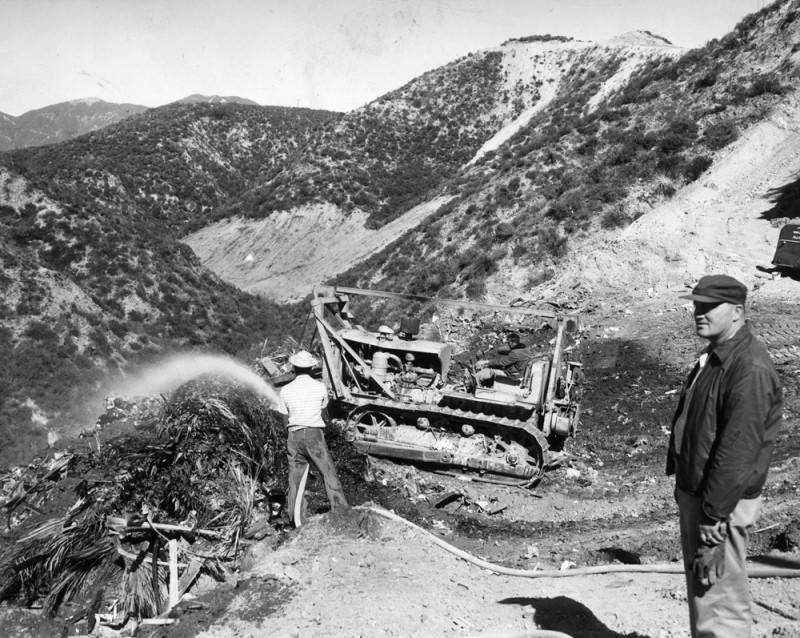 Trash dump in Lopez Canyon near Sylmar in 1956Credit: Valley Times Collection/Los Angeles Public LIbrary
Scroll to continue reading
Shifting to backyard incinerators helped until scientists discovered smog during World War II, and those were gone by the late 1950s. By then, we had moved on to burying refuse in out-of-the-way places like Calabasas, Palos Verdes and back in the good old San Gabriel Valley. The Puente Hills landfill near Whittier eventually grew to 700 acres, with garbage mountains rising some 60 feet. It was the largest landfill in the United States. Today, a vast park is planned for the land that stopped accepting trash in 2013.
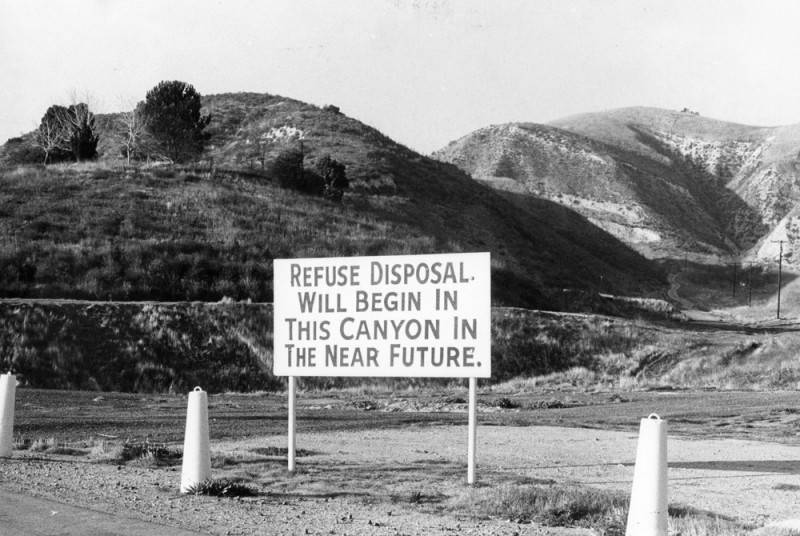 Sign at entrance to dump warns of landfill which will eventually fill in these hills behind the Saratoga Hills subdivision near Calabasas in 1974Credit: E. Bruce Howell/ Herald Examiner Collection/Los Angeles Public Library
Saturday, May 2, 2026
10 a.m. to 2 p.m.
West Valley District Yard
8840 Vanalden Avenue, Northridge
RSVP here
Saturday, May 30, 2026
10 a.m. to 2 p.m.
Ted Watkins Park (on Success Avenue)
1335 East 103rd Street, Watts
RSVP here
Saturday, June 6, 2026
10 a.m. to 2 p.m.
West LA District Yard
2027 Stoner Avenue, Los Angeles
RSVP here
Saturday, June 20, 2026
10 a.m. to 2 p.m.
Harbor District Yard
1400 North Gaffey Street, San Pedro
RSVP here