
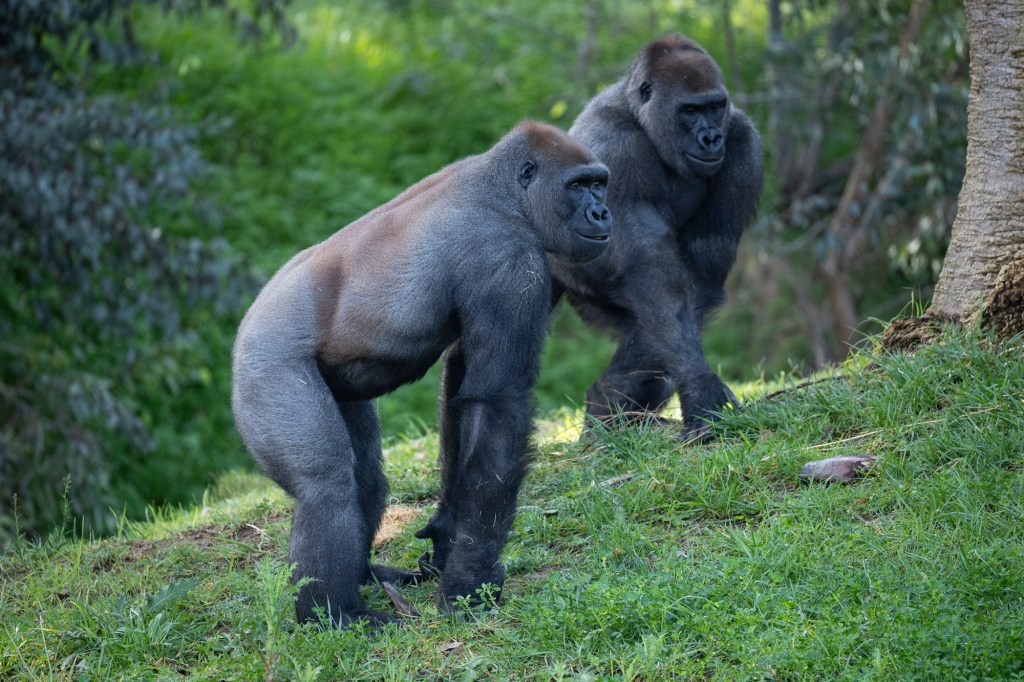
The Safari Park’s bachelor troop of western lowland gorillas now includes five apes, including a trio of former New Yorkers who moved to San Diego in late 2024.
Mizani and Mokonzi, who are both 11, and 10-year-old Njemba came from the Bronx Zoo in a transfer approved by the Association of Zoos and Aquariums’ Species Survival Plan.
The movement, breeding and care of threatened or endangered species in zoos, such as gorillas, is guided by recommendations made by special committees that seek to ensure the sustainability of healthy, genetically diverse populations.
After arriving in San Diego, the newcomers initially were housed together — separate from 18-year-old Frank and 15-year-old Monroe, both native San Diegans — as they acclimated to their new environment.
The two groups rotated between a behind-the-scenes area and the public-facing area of the habitat until the decision was made to combine them into a bachelor troop of five, a zoo spokesperson said.
Frank was born at the San Diego Zoo in September 2008, while Monroe was born at the park in June 2011. Frank was moved to Safari Park in 2013 to join Monroe so the two would develop a bachelor bond. They lived in a troop led by Winston, the dominant male gorilla known as a silverback, with distinctive silver-gray fur that indicates maturity.
In late 2022, park officials moved the pair into their own space at the park after seeing Monroe starting to challenge the females in the troop while Frank was beginning to challenge Winston, park officials said at the time.
Young male gorillas typically venture out on their own as they approach sexual maturity or form bachelor troops.
“This opportunity to join the existing bachelor troop at the Safari Park offers Mizani, Mokonzi, and Njemba the chance to grow into adulthood and learn alongside fellow adult males that can guide and teach them,” a zoo spokesperson said in a statement.
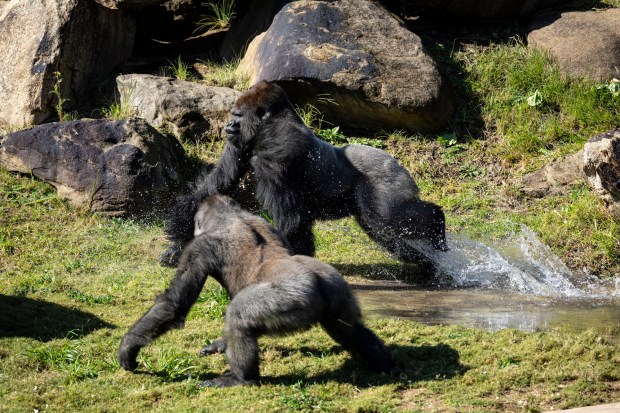 Frank, 18, and Njemba, 10, in front, run around their habitat at the San Diego Zoo Safari Park. Njemba and two other male gorillas moved from the Bronx Zoo in late 2024. (San Diego Zoo Wildlife Alliance)
The grouping also provides the gorillas “the opportunity to experience a dynamic social group as they would in their native habitat,” the statement said.
Since the five have been housed together, zoo observers have watched as new relationships develop. Wildlife care team members say Njemba has been “obsessed with Frank” since joining the bachelor troop, while Monroe and Mizani “enjoy snacking and watching the dynamics from afar.”
The gorillas often play and chase each other and sometimes wrestle. Such antics are natural behaviors and expected “as gorillas develop their social relationships and individual roles within the troop,” according to the park’s statement.
The bachelor troop is in a location not accessible to most park visitors but can be seen by guests who book behind-the-scenes experiences and tours. Wildlife Safari tours cost $98 and up per person.
Western lowland gorillas are critically endangered in the wild. Safari Park has 11 of the great apes.
The park’s gorillas have faced some dramatic changes over the past couple of years.
In July 2024, Safari Park veterinarians had to euthanize Winston, its beloved 52-year-old silverback who ruled over a troop, after his health declined. Winston had suffered from heart problems, kidney disease and other ailments.
Winston was popular with guests and staff alike, known for his gentle, easygoing nature and acceptance of males in his troop who weren’t his offspring.
Last August, zoo officials moved a silverback named Paul Donn and a female gorilla named Jessica from the San Diego Zoo to Safari Park. Paul Donn, now 37, has become leader of the troop, which includes five females ranging in age from 2 to 48.
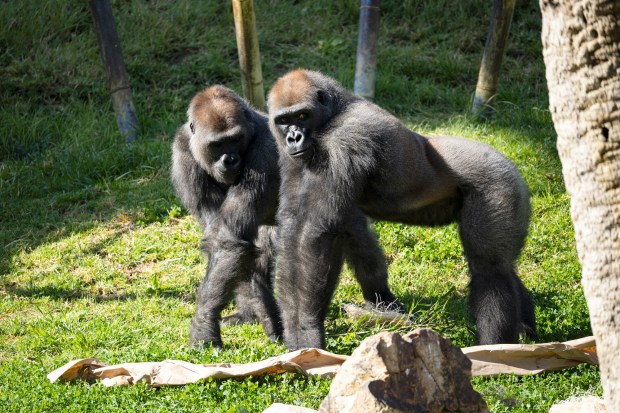 Nejmba, left, and Mokonzi are members of the bachelor gorilla troop at the San Diego Zoo Safari Park. The two and a third gorilla, Mizani, moved to San Diego in late 2024. (San Diego Zoo Wildlife Alliance)