
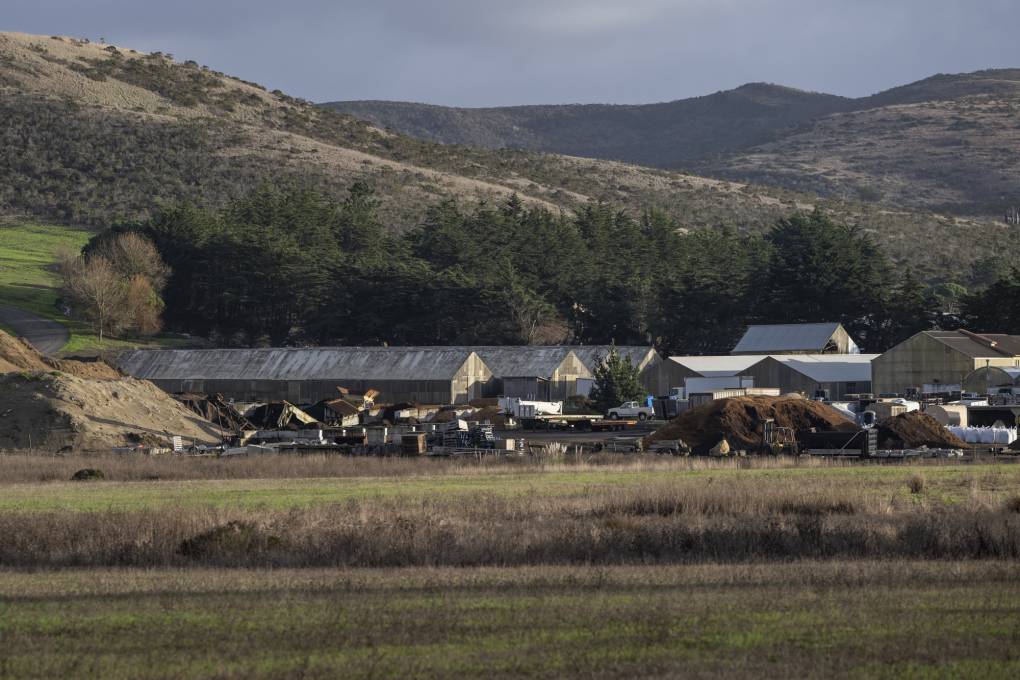
But Jeremy Levine, policy manager for the local pro-housing group, Housing Leadership Council of San Mateo, said that project and 555 Kelly are very different. Stone Pine Cove is located on the east side of the city. It’s directly across from the California Terra Garden, where the mass shooting happened.
“555 Kelly is closer to the commercial part of Half Moon Bay,” he said. “It’s more walkable, it’s more integrated into the community writ large, rather than being sort of to the side, in a corner.”
Its location is intentional. The development will include a community resource center, where residents can receive mental health care, case management and other services. Chidester said the project is centrally located so that residents can take advantage of the fact that the development is on a main artery leading into the city’s downtown and is across from a health clinic and a farmers market.
But during public meetings about the project, its location has proved controversial among some neighbors who worry that traffic and parking could be impacted by additional residents. And at five stories, it would be the tallest building in Half Moon Bay.
Chidester said, as city council members negotiate the land-lease agreement, which would be valid for 99 years, they want to make sure neighbors’ concerns don’t go unnoticed.
“The council wants to just make sure that the terms of the agreements really protect the city in the long run,” he said.
 At a Half Moon Bay City Council meeting on March 14, 2024, Mayor Joaquín Jiménez speaks about the urgency of building affordable housing for farmworkers and other essential workers with low incomes. (Tyche Hendricks/KQED)
State officials are watching these negotiations play out and want to see a decision soon, but their hands are somewhat tied because the development is on city-owned land. Chris Elmendorf, a land use law professor at the University of California, Davis, said he has seen cities delay approvals on projects built on private land, but this case is different.
“State law doesn’t provide nearly as strong legal hooks for controlling cities’ disapproval of projects on land that they own than it does for controlling city’s disapproval of projects on privately owned land,” he said.
So, the state pulled the only lever it could pull: warning the city that it could be violating state housing law by delaying action on a project it promised it would build. In 2024, the city adopted a state-mandated plan to allow for more homes to compensate for growing demand. It included Stone Pine Cove and 555 Kelly Ave. as projects that would help it achieve that goal.
“They made some progress, but you don’t get to claim that you’re getting an A-plus because you complete half of the assignment,” Levine said. “I think we can celebrate [Stone Pine Cove] and the city’s success, while still recognizing that there are farm workers who need housing, who are living in terrible conditions, and it is the city’s responsibility to meet those needs.”