
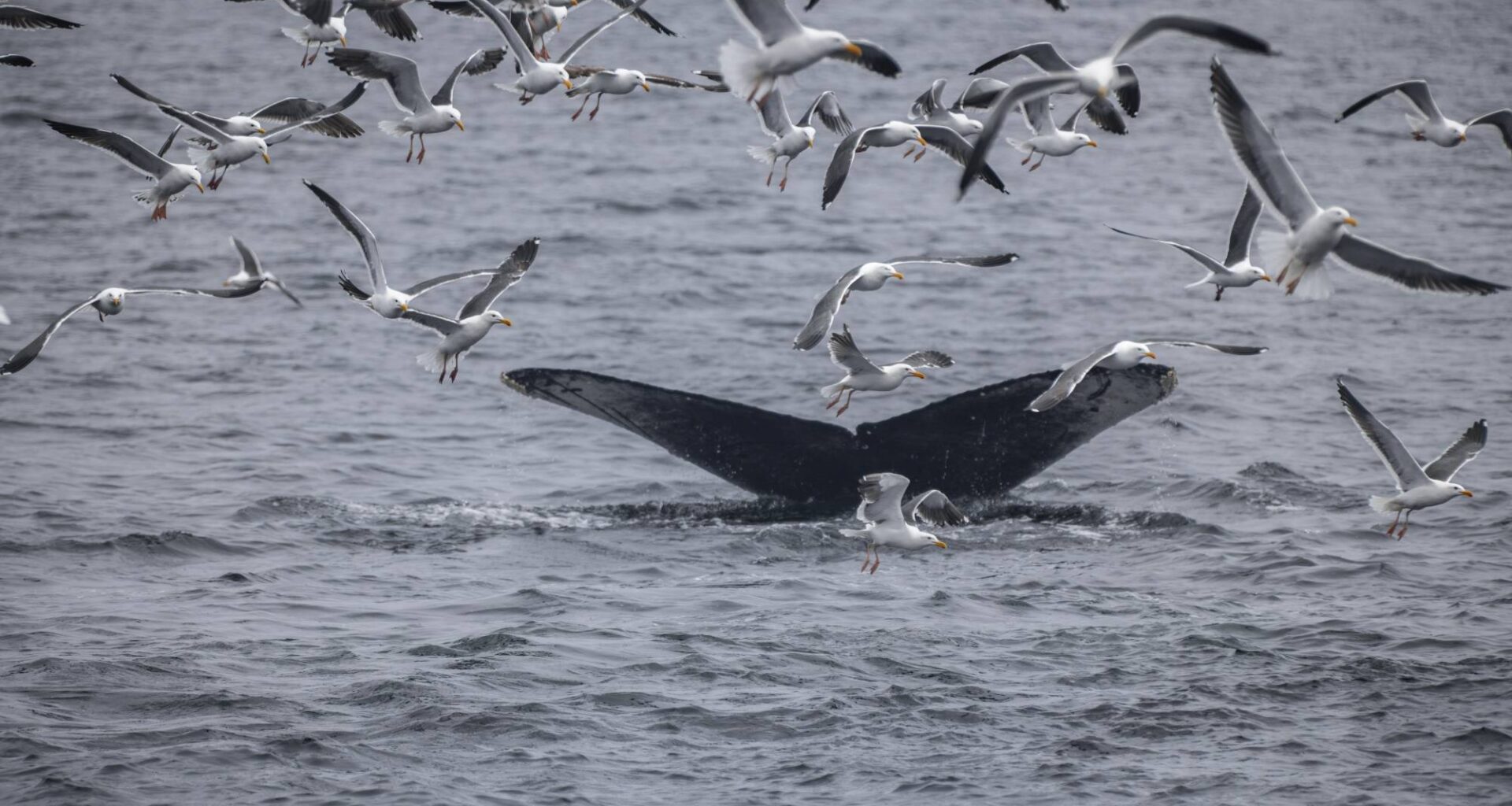
A less speedy boat is also a cleaner-burning boat — a parallel goal of the program is to get ships to produce less pollution. Dirty air created by burning fuel on the water can blow onshore. In some areas of California, marine shipping is the biggest source of nitrogen oxides, such as in Santa Barbara County (73%) and Ventura County (54%). Nitrogen oxides are a precursor to smog.
Morten describes industry reaction to the statewide expansion of Blue Whales Blue Skies as “mixed.” While some shipping lines have expressed concern about being able to achieve high compliance, more lines have signed up for the program this year — 52, compared to 22 last year. She’s seen compliance grow over time as well.
Back in 2015, the program had about a 20% cooperation level. Last year, it was about 70%. Shipping lines that are good at complying receive honors in a yearly awards program, and an additional ambassador program allows brands and cargo owners to sign on to motivate shipping lines to prioritize whale safety and air quality. Current ambassadors include Patagonia, Sonos and the makers of Uggs, Hokas and Tevas.
California has both some of the best whale-watching opportunities in the world and some critically endangered populations.
“There’s basically nowhere else on Earth where you can almost guarantee that if you’re out on a boat regularly during certain times of the year, you can actually see a large aggregation of [blue whales] — incredibly large, amazing animals,” Morten said. “We have that right off of our coastline, right in our ocean backyard.”
But blue whales are also critically endangered, and they rely on the California coast as their main foraging habitat.
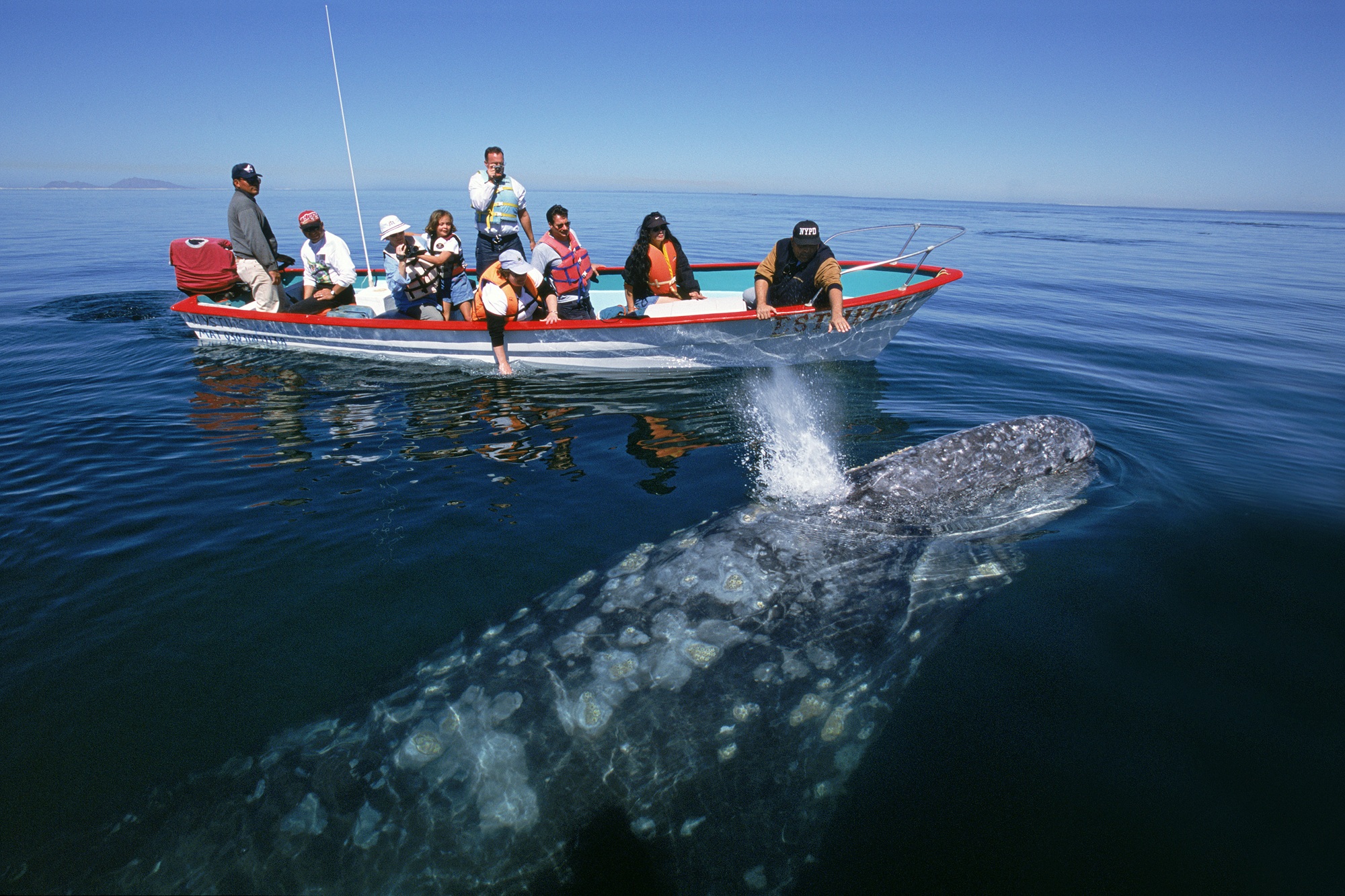 A gray whale in Magdalena Bay, in Baja California. (Mark Conlin/VW PICS/UIG via Getty Image)
Gray whales are also experiencing extreme difficulties. Recent research out of Sonoma State University and the Marine Mammal Center in Sausalito estimates that 1 in 5 gray whales entering the San Francisco Bay dies there.
Federal scientists at the National Oceanic and Atmospheric Administration believe changes in gray whale feeding grounds in the Arctic — accelerated by climate change — are changing whale behavior, driving them into San Francisco Bay as they search for food.
The legislation introduced Wednesday by Sam Liccardo would seek to help whales by directing the Coast Guard to collect reports about their locations and alert vessel operators to their presence.
“Researchers track these whales daily, but we can scale their impact by crowd-sourcing data from the many more numerous commercial and recreational boats, and building a centralized alert system,” Liccardo said in a statement. “A whale desk will protect these magnificent creatures and help mariners avoid costly, harrowing collisions.”