
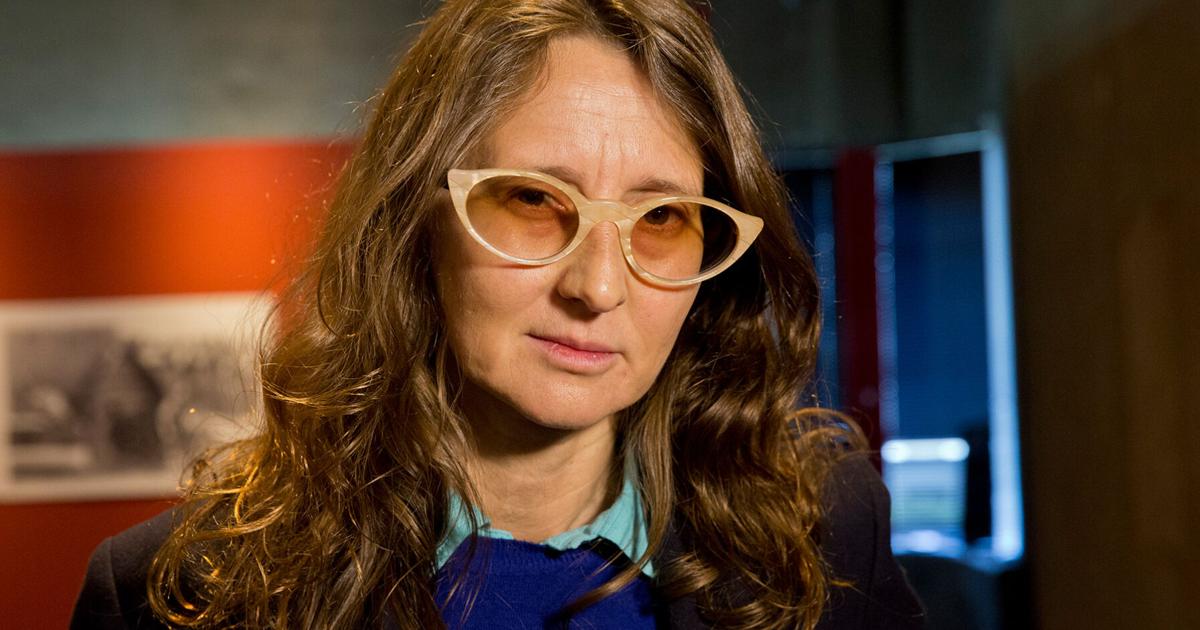
In the 25 years since Lucrecia Martel premiered her directorial debut “La Ciénaga,” Argentina has seen more presidents than films from its acclaimed auteur, a fact best contextualized by the stories she tells in between. For one, she embarked on a boat voyage through the Paraná River after her pitch for an original spin on sci-fi comic series “El Eternauta” wasn’t greenlit. The release of her latest film — her first documentary — “Nuestra Tierra” converges with the filmmaker’s career retrospective at the Berkeley Art Museum and Pacific Film Archive. Martel sat down with The Daily Californian to discuss her first foray into non-fiction filmmaking, collaboration and her filmic philosophy.
Meeting Martel at an Oakland coffee shop on a breezy Tuesday morning, the filmmaker’s conversational nature became immediately clear. Having let down our English-speaking guard, chatting with Martel felt more like meeting a long-lost family friend than any professional formality. She kindly offered to share the gluten-free potato frittata she ordered — sparking a sidebar discussion about our shared dietary restrictions — and was quick to ask about my thoughts on Berkeley as a student native to Latin America.
This kind of detail-focused, free-flowing exchange is perfectly observed in the filmmaker’s work, known for its patient gaze and self-apparent insights.
“I don’t have a film-oriented background, but rather in one in the world,” Martel said in Spanish. “I focus on what I want to do and see how I can develop a visual language. … The shortest path for me is to think about what I want to tell and to comprehend it with as much detail as possible. And little by little, you figure out how to film it.”
It’s an approach that’s deeply embedded in her formal choices for “Nuestra Tierra.” The film traverses the years-long journey to open court proceedings following the 2009 killing of Javier Chocobar, the leader of the Chuschagasta Indigenous community in Northern Argentina. The crime, which was caught on video, stemmed from an attempt by three men to remove the community from land they claim to be theirs. The case speaks to the looming presence of Latin American colonialism and larger systemic failings at addressing injustices impacting Indigenous groups.
The film’s thematic ties to her preceding work “Zama” — about a Spanish officer stationed in 18th-century Argentina — are far from incidental. It was during the aforementioned boat voyage that she read Antonio di Benedetto’s 1956 titular novel, inspiring Martel to adapt it into a film. Looking into uncontacted tribes during her research period for the film, she stumbled upon the video of Chocobar’s murder, and was particularly struck by its familiarity, having previously seen the footage in the news.
“These were people attacking a community carrying a camera and a revolver, things that held great significance in my work,” Martel said. “A camera is the opposite of firing a gun; it represents a desire to understand, a desire to know, a curiosity. Seeing these people using the camera for purposes that were so clearly at odds with one another, it really caught my attention.”
Because of the crime’s clear communal division — city folk threatening a rural community — Martel had to work to build trust with the Chuschagasta community.
“The community tries not to say what it thinks, but rather what it knows can be said, given the current political climate or whatever the circumstances may be. So it’s really hard to talk to people without them taking a stance — a defensive stance,” Martel said. “It took me a long time to get them to be able to express themselves, to feel comfortable expressing their thoughts in front of me.”
“Our Land” cinematographer Ernesto de Carvalho soon joined our conversation. The pair first met when Martel assisted Carvalho with post-production on his film “Canuto’s Transformation,” which was featured in BAMPFA’s Martel retrospective programming, and similarly centers on a South American Indigenous community. He was happy to return the favor with his camerawork in “Our Land.”
A major component of Carvalho’s cinematography in the film is the use of drone footage to capture the land and its inhabitants, a formal choice largely influenced by the investigative nature of the case and the associated parties.
“We didn’t have a reference point, but Lucrecia obviously wanted the drone footage to have a constructed meaning, a form of its own. And there was an internal reference to the archival material — the police cameras, the drones used by the police,” Carvalho said in Spanish. He spoke of the drone’s dual nature, where the image’s “objectifying gaze” coexists with the beauty and sense of belonging connected to the landscapes captured.
Despite the film’s long-gestating development — the project was first announced in 2018, when the court case began — Martel continues to find herself far more enthralled by the aftermath of her work.
“The conversations people have, the opinions it sparks, the connections people make, the interpretations — all of that is what makes cinema so appealing,” she said. “You create something, and it’s as if you’re throwing a ball and letting it go, and people play with it and sometimes it helps them realize things about the world.”