
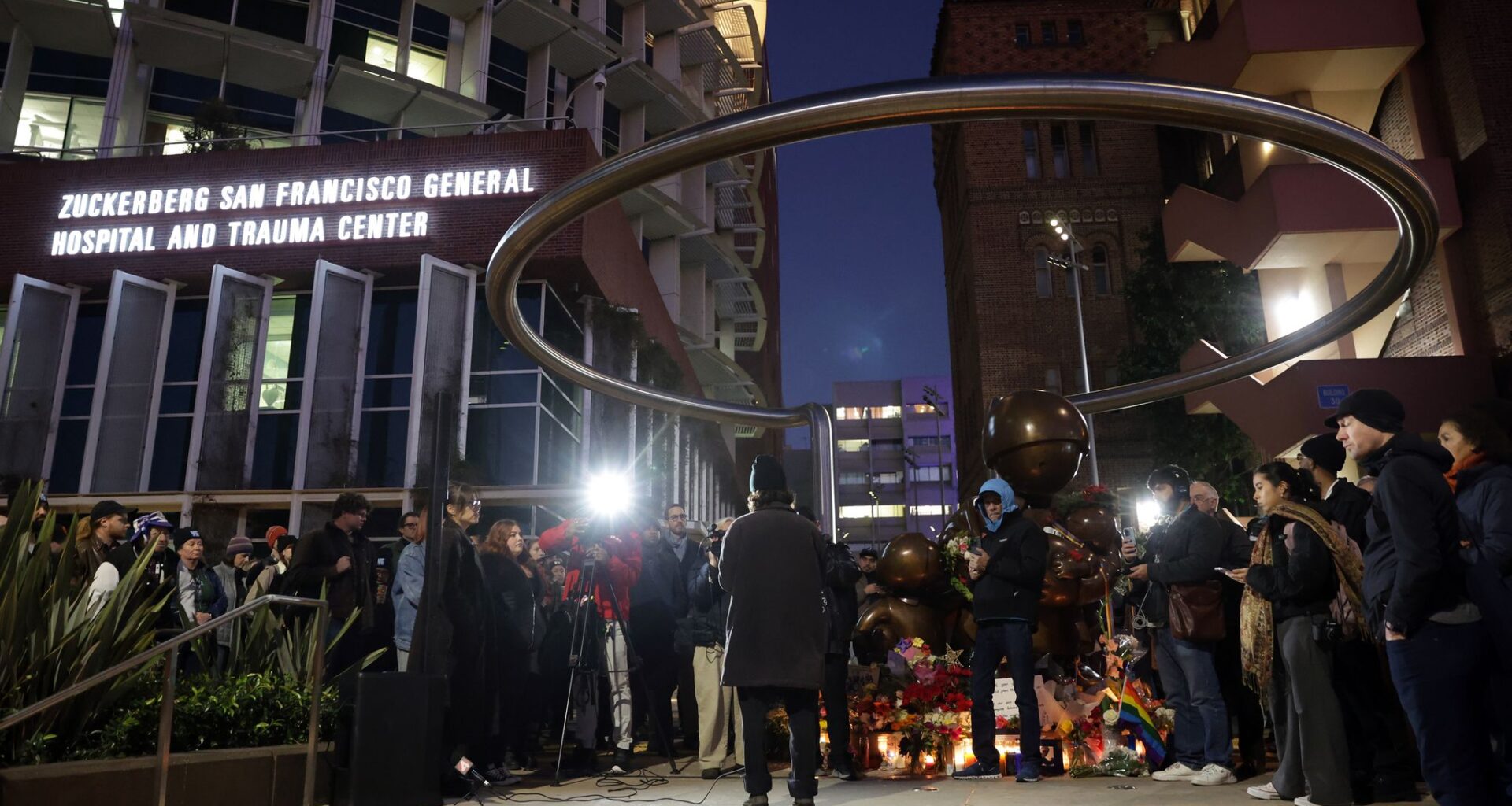
A rally outside Zuckerberg San Francisco General Hospital following the fatal stabbing of a hospital social worker in December 2025. An internal audit in the wake of the stabbing identified security vulnerabilities at San Francisco hospital’s that the city’s health department vowed to fix.
Scott Strazzante/S.F. Chronicle
San Francisco’s Department of Public Health lacked adequate protections to identify, investigate and manage dangerous patients like the one who allegedly stabbed a social worker to death in December, an internal audit concluded.
The 13-page review laid out a series of critical failures at San Francisco Zuckerberg General Hospital and listed improvements the health department must make there and at other facilities to bolster patient and staff safety.
The audit comes five months after the killing of social worker Alberto Rangel, who was stabbed by a troubled patient on Dec. 4 while working at Ward 86, the city’s outpatient HIV clinic, officials said. Rangel died two days later. In the weeks prior to the stabbing, staff had repeatedly warned their superiors about the patient’s behavior, according to Chronicle interviews with hospital employees and the department’s audit.
Article continues below this ad
Wilfredo Tortolero-Arriechi, 34, pleaded not guilty to a murder charge in early January.
The attack followed years of warnings by whistleblowers and sanctions by state regulators over assaults on staff by patients, inadequate staffing and attendant employee burnout as well as fears about “high-risk patients” at the city’s “hospital of last resort.”
San Francisco Chronicle Logo
Make us a Preferred Source to get more of our news when you search.
Add Preferred Source
The Chronicle previously reported that DPH’s internal records showed that the hospital averaged six assaults a month on staff that caused injuries, and had logged a climbing number of physical workplace violent incidents.
In a survey conducted by the hospital’s union representing nurses, 99% of respondents reported being assaulted or abused at work, and 61% of them said they had been attacked at work more than 10 times.
Article continues below this ad
DPH’s internal records showed that the hospital averaged six assaults a month on staff that caused injuries, and had logged a climbing number of physical workplace violent incidents — or nearly one a day.
On Tuesday, DPH Director Daniel Tsai said in an interview that officials were “not shying away from” areas where the department must improve. The audit identified a need for a consistent process around security emergencies, Tsai said, and was based on input from thousands of employees and a group of more than 100 leaders from DPH and UCSF. Staff across Zuckerberg General and in other outlying clinics lacked clarity about how to report threats and respond to them, he said.
“Not having a clear understanding of who does what, under what circumstances, certainly does not enable any team in a moment of crisis to know exactly how to respond,” said Tsai.
In the aftermath of the December attack, DPH committed $15 million a year to improve security and added four people to its security team, a department that was previously manned by a single employee: DPH Director of Security Basil Price.
The audit also recommended improving lighting, adding a weapons detection system and restricting entrances at Building 80/90, where Ward 86 is located. The audit called for consistent availability of “duress devices” like panic buttons, video monitoring, access to emergency call boxes, and emergency phone access. DPH officials said those improvements had already been made.
Article continues below this ad
The audit also showed that it took staff at least eight minutes to call a Code Blue – the alarm hospital staff initiate when a patient suffers a medical emergency that requires immediate lifesaving efforts – and at least 11 minutes for paramedics to arrive after Rangel was stabbed. SF General CEO Susan P. Ehrlich said that during that time, clinic staff were actively treating Alberto from the moment he was injured.
In mid-November, staffers had raised concerns about Tortolero-Arriechi, who seemed to be growing increasingly fixated on his physician, the audit shows. By Nov. 13, Tortelero-Arriechi visited the City Clinic, another local sexual health clinic, and demanded to see his doctor but was rebuffed. A week later, he visited Ward 86 for an appointment, exhibiting “elevated behaviors” and saying he planned to sue the doctor, according to the audit.
The document notes that between Nov. 24 and 26, hospital security staff discussed the case, and tried to contact Tortolero-Arriechi several times but couldn’t reach him.
The audit shows the hospital’s security director and partners at the sheriff’s office did not take further action or run a criminal background check on Tortolero-Arriechi until Dec. 4. That day, Tortolero-Arriechi appeared at the City Clinic demanding to speak to his doctor – and vowing to return to the site every day until he was allowed to see him.
That same morning, Ward 86 staff called DPH Security to report that Tortolero-Arriechi was planning to return to the clinic by 1 p.m.
Article continues below this ad
DPH staff attempted to contact him several times, but were again unsuccessful, according to the audit.
After security personnel ran Tortolero-Arriechi’s information through a criminal history check — which yielded no outstanding warrants — the sheriff’s office dispatched one deputy, who came to Ward 86 and guarded the doctor, according to the audit.
Around 1:30 p.m., Tortolero-Arriechi walked into the clinic, which had no metal detectors, and was directed to Rangel when he asked to see the doctor.
As the two were talking, Tortolero-Arriechi “without warning … stabbed Rangel from behind with a knife,” at which point other clinic staff intervened, separating the two men and attempting to treat Rangel.
Article continues below this ad
“We have had a lot of security protocols,” Tsai said, “and this assessment builds on that. It shows the additional improvement areas that we have looked pretty rigorously at and laid bare for everybody to see.”