
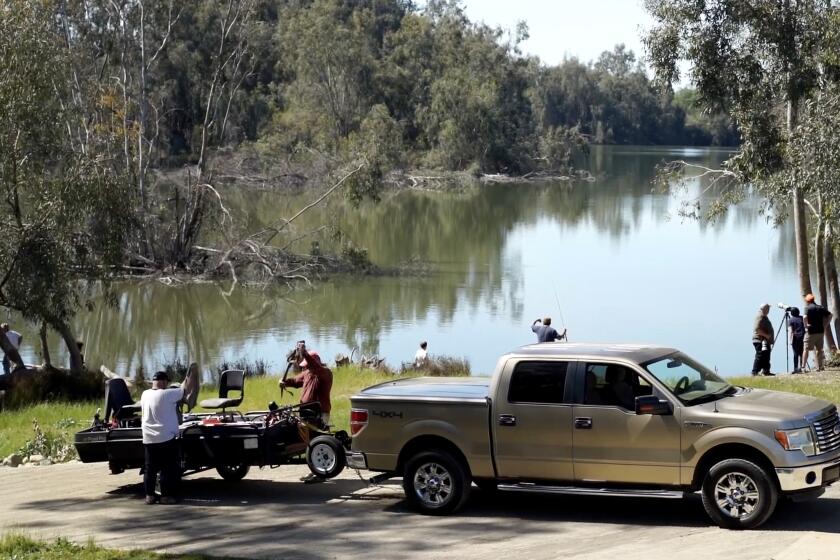
The Central Valley could soon be home to three new state parks in what officials say is the largest expansion of California’s state park system in decades.
The proposed parks — Feather River Park in Yuba County, San Joaquin River Parkway near Fresno, and Dust Bowl Camp in Bakersfield — would serve historically park-poor communities with recreation and historic preservation.
Gov. Gavin Newsom announced the plan Wednesday, Earth Day, on the banks of the San Joaquin River. If approved, the new parks would bring California’s total to 283, far more than any other state.
California has also expanded three existing parks, in Mendocino, Nevada and San Mateo counties, state officials said.
Read more: California is home to some of the greatest state parks. Here are 7 you can’t miss
Unlike national parks such as Yosemite, which are managed by the federal government, state parks are overseen by the California Department of Parks and Recreation, also known as California State Parks. They include beloved sites such as Malibu Creek State Park, Anza-Borrego Desert State Park and the Humboldt Redwoods State Park.
The largest of the proposed parks, Feather River in Olivehurst, Yuba County, sits on nearly 2,000 acres along the Feather River. It would be the first state park in Yuba County, complete with a boat launch and riverside beach, as well as a floodplain designed to take on water in high-flow years.
The San Joaquin River Parkway in Fresno and Madera counties would join various properties into an 874-acre state park directly upriver from the city of Fresno, with parkland on both sides of the river. Officials said it would complement the nearby Millerton Lake State Recreation Area, making a “water recreation hub” in the fast-growing region.
In Bakersfield, Kern County, the proposed Dust Bowl Camp would mark California history at the site of the Sunset Migratory Labor Camp, one of the first camps established by the federal Farm Security Administration to house farmworkers who came to California during the Dust Bowl. The migrant workers played a profound role in shaping the economy, culture and identity of the Central Valley.
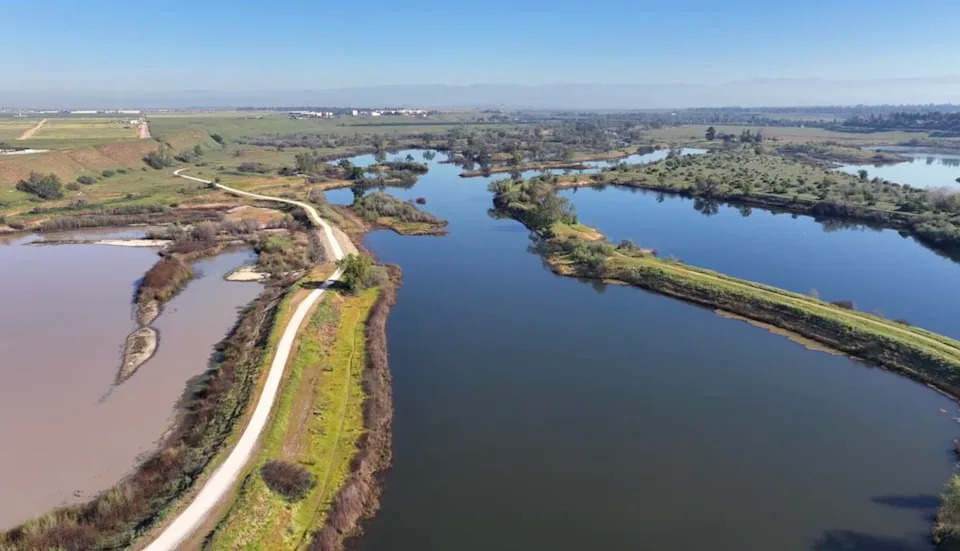
Officials said San Joaquin River Parkway would be part of a new “water recreation hub” in the fast-growing Fresno region. (California State Parks)
The roughly two-acre park would be the first to directly highlight the Dust Bowl and migrant farming camps of the Great Depression, state officials said. It is home to several historic structures that are among the last remaining migrant camp buildings from the 1930s and ’40s Dust Bowl era in California. Also known as Weedpatch Camp, the site is on the National Register of Historic Places and inspired portions of John Steinbeck’s novel “The Grapes of Wrath.”
Read more: Trump’s order to expand U.S. timber production includes all of California’s national forests
Wednesday’s announcement is part of a new initiative called State Parks Forward, which seeks to rapidly expand California’s 1.6-million-acre state park system. It kicks off a planning and acquisition process for the three new parks, which are publicly held and can be acquired at little to no cost to the state, officials said.
The last new state park, the 1,600-acre Dos Rios State Park near Modesto, was the first added in a decade when it opened in 2024. A decade earlier, in 2012, the parks department was mired in scandal when officials threatened to close 70 state parks due to a lack of funds until a hidden $54-million stockpile was uncovered.
Wade Crowfoot, California Natural Resources Agency secretary, said Wednesday’s announcement builds on California’s 30×30 plan, which seeks to conserve 30% of the state’s land and coastal waters by the end of the decade. The state has achieved about 26% of its land goal and 22% of its marine goal so far.
“California’s state parks are nothing short of iconic — with locations like Big Sur, Southern California beaches and the world’s tallest trees — but our state has even more to offer,” Crowfoot said. “Now through State Parks Forward, we’re bringing more parks to more places — particularly in the Central Valley, a beautiful region that has too often been overlooked for new parks — while at the same time making critical progress to conserve 30% of our lands by 2030.”
The initiative also includes plans to grow existing state parks by 30,000 acres by the end of the decade, leaning on recent legislation, Senate Bill 630 and Assembly Bill 679, to streamline the purchase process for sensitive ecosystems and critical wildlife habitat corridors next to existing parks.
Those expansions include 453 acres recently added to Montgomery Woods State Natural Reserve in Mendocino County, 218 acres to South Yuba River State Park in Nevada County and 133 acres to Pigeon Point Light Station State Historic Park in San Mateo County, also announced Wednesday.
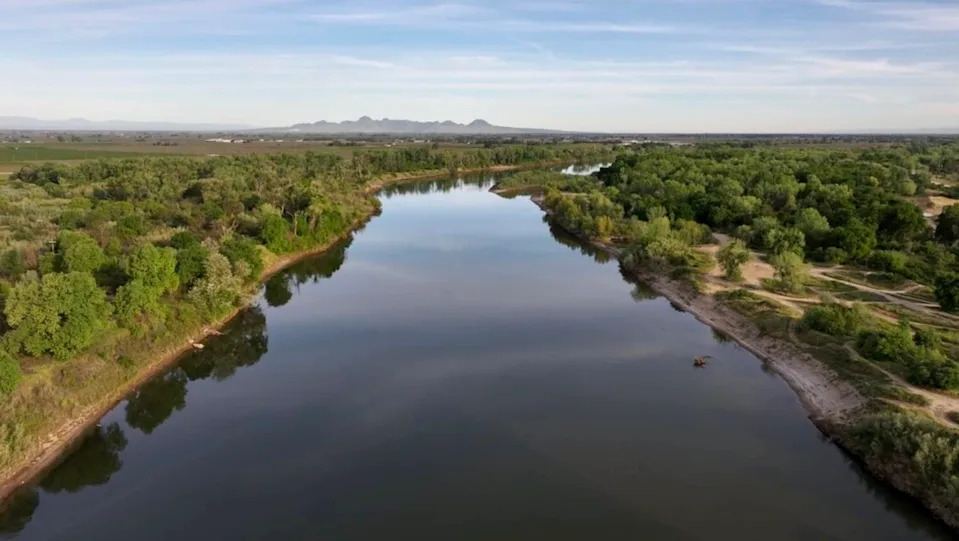
Feather River Park would be the first state park in Yuba County. (California State Parks)
Newsom used the opportunity to contrast California’s efforts to the Trump administration, which has worked to narrow protections for national parks and forests. Last year, the president ordered the U.S. Forest Service to open up some 112 million acres of national forestland to logging — including all 18 national forests in California — and rescinded the 2001 “Roadless Rule” that established protections for 58.5 million acres of wilderness areas across the United States.
The president has also proposed cuts to National Park Service funding and pushed to expand oil, gas and mineral development on federal lands, among other efforts.
“As Trump sells out America’s national parks, California is doubling down on protecting the Golden State’s natural beauties,” Newsom said. “Today, through the State Parks Forward initiative, we’re expanding our parks system with three new state parks, creating new outdoor recreation opportunities for Central Valley communities, and deepening our conservation commitments and preserving our lands for generations of Californians to come.”
The parks department will immediately begin a public engagement process for all three new parks to hear directly from the surrounding communities and stakeholders. The timing for each park’s final approval has yet to be determined.
This story originally appeared in Los Angeles Times.