
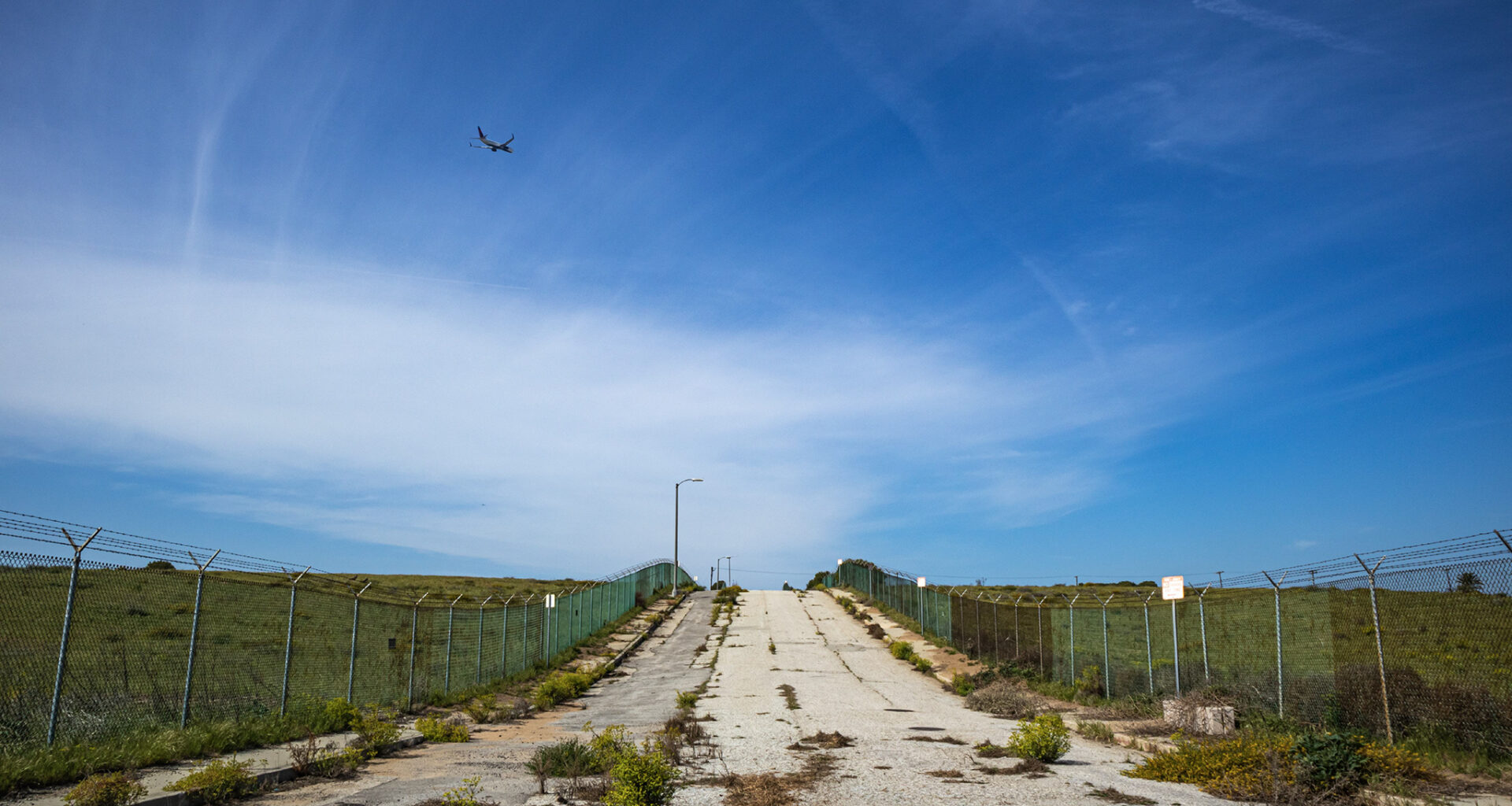
But in 1967, the city began razing the homes due to the exponential growth of Los Angeles International Airport right next door. The Jet Age was booming, and LAX had begun to make the neighborhood unlivable due to noise, safety and pollution concerns.
At this point, Surfridge has nearly been abandoned for longer than it ever existed. The land is now just a fenced-off swath of coastal land with little more than paved cul-de-sacs as a reminder of its idyllic history. It’s also become an unlikely habitat for endangered species, and a yearslong effort to restore the former neighborhood to nature took a major step forward last week.
If Surfridge had remained intact, today it would have looked much like other beach neighborhoods up and down the Southern California coast: paved driveways and sidewalks, a steady stream of cars entering and exiting the neighborhood, and most land used up for development. Maybe some Surfridge residents would have planted milkweed or other plants to encourage pollinators, or swapped out turf grass for native gardens. But overall, it probably wouldn’t have turned into a wonderland for endangered species.
Left alone, however, Surfridge has slowly turned back into nature over the past several decades, transforming into a vital coastal dune habitat.
At one point, LAX planned to expand the airport right into the coastal dunes. Potential plans included expanding the airport’s runways and adding a golf course at the north ends of the dunes. That changed in the 1970s, when the El Segundo blue butterfly was found for the first time on the so-called “LAX Dunes.” The Endangered Species Act was passed just a few years later, and the butterfly was named as one of the original endangered species protected by the law. Los Angeles World Airport’s natural resources team has spent much of the years since then working on a recovery plan for the butterfly, which includes a restoration area spanning more than half of the former Surfridge footprint.
The butterfly is only found in a stretch of coastal Southern California from the Ballona Wetlands to the Palos Verdes Peninsula, and the LAX Dunes are home to the largest colony. As of a few years ago, an estimated 17,640 El Segundo blue butterflies flitted around the stretch of sand dunes just west of LAX. Other sensitive species found in the dunes include the Southern California legless lizard and San Diego horned lizard.
The airport’s natural resources team has worked on steadily rewilding the dunes since the 1980s, but the process got a boost in 2023 when the airport received a $500,000 grant from the state’s natural resource agency. The grant will be used to remove invasive plants and plant 50,000 natives across a 50-acre swath of land.
Last week, the airport wrapped up a major stage in this restoration work — a total of 24,000 native plants are now planted, and 17.9 acres of invasive vegetation have been removed, “creating space for the endangered El Segundo Blue Butterfly to thrive again,” according to a Facebook post from the airport. LAX also called the area “one of the last remaining coastal ecosystems in Los Angeles.”
While Surfridge continues to fade away (and remains closed to the public), it is possible to take a short stroll along the northern edge of the area and look out on the dunes via the Waterview Trail, which stretches from Pershing Drive to Vista Del Mar Boulevard.