
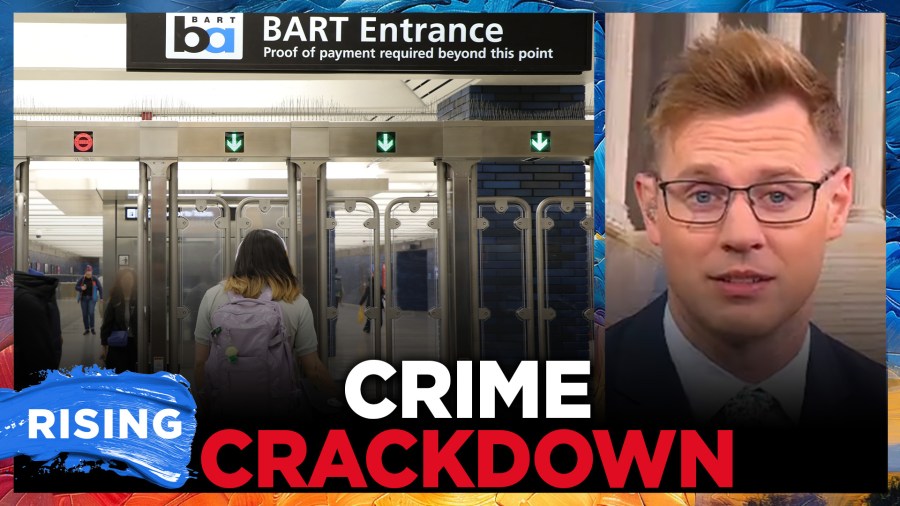
Today, we have an exciting new report from Obvious Land: San Francisco’s public transportation system has raised revenue, dramatically improved customer safety, and is cleaner and more orderly than ever, and they accomplished it all with one neat trick. They actually cracked down on crime. And it worked.
This news won’t surprise most normal people, but liberals might be in for a shock. It turns out that when you install new gates that it make impossible for fare-evaders — that’s the euphemism we use to describe criminals who refuse to pay to use the subway — to jump the gate, you magically improve everything about the subway. Seriously.
They’re even taking notice within the mainstream media, which endlessly excuses law-breaking and says we need to tackle the root causes like poverty and homelessness (which is really like saying we should do nothing and let like the criminals run wild). But look at this headline from The Atlantic, which admits:
“In August, BART completed the installation of new fare gates at station entrances and exits: Six-foot-tall saloon-style doors, made of plexiglass with metal frames, have replaced the waist-high barriers of the 1970s that were easy to duck or jump. The new gates have compelled more riders to pay their fare—revenue is projected to rise by $10 million a year. They have also led to an enormous drop in vandalism. Workers spent nearly 1,000 fewer hours cleaning up after unruly passengers in the six months following the gates’ installation, compared with the six months before. Crime on BART fell by 41 percent last year.”
How about that? It turns out, if you put in a little bit of work to deter, exclude and actually punish criminals, you end up way ahead in the long run.
Note that this perfectly obvious finding was bitterly opposed by so-called criminal justice reformers. Previously, the Center for Policing Equity said that cracking down on crime wouldn’t make the subway system safer, and they pointed to studies that supposedly showed that. Well, it turns out those social justice influenced academics were wrong, and in the real world, when you crack down on bad behavior, you get really favorable results.
Look, we know what’s going on here. It’s quintessential broken windows policing. If you let just a small number of reprobates get away with even small crimes, you get more serious crime. You end up turning over the public spaces to the mentally ill and the dangerous.
So with just a little increase in enforcement, you can actually make a big difference. Note that San Francisco has not solved its homelessness problem or its mental illness problem. It hasn’t addressed the so-called root causes of crime. It has simply installed gates, or walls, that the criminals can’t jump over.
Maybe there’s a lesson in that.
Robby Soave is co-host of The Hill’s commentary show “Rising” and a senior editor for Reason Magazine. This column is an edited transcription of his daily commentary.
Copyright 2026 Nexstar Media, Inc. All rights reserved. This material may not be published, broadcast, rewritten, or redistributed.
For the latest news, weather, sports, and streaming video, head to The Hill.