
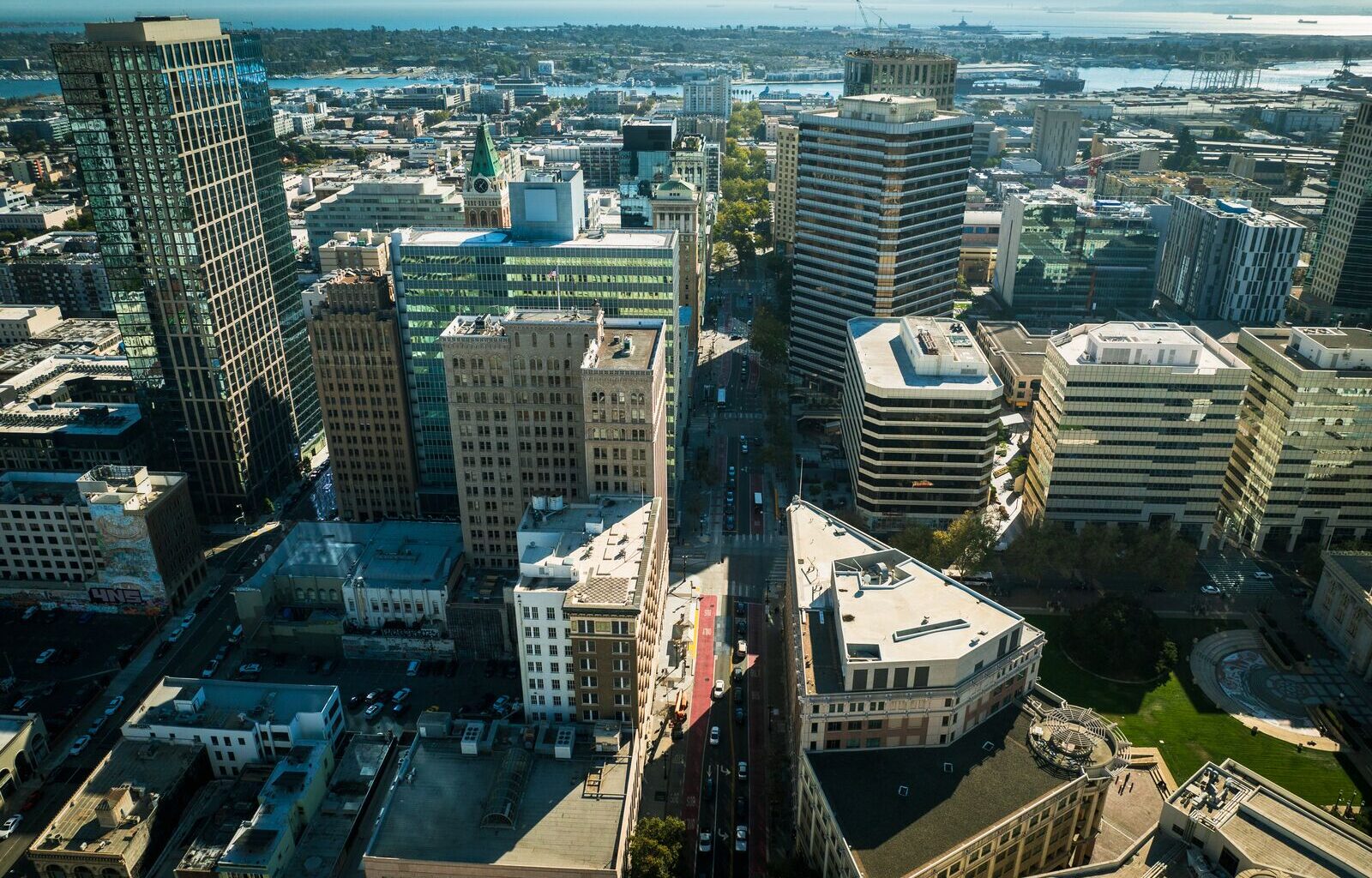
Nearly 38% of Oakland’s downtown office space was empty in the first quarter of the year, according to a new report from the commercial real estate firm Cushman & Wakefield.
The findings, first reported by the East Bay Times, show that Oakland’s vacancy rate remains stubbornly high six years after the onset of the COVID-19 pandemic. Oakland isn’t alone in this problem, the paper reported: vacancy rates in downtown San Francisco and downtown San Jose are hovering at 31%. But while San Francisco and San Jose have seen slight declines in their vacancy rates over the past year, Oakland’s has ticked upward.
Oakland’s downtown vacancy rate is steeply up from 2019, shortly before the pandemic, when the rate was 10.8%, the East Bay Times noted.
The Cushman & Wakefield report observes that the Bay Area has experienced continued layoffs in the tech sector, and a failure by the booming AI industry to translate into greater demand for office space in Oakland.
According to the report, the Lake Merritt area saw some large leases signed in 2025, which could be a positive signal. But it also warned that several of the biggest tenants in downtown Oakland, including Kaiser, Clorox, and Pandora have leases that expire over the next 36 months.
A few recent big deals in Oakland show some stirring demand. The largest deal in the first few months of 2026 was the expansion of the Emerson Collective, a company that invests in entrepreneurs, which took approximately 18,000 square feet on 9th Street. Hively, a social services advocacy organization, also signed a new 10,104 square foot lease on Hegenberger Road, and Alta Planning + Design leased nearly 9,000 square feet on Grand Avenue.
“Looking ahead, these homegrown expansions will be crucial in halting the rise in vacancy, but it will take an in-migration of new, larger tenants for vacancy to decline meaningfully,” the report said.
Oakland has historically served as a “release valve” for San Francisco demand, offering relatively affordable space compared to the West Bay. The report speculated that high-growth companies may turn to the East Bay for more office space.
“*” indicates required fields