
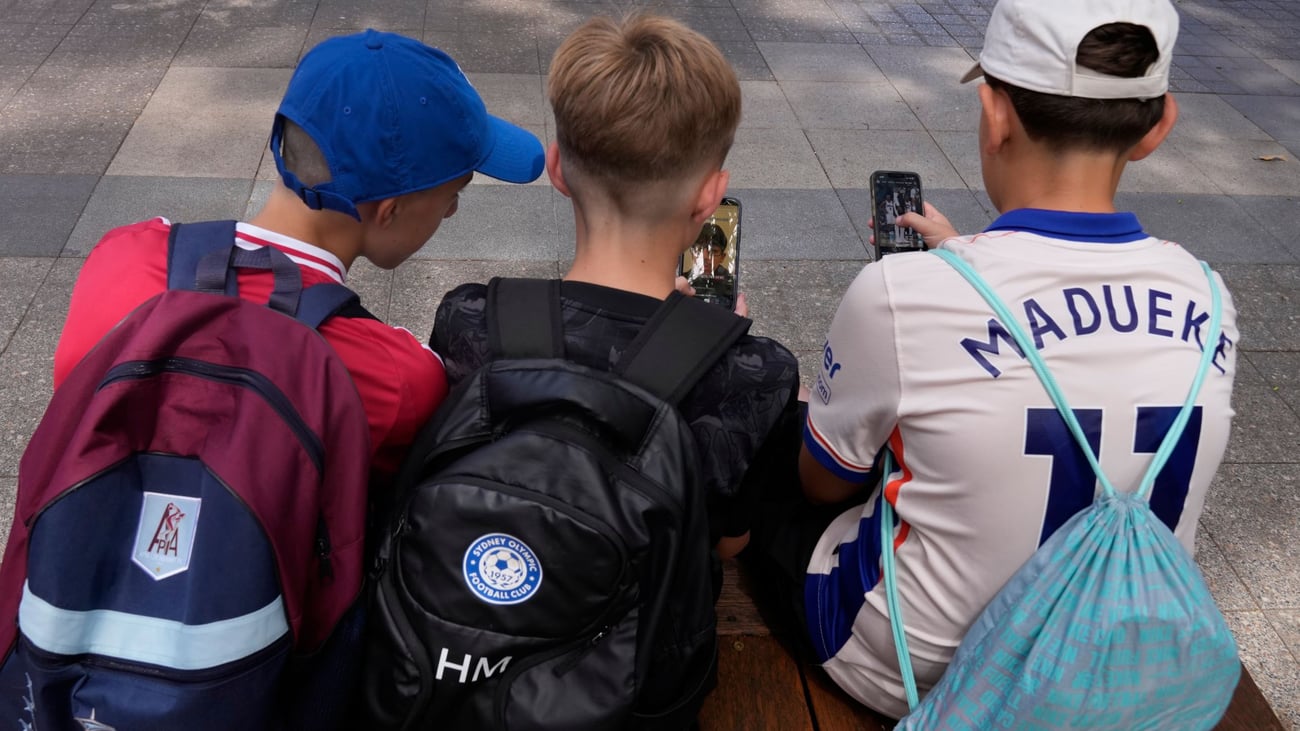
The bill now would create a statewide school smartphone ban for students in transitional kindergarten through eighth grade, instead of through high school.
SACRAMENTO, Calif. (CN) — California high schools just called. They want their cellphones.
That’s the message Assemblymember Al Muratsuchi got at Wednesday’s Assembly Education Committee.
Muratsuchi, a Torrance Democrat, sought to install a bell-to-bell smartphone ban in state schools from transitional kindergarten through 12th grade.
He knew the committee had concerns, as the hearing for Assembly Bill 1644 already had been postponed twice. The committee worried schools are racing to obey a new law requiring they implement new policies that would limit or prohibit smartphones in schools by July 1. Some lawmakers also had concerns about students communicating with their parents.
Those concerns led Muratsuchi to agree to bill amendments that would create a smartphone ban for students in transitional kindergarten to eighth grade, though parents must have at least one method of contacting students during school hours. A ban for high schools would be strongly encouraged.
The bill passed the Education Committee and now proceeds to the Assembly Appropriations Committee.
“I recognize that changes comes slowly,” Muratsuchi said.
A longtime proponent of restricting cellphone use in schools, Muratsuchi argued smartphones distract and undermine education. At least 10 states, including New York and Texas, have enacted such bans.
Jose Torres, deputy executive director of TechNet, said his trade association believes in the power of technology.
“This approach is not about limiting technology,” he said of Muratsuchi’s bill. “It’s about using it thoughtfully.”
The bill faced some opposition. Dorothy Johnson, a legislative advocate with the Association of California School Administrators, didn’t question the damage smartphones can cause. However, she pointed to the existing law, passed in 2024, that requires schools to enact a policy by July 1 about limiting or prohibiting smartphone use.
Muratsuchi’s bill would eliminate that 2024 law, replacing it with the new statewide prohibition.
“So, it’s making them do a double-take,” she said, adding: “What is that saying — just kidding?”
Johnson also asked for a delay in implementation, if the bill did move forward. It currently calls for the prohibition to become effective July 1, 2027.
Assemblymember Darshana Patel, a San Diego Democrat and committee chair, noted that she served on a local school board before her legislative stint. She agreed with Muratsuchi on the negatives smartphones bring into the classroom — distractions and “doomscrolling.”
However, they also have an instructional purpose, she added. For example, journalism students use them to record voice memos when conducting interviews.
“It has now become a handheld computer that has very important purposes,” Patel said.
A co-author of the bill, Assemblymember Josh Lowenthal — a Long Beach Democrat — said he remained mindful of how state policy can affect families. His district includes islands. Some parents spend their working days on boats and rely on smartphones to communicate with their children.
Those needs must be weighed against the positives that cellphone prohibitions bring, he added. He spoke with a local school board member that day, who told him Agoura High School has seen bullying drop by two-thirds since it implemented a ban. Additionally, daily attendance and student performance have risen.
“Even within that community, the naysayers are now believers,” he added.
Like Patel, Assemblymember Josh Hoover, a Folsom Republican and bill co-author, has served on a school board. In fact, Hoover pointed to a 2019 law written by Muratsuchi he said enabled his board to push for a smartphone prohibition.
That law enabled school boards to create policy limiting or prohibiting smartphone use by students.
Once elected to the Legislature, Hoover wrote the 2024 law Johnson mentioned that required school boards to make policies limiting or banning smartphones.
Subscribe to our free newsletters
Our weekly newsletter Closing Arguments offers the latest about ongoing
trials, major litigation and rulings in courthouses around the U.S. and the world,
while the monthly Under the Lights dishes the legal dirt from Hollywood,
sports, Big Tech and the arts.