
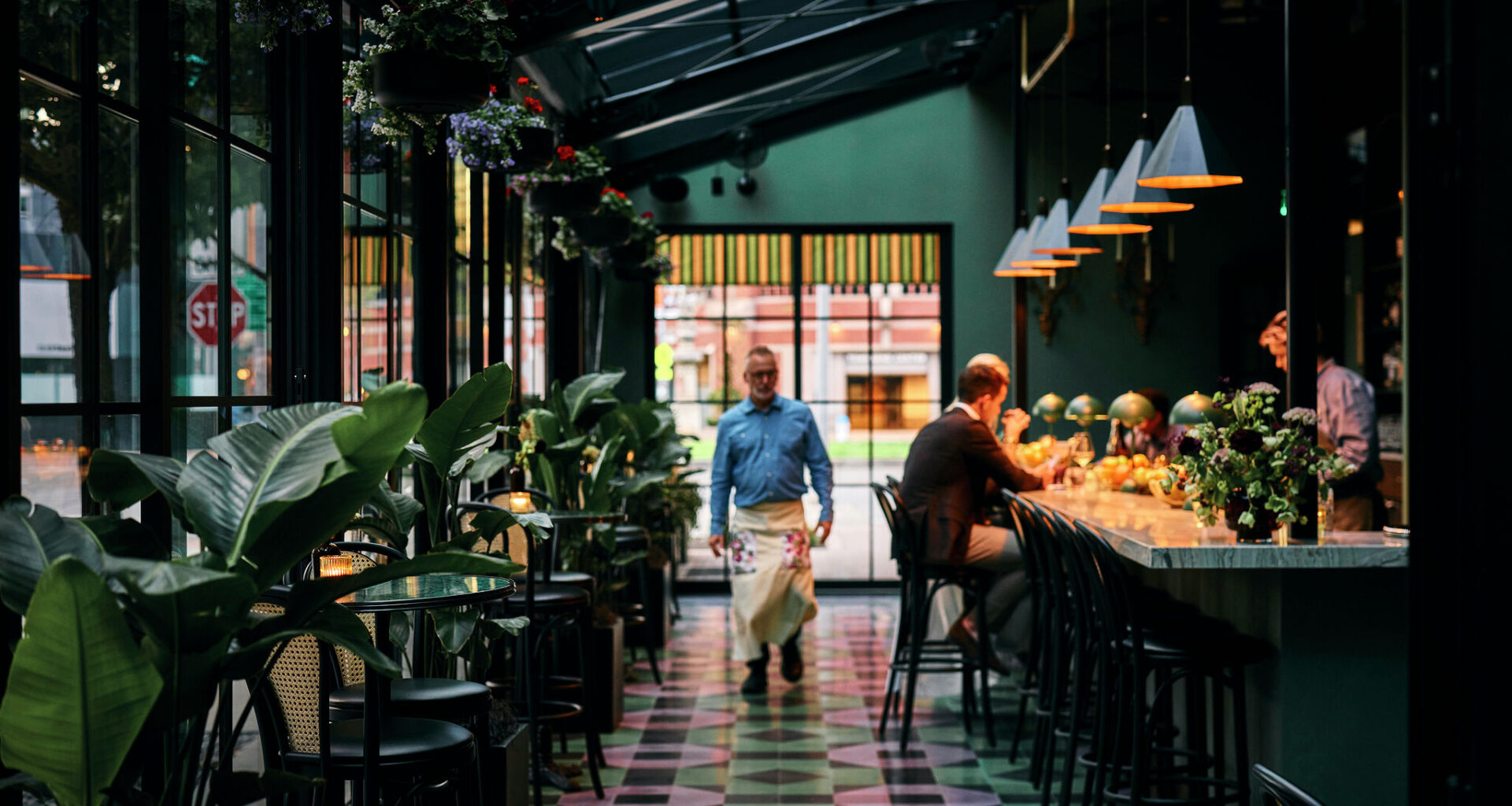
JouJou, a new upscale restaurant in San Francisco, has been open less than two months and already has the makings of a destination. It’s from the team behind two-Michelin-starred Lazy Bear; it’s on trend, part of a wave of French restaurants hitting the city; and trying to score a peak-dinner reservation is tough. The restaurant is often booked, which makes people want to go even more.

Bail on that reservation, however, and JouJou has a policy that will rattle guests and make future diners nervous: The restaurant charges a $75 per person fee if you cancel less than 24 hours before your booked time. No-shows and late cancellations have a direct impact on a restaurant’s bottom line, and while these types of penalties are not uncommon in the Bay Area, the dollar amounts are on the rise.
Even two years ago, a fee of $15 or $20 for a late cancellation or no-show at a nice restaurant didn’t raise eyebrows. But now, those amounts are doubling and even tripling to $35 to $75 to better reflect restaurants’ losses at a time when everything costs more. Some Bay Area restaurants have even started charging for cancellations made less than 48 hours in advance. SFGATE spoke to restaurateurs behind seven concepts in Oakland and SF to understand the nuances of their policies and how they handle circumstances around cancellations.
Article continues below this ad
JouJou co-owner Colleen Booth and chef David Barzelay are seen inside their restaurant in San Francisco.
Photo by Kelly Puleio
JouJou co-owner Colleen Booth told SFGATE that they chose to implement a fee because they have seen cases of the issue continue to rise at their other business. True Laurel, she said, has an “astronomically high” no-show rate of 13%. A 2021 OpenTable study found that 28% of Americans said they hadn’t shown up for a reservation in the past year. Of course, this was mid-pandemic, so figures might be a bit lower now.
Booth said $75 is less than the average guest check and felt like a round enough number and a firm enough punishment for those who couldn’t give them the grace of canceling within 24 hours.
“We truly want to do the best we can to show all of our guests a great time, and we find it wildly helpful to know that you are coming in,” Booth said. “Would you not update your RSVP to a dear friend’s dinner party if your plans changed?”
Article continues below this ad
Part of the issue, Booth said, is that guests don’t understand the economics of running restaurants and how no-shows and late cancellations affect everyone’s livelihood, from the kitchen staff to the servers. JouJou is a French seafood restaurant, with sauces and braises that take “days to make” and a raw bar with fresh fish coming in daily. What happens when a four-top cancels at the last minute and no one claims that table?
“From a fiscal business perspective, it’s the biggest pain point. It’s disheartening,” Booth said. “We’ve turned away dozens of people for that table. And we are not a pedestrian-heavy neighborhood. How are we going to recoup that money? We are preparing for you.”
Sometimes, exceptions are made, like a remorseful diner who cancels 15 hours before their reservation, about to board a plane for a funeral (though Booth has one guest whose grandmother has died four times in the past two months). Depending on the interaction as well as the size of the party and reservation time, they will put the $75 on a gift card that can be used on a future visit.
A spicy lobster entree at JouJou in San Francisco.
Photo by Kelly Puleio
Booth said the penalty is deterring but not stopping the bad behavior, so the cancellation fee isn’t going anywhere. “If anything, I’m only getting more data to make it even stricter,” she said.
Article continues below this ad
Reservation apps like Tock and OpenTable track this data and have implemented features to help mitigate the effects of no-shows and late cancellations. For instance, restaurants that use OpenTable’s deposit feature see a 60% reduction in no-shows, a spokesperson for the company told SFGATE. Last year, the app also launched a 2% service fee for no-shows and guest modifications, which restaurants have the option of passing on to diners. Many do, which, for diners, only fuels the anxiety of making a reservation at all.
‘No matter the story’
Chef-owner Greg Lutes has different penalty fees at his two Bernal Heights eateries. 3rd Cousin, an intimate Michelin-recognized restaurant, says it charges $50 per person for no-shows or cancellations less than three days in advance; at the American bistro Precita Social, it’s lower — $45 for the same crimes, but within 48 hours. When the bistro opened in August 2025, they had dozens of late cancellations and no-shows at first, Lutes said.
Article continues below this ad
The charge has helped, as has Lutes’ willingness to work with people. “If somebody reaches out to us two days out we reschedule it for you and hold it as a house account,” Lutes said.
Less than 24 hours? “We are always going to charge them, no matter the story. The flight got canceled. Somebody’s dog died. They got COVID,” he said.
Patrons dine at Precita Social in San Francisco.
Image via Yelp user Ahn P.
Some people have taken to social media to complain or give the restaurant a one-star rating without dining there.
Article continues below this ad
“The need to weaponize Yelp or Google reviews because you’re resentful about our policies?” Lutes said. “At the end of the day I have a business to run. We’re negatively impacted financially by last-minute cancellations and we have to do this to protect some of our revenue.”
Meanwhile, Pujan Sarkar, a restaurateur of 12 years, has never charged a no-show or cancellation fee. At his modern Indian restaurant Tiya in SF, the focus is on building relationships, and that starts with proactive communication, Sarkar told SFGATE. The hosts have “three extra hours” built into their shifts for calling, texting or emailing guests to confirm attendance on top of the regular reminders that go out through their reservation platform.
“It’s very challenging when you have to engage people to get a confirmation after they have a reservation set, but trust and hospitality comes first,” he said. “That’s a strong point for me. That’s why we eliminated from day one any cancellation fees and credit card holds.”
Pujan Sarkar is chef and co-owner of Tiya in San Francisco and a culinary partner at Khaki in San Ramon.
Courtesy of Tiya
Instead, they work with guests to shift the day or time of the reservation and tell them, “We don’t want to lose you as a customer.”
Article continues below this ad
The strategy is 90% successful, he said.
“I see my guest is more repetitive and more loyal and so many told me, ‘We notice you are not charging,’” Sarkar said. “I don’t want to get $20 from you if you’re not coming. How can I get money without giving service?”
A sneaky truth
Sometimes, the illusion of a steep charge is enough to curb the problem altogether. A decade ago, when Michele Belotti opened Belotti, his personal ode to Italian food in Oakland, the no-shows and late cancellations were “through the roof.”
Article continues below this ad
At the time, the young Bergamo-born chef was nearly broke, having opened the small Rockridge eatery with his childhood communion savings and another 20,000 euros from his parents and his wife, Joyce’s, parents. Joyce was in San Diego doing her residency in dentistry and Michele was living in the office above the restaurant, sleeping next to the water heater. He took showers at 24 Hour Fitness.
Battuta steak tartare is served at Belotti Ristorante E Bottega in Oakland, Calif.
Image via Yelp user Karl C.
Instead of changing his ethos of nearly 100% handmade pastas or occasional complimentary desserts and generous, 6-ounce wine pours, he tried implementing a cancellation fee, taking the average customer spend and adding $10.
“As soon as we started doing that, our cancellations dropped,” Michele said.
Article continues below this ad
Today, the Resy page says that canceling after 24 hours will cost you $75 plus tax per guest. But there’s a sneaky line after that: “Any waiver of the fee is at the sole discretion of the restaurant.”
And the truth is Michele has a lot of discretion.
“Last year, we charged three customers, only no-shows,” he admitted. “When they reach out and say, ‘We got charged,’ most of the time we refund the charge or give them a gift card of the value.”
Article continues below this ad