
Cleary is hoping that range of price points will make TBD the kind of place where regulars might more easily visit a couple times a month. He cites a recent Saturday night when a customer came in by herself, ordered tuna tataki, fried chicken and one box of skewers, and then sat at the counter reading a book.
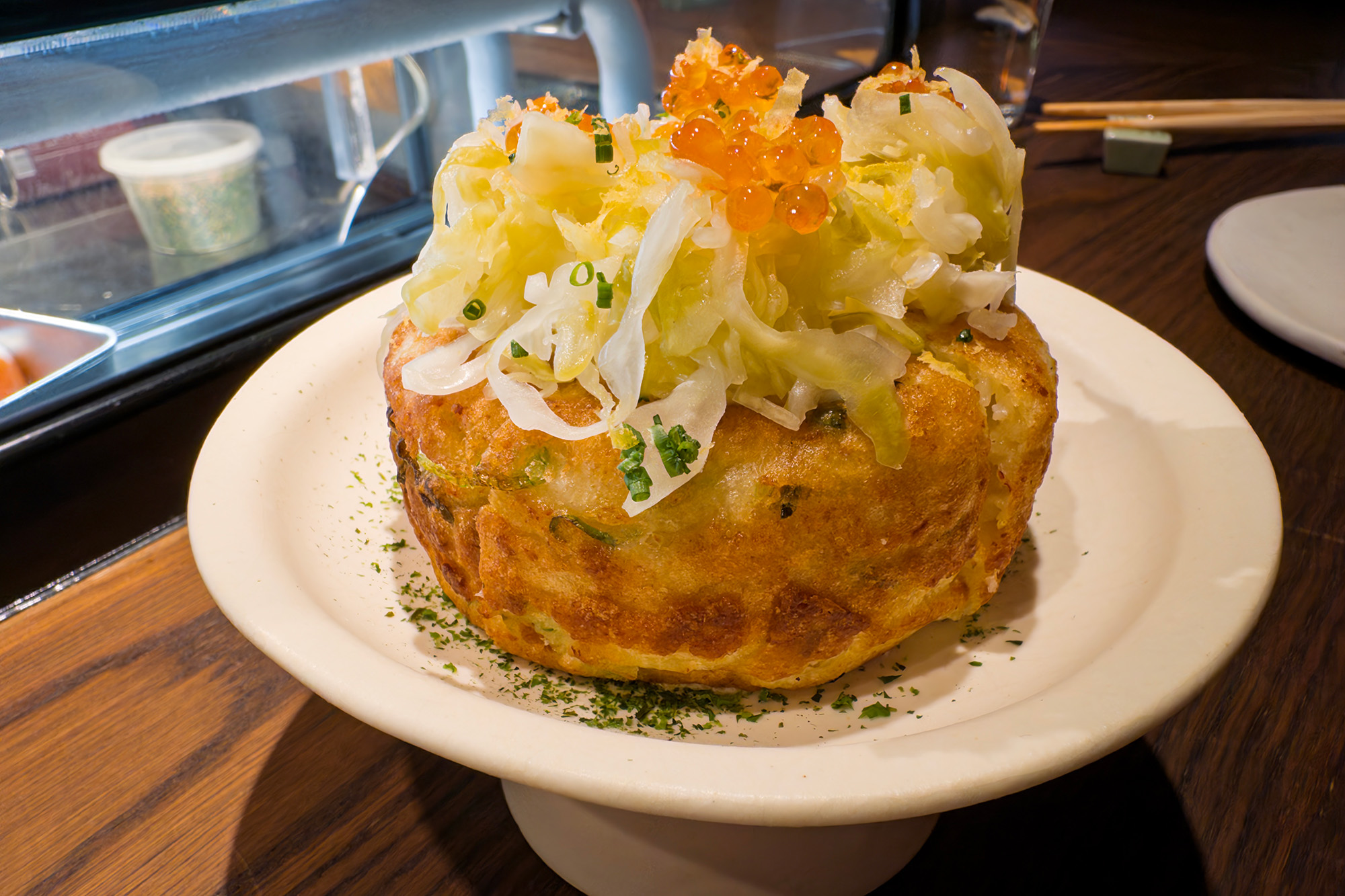 TBD’s take on okonomiyaki — a puffy king crab pancake topped with sauerkraut and ikura. (Luke Tsai/KQED)
“That’s kind of the ideal situation,” Cleary says. “You come by, do your thing, have a good time and leave. I feel like the vibe is warm and intimate, but also lively like an izakaya.”
When Cleary closed Hina, he questioned whether he ever wanted to open a restaurant in San Francisco again. In the end, the opportunity to team up with Lee, who runs two of the city’s most celebrated sushi spots, was too intriguing to pass up. The new restaurant is located on the edge of Union Square, in the space that originally housed Akiko’s. Broadly speaking, Cleary heads up the yakitori program while Lee is in charge of sashimi and hot izakaya-style small plates. But the whole kitchen team collaborates on every dish.
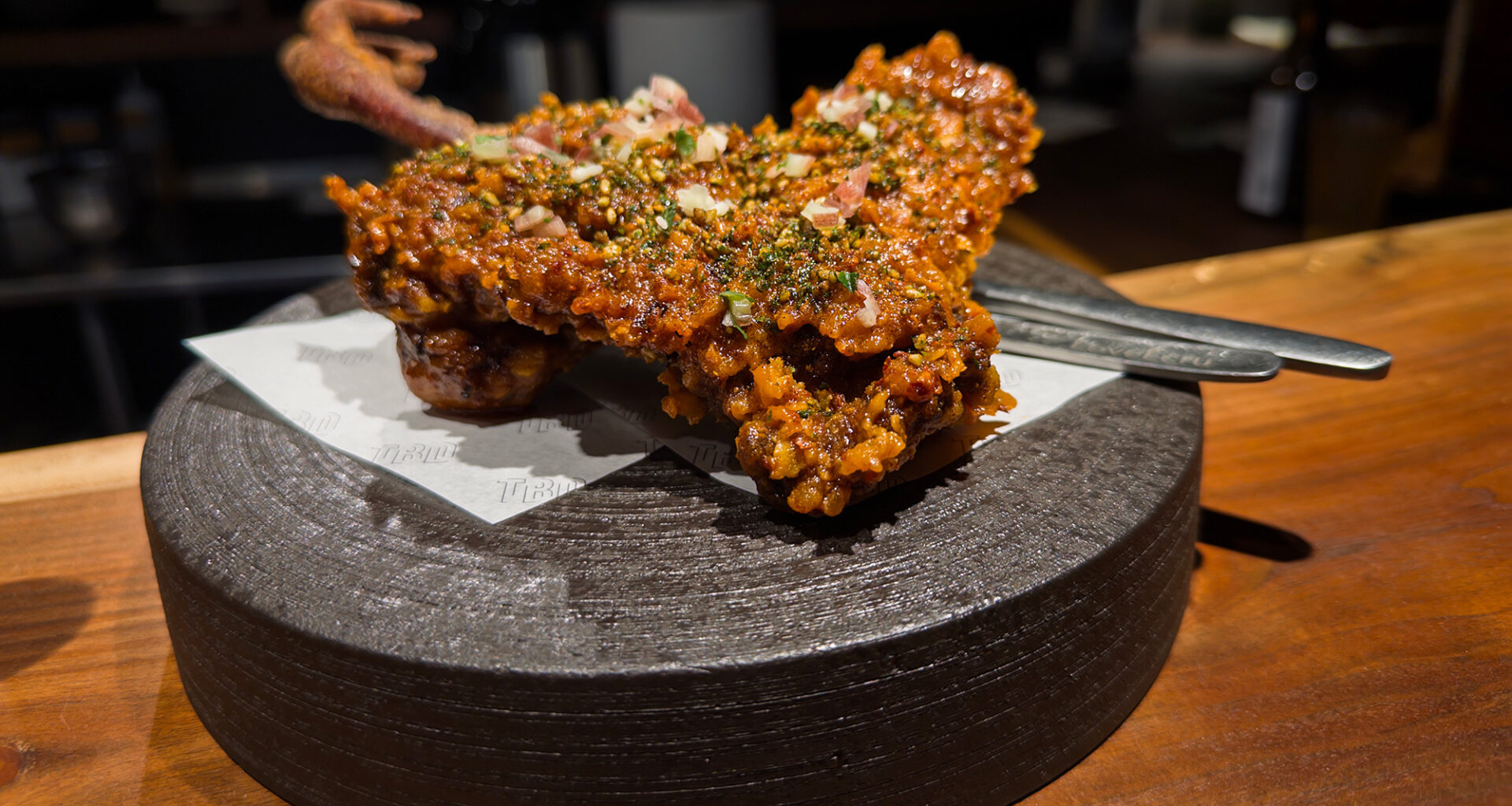
The aforementioned fried chicken leg, for instance, is a showstopper of a dish that comes with the claw attached — Lee’s idea, Cleary says. Another chef, Jerry Lam, built out the rest of the dish — the double-fry technique that gives the chicken its exceptional crunch, the honey-butter chile glaze, the housemade furikake topping. And the hint of shichimi togarashi and side of yuzu hot sauce echo the hot chicken sandwiches Cleary sold at Hina during the takeout-only days of the pandemic.
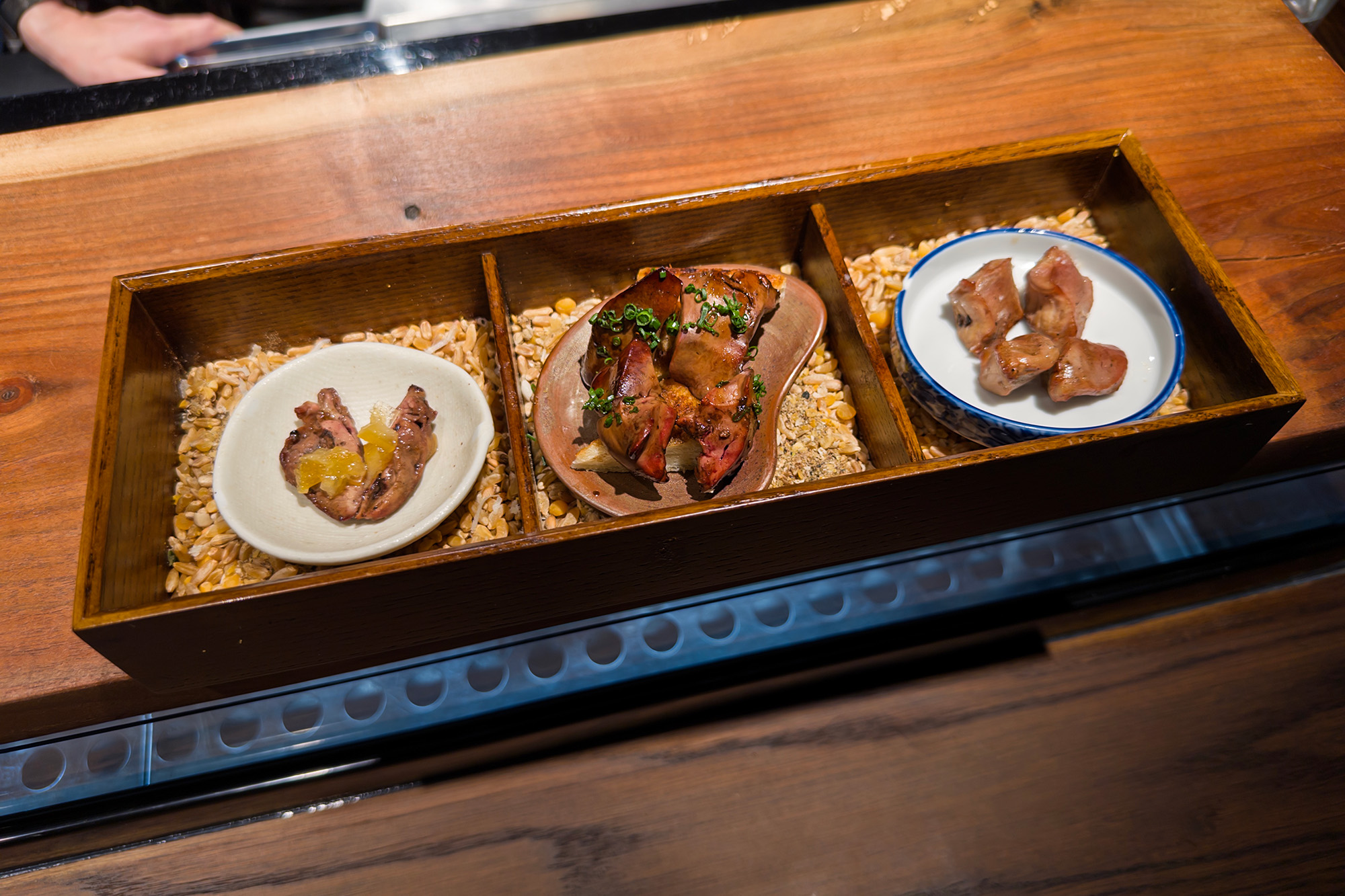 A trio of chicken offal: the gizzard, the liver and the heart. (Luke Tsai/KQED)
And even though TBD is a more casual restaurant, Cleary is still pushing into new frontiers of yakitori technique. For instance, the izakaya is one of the very few yakitori specialists that forgoes the skewers themselves — a first for Cleary. At TBD, the various cuts of grilled chicken are instead presented in an elegant wooden box. One box comes with a trio of different cuts of crispy chicken skin, topped variously with ikura and pickled mullet roe. Another plate features an egg-yolk-topped chicken meatball served between two rice-flour wafer buns, like a Japanese ice cream sandwich.
“I wanted something that looks a bit better and more unique, I guess,” Cleary says. “I wanted my own thing.”
The other big change is that Cleary is now one of the only yakitori chefs in the U.S. who’s dry-aging all of his chicken — a logical area of experimentation given that Lee’s sushi restaurants are known for their innovation in dry-aging raw fish; they’ve already got several of the aging cabinets on site.
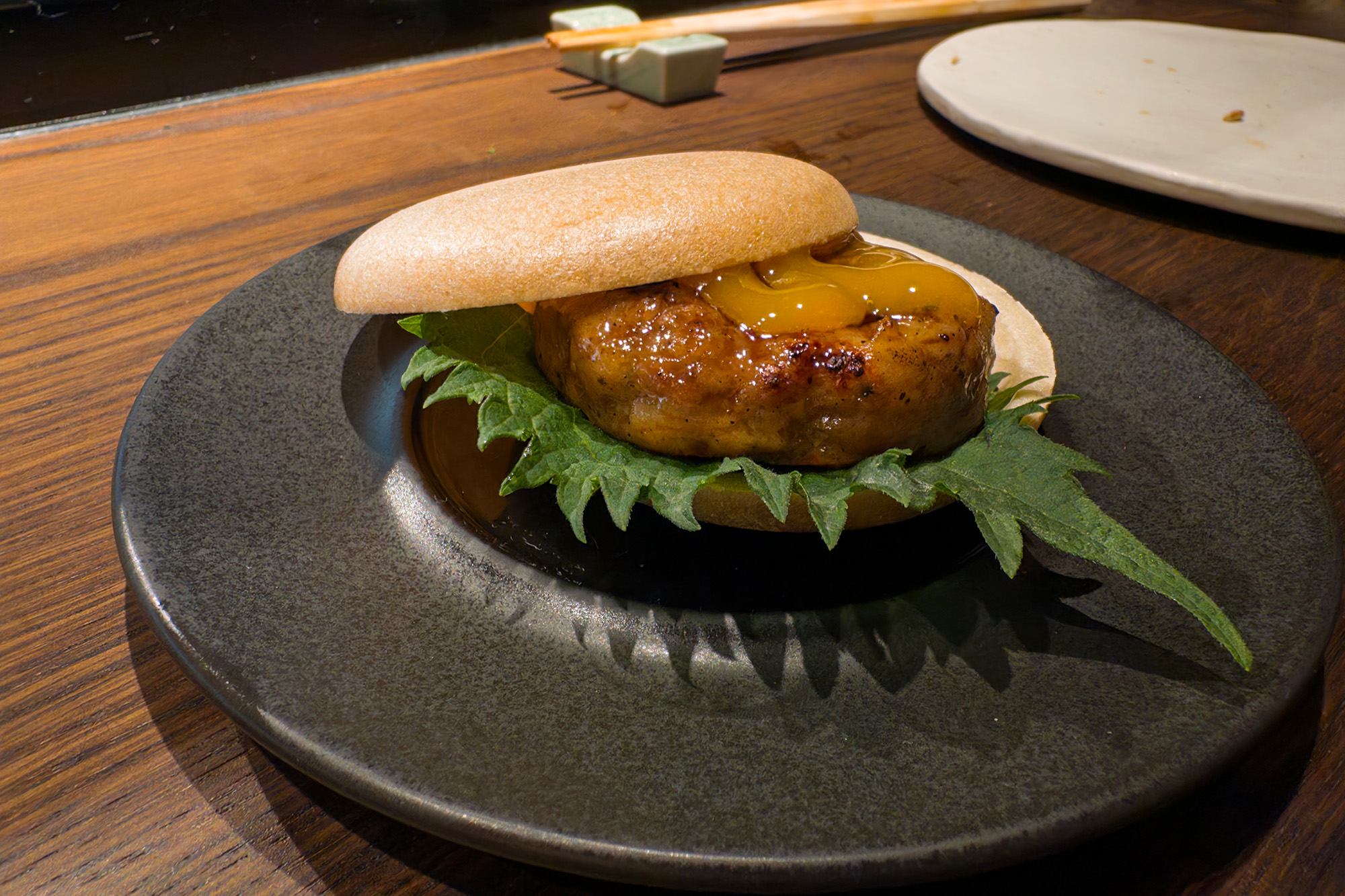 The tsukune (chicken meatball) comes between two monaka wafers, reminiscent of a Japanese ice cream sandwichj. (Luke Tsai/KQED)
Up until this point, however, dry-aging chicken hasn’t really been a thing in the yakitori world. According to Cleary, the results have been incredible: “It makes the skin really, really crispy and concentrates the flavor of the meat a lot more.”