
While the invisible hand of the market tirelessly goes about its business of flipping the bird at the beleaguered RSN model, the rise of streaming has ensured that local sports consumption remains as massive as it was during pay-TV’s heyday.
Per Nielsen Station Index data, in-market NHL deliveries grew 15% during the 2025-26 season, an uptick that was powered by a 51% gain in unique streamers per game. Among the teams posting the biggest year-over-year audience growth were major-market players such as the New York Islanders, Anaheim Ducks and Chicago Blackhawks, which rep a collective aggregation of 17.5 million TV households—or 13.7% of the U.S. base.
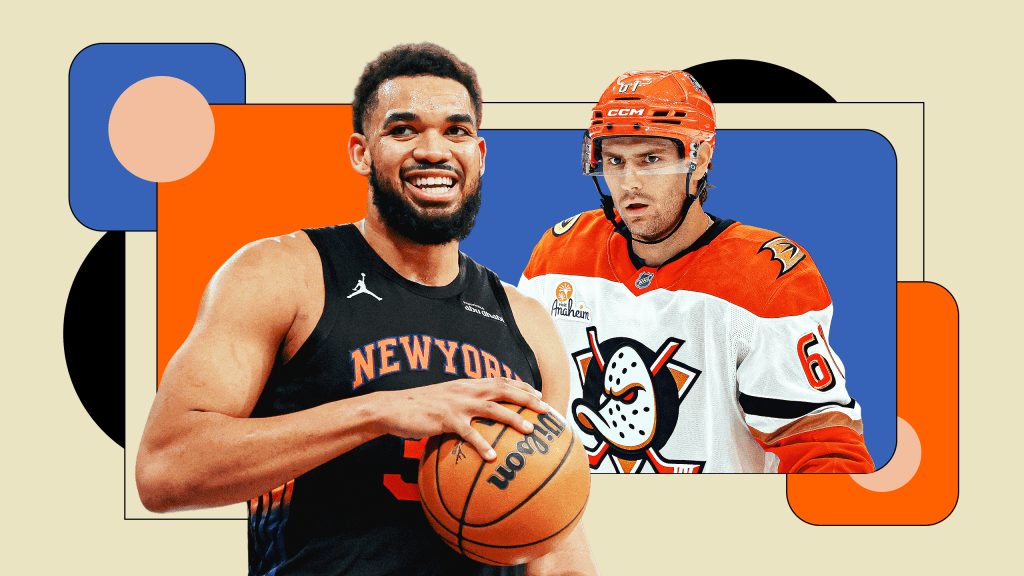
Despite missing the playoffs for the sixth straight campaign, the Blackhawks closed out the regular season as the NHL’s top local gainer, followed by the Ducks. Anaheim’s expanded in-market deliveries proved that last year’s big ratings boost (+75%) was no fluke, and its ongoing audience growth may be interpreted as an endorsement of the hybrid TV/streaming scheme the team adopted after its contract with Bally Sports West expired in 2024.
One of the first NHL teams to embrace a mashup of local over-the-air TV (by way of Fox Television Stations’ KCOP) and streaming (via the free, ad-supported platform Victory+), the Ducks appear to have navigated the post-RSN landscape without losing ground among their home fan base.
The Blackhawks’ position as the NHL’s top in-market gainer, meanwhile, marks a stark contrast compared to last season, when the team saw 78% of its local deliveries fall off during its inaugural term on Chicago Sports Net (CHSN). The swing from biggest loser to biggest winner was facilitated last summer when Comcast reached a carriage deal with CHSN, which is co-owned by the Blackhawks and Jerry Reinsdorf’s Bulls (NBA) and White Sox (MLB).
Comcast assigned CHSN to its premium “Ultimate TV” tier, which costs up to $135 per month before equipment rental fees and taxes are factored into the billing calculus. As prohibitive as the price of entry may seem on paper, the Blackhawks’ single-season jump from worst to first underscores the priority Chicagoland places on its hometown teams. (The Bulls this season posted the NBA’s fourth-biggest local audience gains.)
Other NHL gainers include the Buffalo Sabres, Boston Bruins, Philadelphia Flyers and Pittsburgh Penguins. Of the dozen franchises that enjoyed year-over-year growth, only the Detroit Red Wings and Minnesota Wild are on the lookout for a new local distribution platform, as both teams were affiliated with one of the Bally Sports-branded RSNs owned by the soon-to-be-defunct Main Street Sports Group. (Among the NHL’s five biggest backsliders in 2025-26, two clubs—the St. Louis Blues and Los Angeles Kings—lost ground while under the stewardship of a Bally Sports RSN.)
While the NBA’s local deliveries were effectively flat versus 2024-25, stasis is the new growth. (In a time of hyper-accelerated cord-cutting, not losing any ground counts as a victory, considering that 12% of the NBA’s in-market audience fell off last season.) Unfortunately, there’s no telling when the legacy bundle will stop shedding customers. According to projections filed with a U.S. bankruptcy court in late 2024, Main Street precursor Diamond fully expected to lose another 26% of its TV subscribers by 2027, with a projected shrinkage reducing its linear base from 22.6 million customers to 16.7 million. The same document eyed a 47% plummet in Diamond’s linear distribution revenues, with fees from local operators set to plunge from $1.48 billion in 2024 to $776 million just three years later.
Among the biggest NBA gainers were the Denver Nuggets, Detroit Pistons, Philadelphia 76ers, Phoenix Suns and New York Knicks. Led by Cade Cunningham, who earned his second straight All-Star nod and powered the team to an Eastern Conference-best 60-22 record, the Pistons this season also notched the NBA’s biggest streaming growth.
As was the case with the NHL, alternative platforms did a lot of heavy lifting for the NBA this season, as the league saw a 43% uptick in unique streamers per game. All told, average minutes streamed increased 37% versus 2024-25, as hoops fans who’ve quit the pay-TV habit have remained locked in with their hometown faves via digital pathways. Streaming now accounts for 15% of the NBA’s local deliveries, up from a 5% contribution in 2023-24.
The steady uptick on the digital side of the ledger has helped keep local sports viewership on an even keel despite the ongoing disruption of the legacy TV model.
“We’re going to be seeing a great deal of movement and experimentation as Main Street winds down their business,” said Craig Sloan, CEO of Playfly Sports, during a recent Zoom interview. “There’s a lot of upheaval in the space, but when you look back at the last 10 years of local audience deliveries, live sports haven’t lost a step.”
The ongoing dominance of hometown sportscasts, which regularly trounce the competition on the local broadcast affiliates, suggests that fans will let almost nothing come between them and their beloved teams. “What we’re seeing is, fans are showing up no matter where their teams wind up landing,” Sloan said. “If you’re a Yankees fan, there is no substitute for Michael Kay and Paul O’Neill calling games on YES. If you’re a Red Sox fan, NESN is home. And so on and so on, no matter where you are or which team you’re rooting for.”
While the dissolution of the Main Street RSNs means that some 20 NBA and NHL teams are now on the lookout for new in-market distribution platforms, Playfly continues to enjoy an unrivaled position of influence within local sports. The company manages everything from ad sales and sponsorship deals to marketing, and despite all the entropy in the RSN space, Playfly’s role hasn’t diminished in the slightest.
“There are 83 teams in the U.S. that have been in our portfolio since 2007, and we still have all 83 teams,” Sloan said. “We do have a bunch that need to land in new homes, but we’ve had verbal commitments from those teams.”
Sloan allows that the next big test for local sports arrives as the 2026 FIFA World Cup descends upon North American for a 39-day residency. “I can tell you that we had almost zero degradation to our NBA audience for the 17 days of the Winter Olympics,” Sloan said. “So while NBC absolutely killed their broadcast competition, our NBA numbers really held up in the face of all that coverage.”
He foresees a similar dynamic emerging this summer. “The World Cup lands in everyone’s backyard right in the middle of baseball season, so we’ll see if we can hold up under that onslaught,” Sloan said. “But our contention has always been the same: Nothing gets in the way of local sports consumption. When the home-team audience stays as strong as ever while one network is changing people’s viewing habits for two weeks and wiping out the entirety of its national TV competition, you know you’re onto something good. And that something is truly unique to us.”