
Taking your seat at Zellerbach Hall, giant fish heads, headless men, life-size puppets and nearly naked human caterpillar hybrids probably isn’t what you’d expect.
Swedish choreographer Alexander Ekman draws directly from Scandinavian folklore and Midsummer traditions for Joffrey Ballet’s production of “A Midsummer Night’s Dream.” If you crave a mind-bending artistic experience that leaves you both squeamish and in awe, or traveling to a world toeing the line between the beautiful and grotesque, this is the production you’re missing.
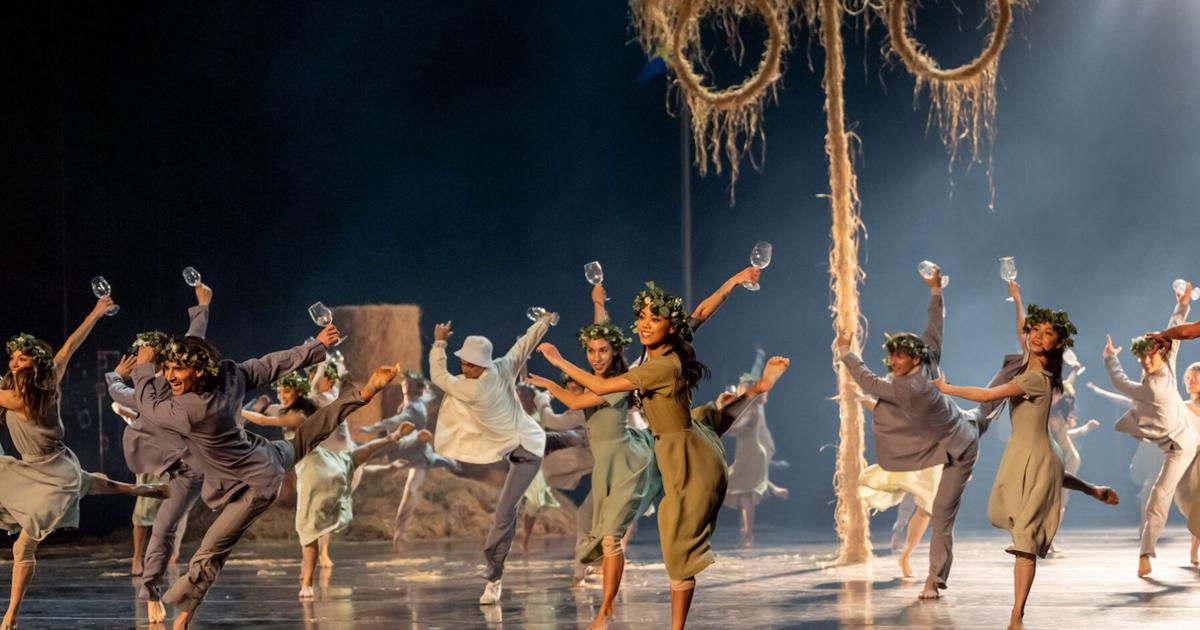
Act 1 of the ballet follows a Swedish community through its celebration of Midsummer, or the summer solstice, as a symbolic sun slowly moves across the stage. Come Act 2, the endless Midsummer sun vanishes and night falls, introducing a surreal universe of tension, carnality and even nightmares as the veil between dream and reality becomes ambiguous.
Ballet pushes the human body to extremes, and Ekman approaches this unearthly and superhuman aspect of the art form directly in his choreography. Ekman is a master of duality; the curtain lifts to an ethereal and harmonious ensemble of dancers bathed in gossamer sunlight, and the hopefulness and vibrancy of their movement is contagious. As the ballet progresses, Ekman manipulates each dancer’s individual steps to accentuate the twisted nature of balletic art, embodying the midsummer fracturing of reality. Diverging from ballet’s graceful traditions, Eckman uses leg extensions, a feigned defiance of gravity and the reverberation of bourrées to evoke nightmarish, alien-like scenes.
The use of negative space and resistance between bodily interaction left spectators in breathless anticipation. In Nordic tradition, passion runs high beneath the endless Midsummer sun, according to UC Berkeley professor Linda Rugg in a UC Berkeley News article. When depicting lovers in the first act, Ekman builds simultaneous tension and stability by emphasizing the space between the palms and bodies of dancers. In the second act, when night falls, and reality turns fluid, resistance melts away as dancers are pressed together, limbs melding and twisting together.
The shock value of this production of “A Midsummer Night’s Dream” is unmatched. The cast is completely engaged and adept at toying with audience discomfort, crawling through aisles and, even using vocals throughout the show, breaking traditional divides between performers and the audience in ballet productions. If you’re lucky enough to sit in the front rows, you may just find yourself face to face with a wild-eyed dancer or deafened by screams on stage. The show thrives off audience reaction, a torrent of the bizarre ‘never let them know your next move’ form of ballet.
The truly mind-bending aspect of the performance was the manic use of props and costuming, which left the audience both unable to look away and equally unable to digest what they’re witnessing. The production involves a surprising amount of fish — from fish raining from the rafters, giant fish heads, to the corps of dancers manically seizing like fish out of water and smacking their lips — its presence is unmistakable. Other props, from hay bales to puppets, to mobile barbecues, raise audience eyebrows to say the least.
Transcending the impressive, chaotic use of thematic props, the set design remained the lifeblood of the production. The designers and tech crew truly transport the audience from warm, vibrant scenes of a hay field in Act 1 to the alien, dream-like realities of Act 2. The effects throughout were outstanding, allowing the audience to bear witness to rainstorms and anti-gravity landscapes. The manipulation of light to create truly disturbing scenes in Act 2 merits a watch on its own.
The Joffrey Ballet’s production brings vibrant Scandinavian folklore to life before audiences, truly innovating ballet to bend minds and expectations. The experience is unlike any other, and seekers of art that push the limits of experience are sure to devour the cast’s performance. See Ekman’s “A Midsummer Night’s Dream,” and chances are, you’ll leave the theater mouth agape like a fish.