
As I cruised down Highway 101 heading south past San Jose, the gray Silicon Valley office parks transitioned into green and brown agricultural landscapes. It’s here that I arrived in the Coyote Valley, the narrowest stretch between the Santa Cruz Mountains and the Diablo Range. This corridor hosts thousands of acres of farms, orchards and ranches. It’s also a biodiversity hotspot, with 1.1 million acres of wildlife habitat sandwiched between the two mountain ranges.
My destination for the day was the 1,859-acre Máyyan Ooyákma – Coyote Ridge Open Space Preserve, which opened to the public in August 2023. “Máyyan Ooyákma” means “Coyote Ridge” in the Muwekma Ohlone language — the tribe helped rename the preserve as part of an effort to promote awareness, justice and equity for the displacement of these people from the land.
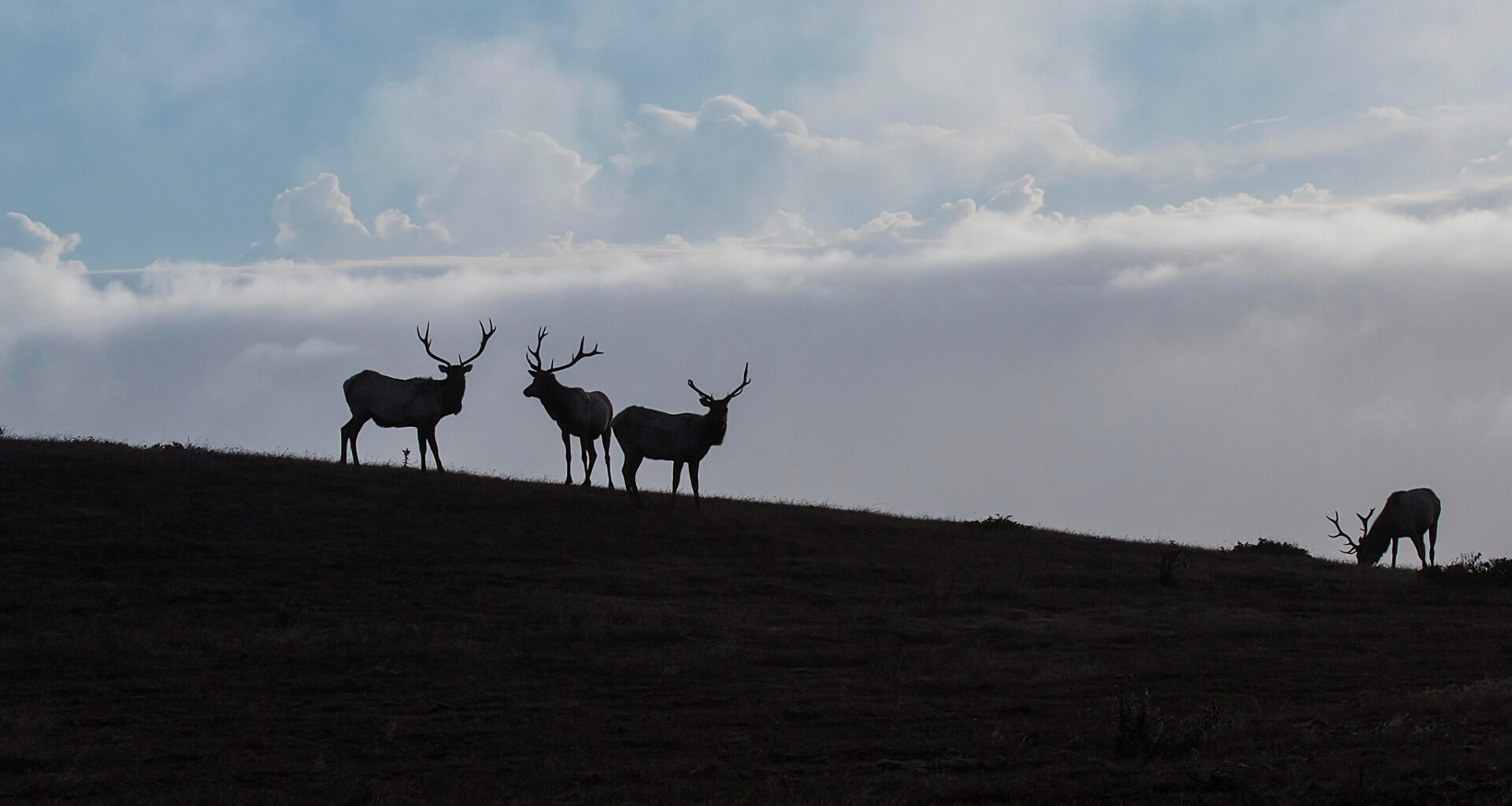
I wanted to come here for three reasons. First, it’s one of the few public places where you can experience the beauty of the Coyote Valley for yourself. The preserve’s serpentine grasslands are also one of the few places where the federally threatened Bay checkerspot butterfly thrives. And it’s a less-crowded spot than Point Reyes National Seashore for seeing tule elk in their natural habitat. There’s even a California Department of Fish and Wildlife collaring and tracking initiative here to understand migration patterns and population fluctuations of these sometimes elusive animals.
Tracking the elk is important.
Tule elk were nearly hunted to extinction in the mid-1800s, and DNA evidence shows that there were only between two and four closely-related individuals remaining by early 1870s. There are some 5,700 tule elk across California today. In 2019, 100 of them were counted in Máyyan Ooyákma – Coyote Ridge, and a larger population is thought to live to the west of the preserve. This first collaring initiative, which started with 25 elk and set to last three years (until the collar batteries run out), will shed light on the size of the population, how many calves are being born, and whether the overall population is declining, staying stagnant or growing.
After checking out some maps and getting some tips from Charlotte Graham, the spokesperson for the Santa Clara Open Space Authority, I decided to hike a 5-mile loop of the preserve’s habitat protection area. I snagged my “Butterfly Pass” (a free permit) online and made sure to visit shoe/tire cleaning stations at the preserve to help protect the sensitive habitat.
Early into the hike, I realized the Serpentine Spring Trail wasn’t joking around, packing nearly 900 feet of climbing into just 1.3 miles. I was happy to take a few breaks on my ascent to enjoy panoramic views of the Coyote Valley. As I reached the Tule Elk Trail, I was thrilled to see that the trail flattened out and that I was now surrounded by tall grasslands. I finished my hike on the Bay Checkerspot Trail, where I headed downhill for two and a half miles, taking in more views of the Coyote Valley.
I didn’t see any elk on this visit, but I did see several butterflies and impressive wildflower displays, including poppies, mariposa lilies and yarrow. Next time I come here, I’m going to arrive earlier in the day to maximize my chances of seeing elk. I’ll also try to visit in cooler months as those are good for elk spotting, too. No matter what, it was a good day spent exploring a new area close to home.
Alexandra Kenin runs a hiking tour company called Urban Hiker SF and has authored two hiking guidebooks for the Bay Area: “Urban Trails: San Francisco” and “Urban Trails: East Bay.”