
Why this matters
Facing a tight budget year, the county’s waste disposal fee is far lower than what some other counties across the state charge. Raising it, advocates say, could help fund programs aimed at reducing landfill waste.
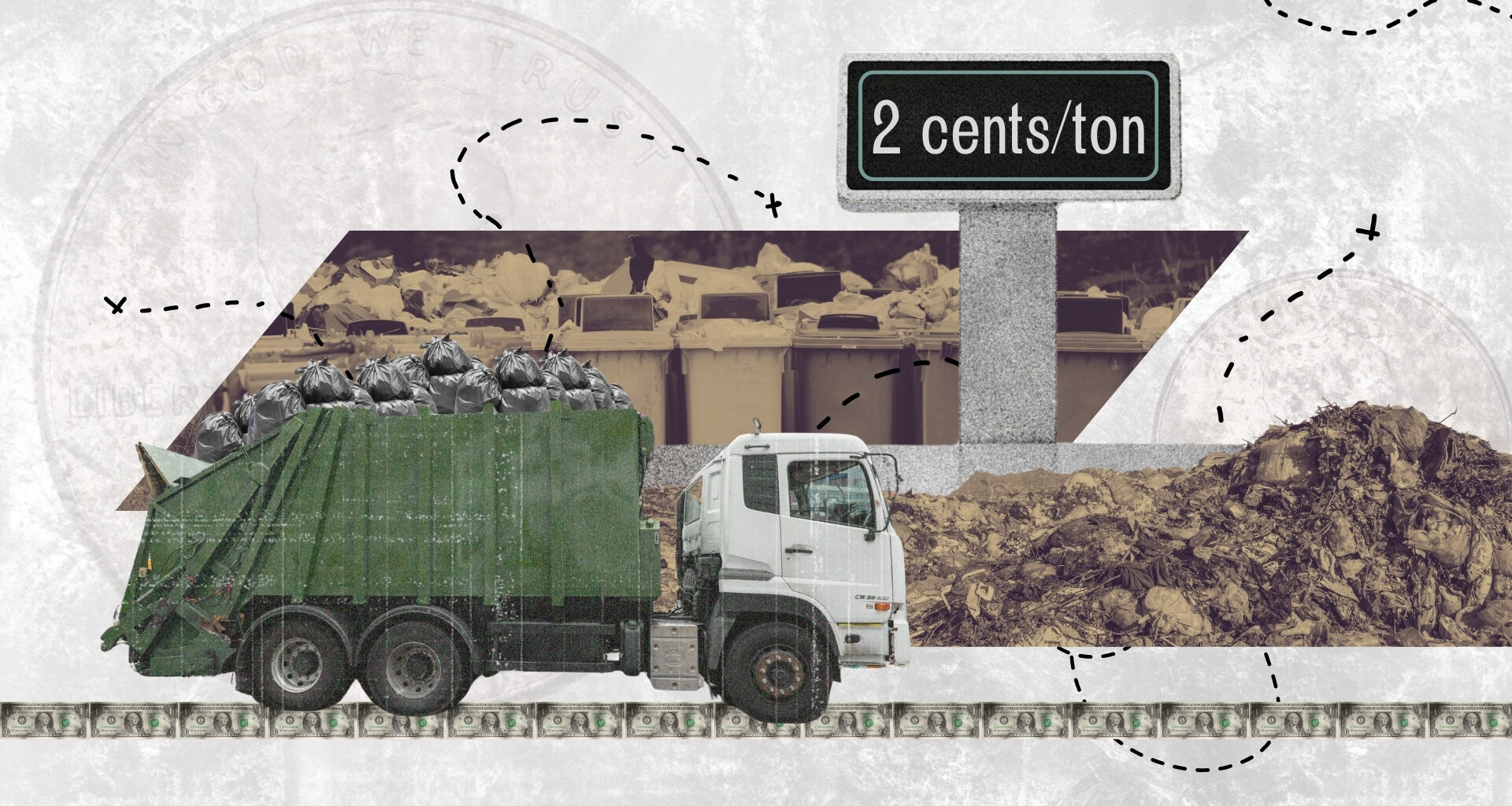
San Diego County charges local landfills 2 cents for each ton of waste they process. And that fee hasn’t changed in 28 years.
Now, seeing an opportunity to raise money for environmental projects, local environmentalists are hoping the county will raise it.
San Diego County’s fee is “artificially low,” Solana Center for Environmental Innovation Executive Director Jessica Toth told the County Board of Supervisors in August. She said increasing the fee would “go a long way” towards several environmental goals, including tackling textile waste.
Under state law, counties have the authority to set waste disposal fees, but San Diego County hasn’t changed its fee since 1997. Last year that fee brought in just under $70,000. The money generated primarily pays for the administrative costs of overseeing the landfills, said Donna Durckel, a spokesperson for the county’s land use and environment group.
Counties around the state have set their fee dollars higher than San Diego and use the money to fund environmental programs and outreach. Local environmentalists say San Diego County should do the same.
Toth, members of the Sierra Club and other activists are asking the county to raise the waste disposal fees to $1.02 per ton. That would bring in around $3.4 million annually the county could use to comply with state environmental laws at a time when the county faces $300 million in federal cuts.
“It’s really a win-win for the county,” Ron Askeland, chair of the Sierra Club Conservation Committee, told supervisors.
From the Documenters
This story came by way of a news tip by Brisa Karow, a Documenter in inewsource’s San Diego Documenters program, which trains and pays community members to document what happens at public meetings.
Board of Supervisors Chair Terra Lawson-Remer seemed receptive to the group’s proposal at the August meeting and directed staff to look into what the county could do.
“Is there some kind of program that would be county wide that could fill in the gaps that the cities have?” she asked.
Durckel said staff met in September with environmentalists. Askeland, who attended that meeting with the county, told inewsource he’s hopeful the county will make the change.
Laura Anthony, president of Zero Waste San Diego, encouraged supervisors to increase the fee to help fund programs to educate the public on how to reduce their waste and stop throwing “valuable resources” that could be reused into the landfill. ““Disposal is the most damaging and costly option for our future,” she said. “The fee should reflect the reality.”
Supervisors Lawson-Remer, Jim Desmond and Joel Anderson did not respond to requests for comment.
Following state law
In 1989, California passed a law requiring cities and counties to reduce how much waste goes to landfills by 50% and create longterm waste management plans, Durckel said.
The county later set its waste disposal fee at 2 cents per ton – a level that would “maintain only the basic, legally required planning tasks, leaving implementation to local jurisdictions,” Durkel said, adding, “The fee has not been adjusted since inception as it has been adequate to date to fulfill these required functions.”
The county does not own any of the landfills, but instead collects the fee from landfill operator inside county limits.
One reason to consider raising the “nominal” fee is to keep pace with inflation, said Sophia Jones, associate director for policy and advocacy at the Institute for Local Self-Reliance, a D.C.-based research organization focused on local initiatives for people and the planet.
“A lot of the times these fees, speaking generally, are set at a specific rate and aren’t adjusted even decades down the line. That’s where inflation and costs of operating and things like that factor in,” Jones told inewsource.
Those pushing a fee increase say the additional money raised would help the county comply with another environmental law passed in 2016. That law requires counties and cities to reduce organic waste disposal in landfills. Counties have struggled to comply with the law, according to a 2023 survey by the California State Association of Counties. In the survey, 56% of responding counties said they had to increase rates to cover the costs of compliance. Close to two-thirds of counties said they anticipated needing to increase rates within the next three years, the survey said.
California counties raising fees
Other counties with higher waste disposal fees told inewsource the waste fees have helped them meet environmental goals.
Three counties in the Bay Area also stick out: San Mateo County has a $9.89 per ton fee on all waste disposed of at landfills. In Santa Clara County, the fee is $4.10. In Alameda County, it’s $4.34.
San Mateo adopted its fee in 2009, according to Gordon Tong, the county’s waste reduction program manager. Tong said that ever since the fee increased, the state and the county have made “a lot of good strides” towards environmental efforts. San Mateo County uses that money for recycling, composting and reducing waste, he said.
Santa Clara County has had its fee since 2010. It is imposed on each ton of waste landfilled or incinerated within the county, said county spokesperson Carolyn Lê The Santa Clara Board of Supervisors approved reauthorizing collection of the fee in June 2024.
“It’s a very small fee, and it goes a long way towards protecting our community,” said Billy Puk, Santa Clara’s household hazardous waste program manager.
Within counties, there are also a range of different fees for different types of waste, and cities implement their own fees for landfills in their jurisdictions.
The issue has not been taken up on a Board of Supervisors agenda since the August meeting, and Lawson-Remer did not answer whether it would be added to a future agenda.
Type of Content
News: Based on facts, either observed and verified directly by the reporter, or reported and verified from knowledgeable sources.