
Note: I am hiking the PCT while working full-time remotely. I work Monday through Thursday from my RV, and trail run some Monday-Thursday nights and hike Friday through Sunday before returning to basecamp. It’s a balance between trail miles, logistics, and recovery—more on how it works here: https://thetrek.co/pacific-crest-trail/my-plan-to-hike-the-pct.
 Section D was the first time I felt like I was actually getting better at this.
Not just surviving the trail, but adapting to it.
The mistakes didn’t stop, but the consequences started to feel more manageable. Recovery was faster. Decisions were more intentional. And for the first time, I could see the gap between where I started and where I am now.
Section Snapshot
Miles: 342.0 → 453.8
Start / End: Cajon Pass (I-15) → Agua Dulce
Conditions: Cold mornings, lingering snow at elevation, warming desert
Terrain: San Gabriel Mountains → high ridgelines → gradual descent into high desert
Style: Hybrid (RV base + trail running + overnight)
Pace: Faster and more efficient, with fewer breakdowns
RV Campgrounds: Monte Cristo Campground: Thousand Trails Soledad Canyon
Mileage
Wednesday, April 15, 2026 — Mile 242.0 to 351.8
Thursday, April 16, 2026 — Mile 351.8 to 369.4
Friday, April 17, 2026 — Mile 369.4 to 383.9
Saturday, April 18, 2026 — Mile 383.9 to 404.3
Sunday, April 19, 2026 — Mile 404.3 to 418.6
Monday, April 20, 2026 – Tuesday, April 21, 2026 — Zero Days (0 miles)
Wednesday, April 22, 2026 — Mile 418.6 to 436.0
Thursday, April 23, 2026 — Mile 436.0 to 453.8
What Defined Section D
Section D was defined by contrast.
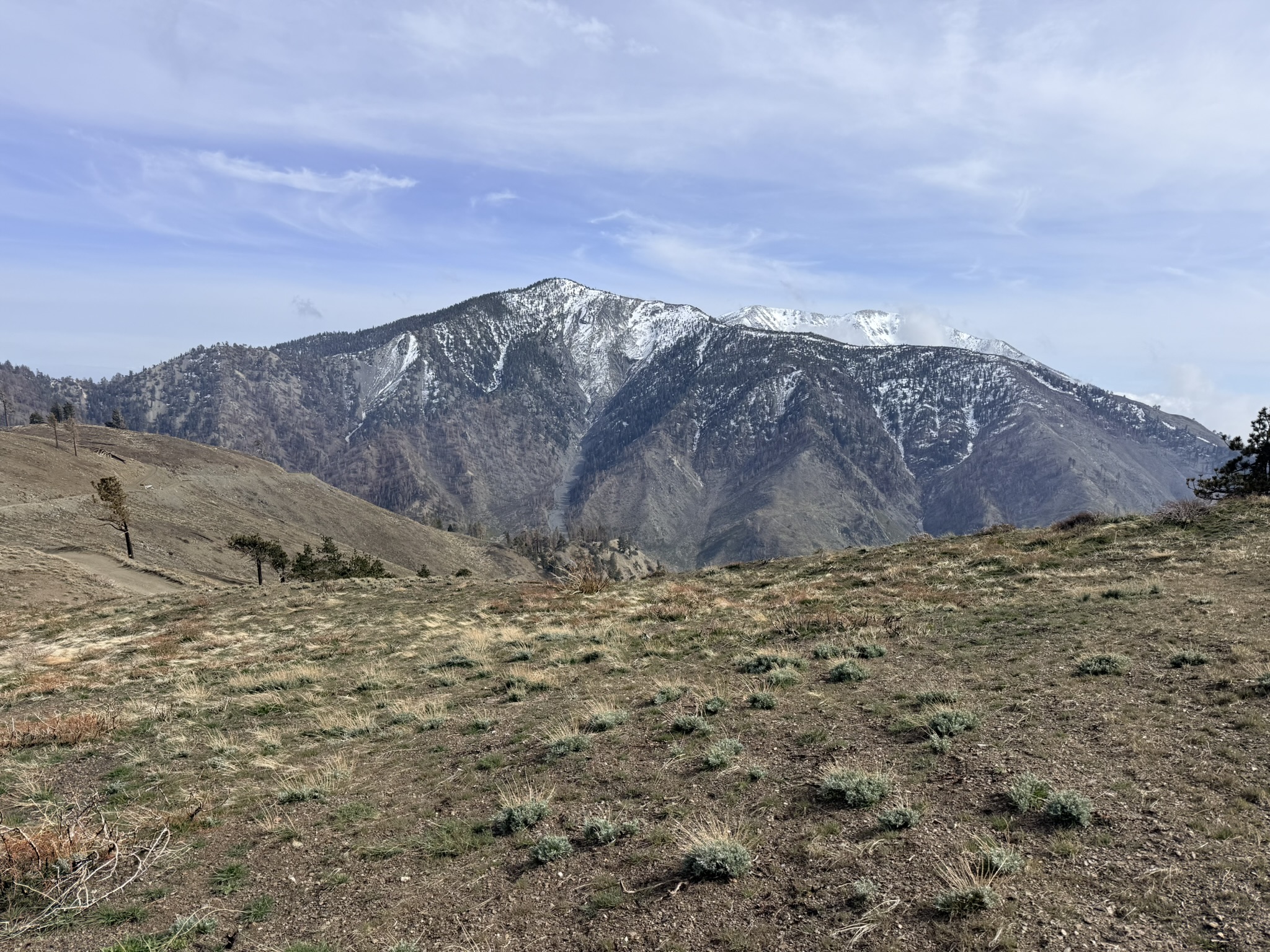
Cold mornings and snow at elevation gave way to dry, rolling desert. Steep climbs in the San Gabriels transitioned into smoother, more runnable terrain.
It’s also a section where small decisions carried more weight. Not catastrophic, but enough to shape my day.
By this point, the basics were dialed in and it was now about refinement.
Easing Back In: Solo Miles and Wrightwood
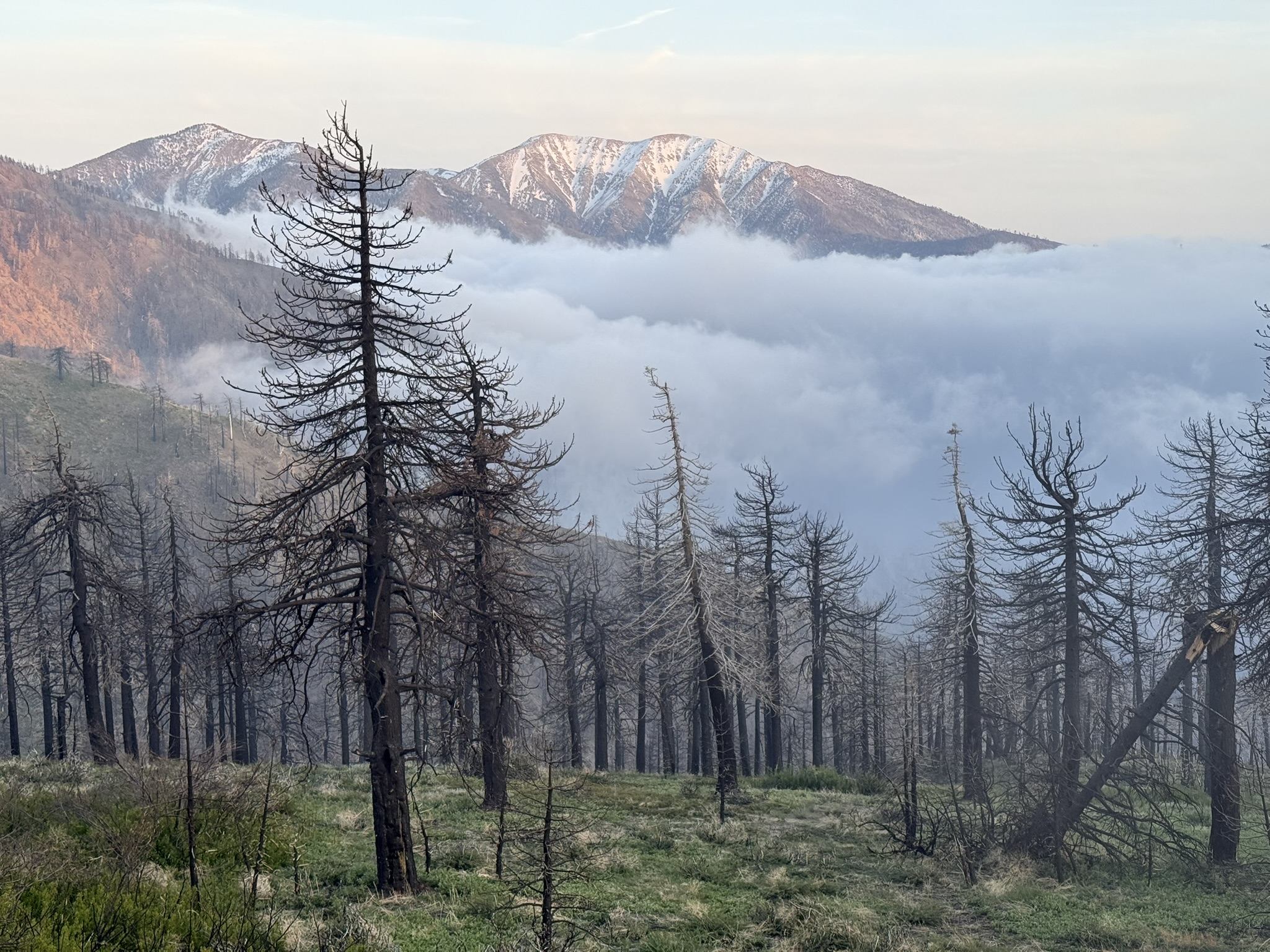 The section started with two solo days moving north out of Cajon Pass.
These miles felt steady and controlled. A mix of hiking and trail running, with terrain that allowed for both. The trail climbed gradually into the San Gabriel Mountains, and the air felt noticeably cooler than the lower desert sections behind me.
Each night, I returned to my RV instead of staying on trail.
That pattern continues to shape how I experience the PCT. I move faster during the day, recover more completely at night, and reset before heading back out.
On Thursday night, I drove into Wrightwood and stopped at a local brewery.
After a day on trail, sitting down to a hot sandwich and a beer felt like a different world entirely. It’s a strange contrast, going from remote ridgelines to a small mountain town within the span of a few hours.
Mount Baden-Powell: Small Mistakes, Real Consequences
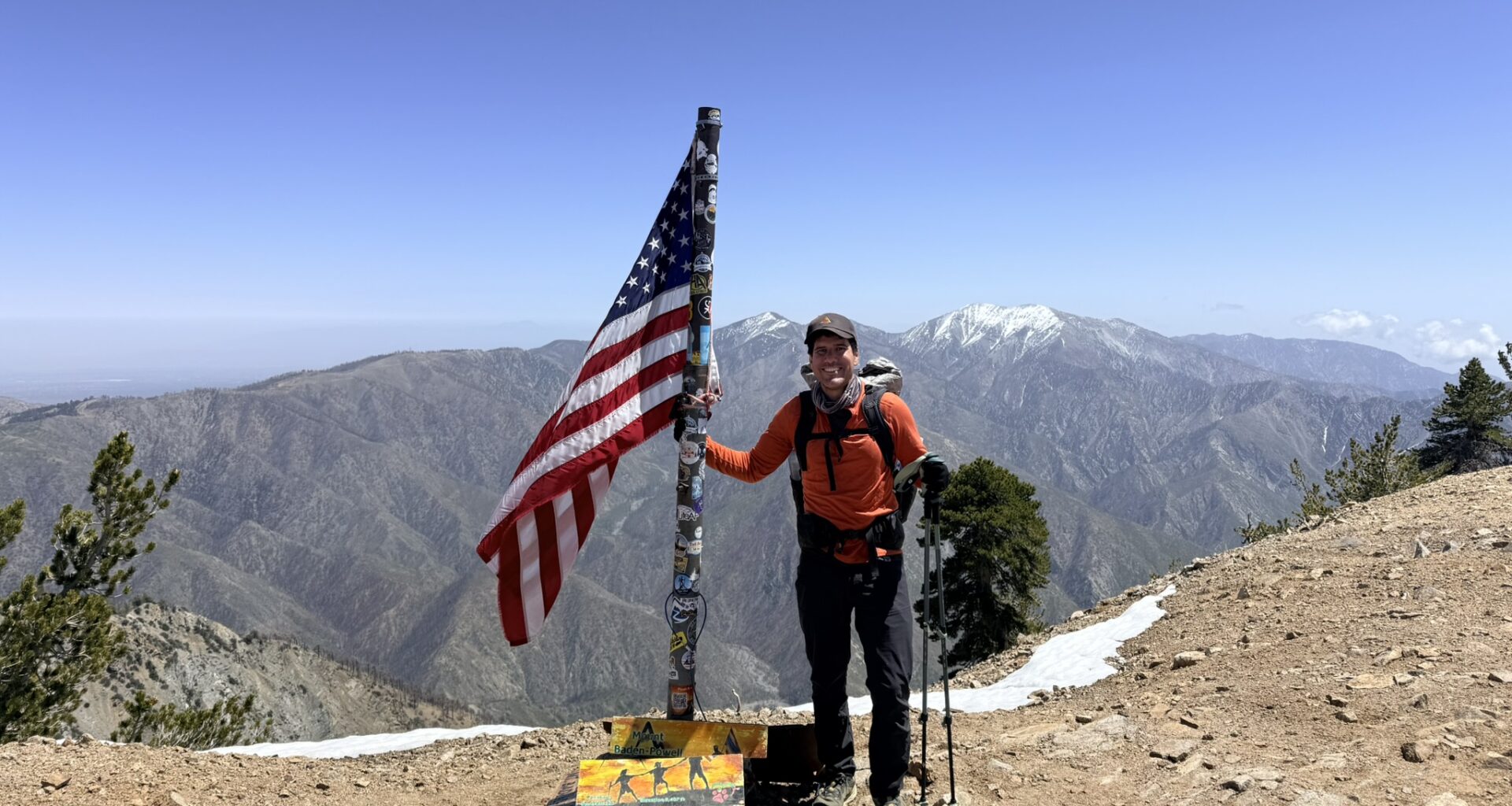
 The climb up Mount Baden-Powell was the defining moment of the section.
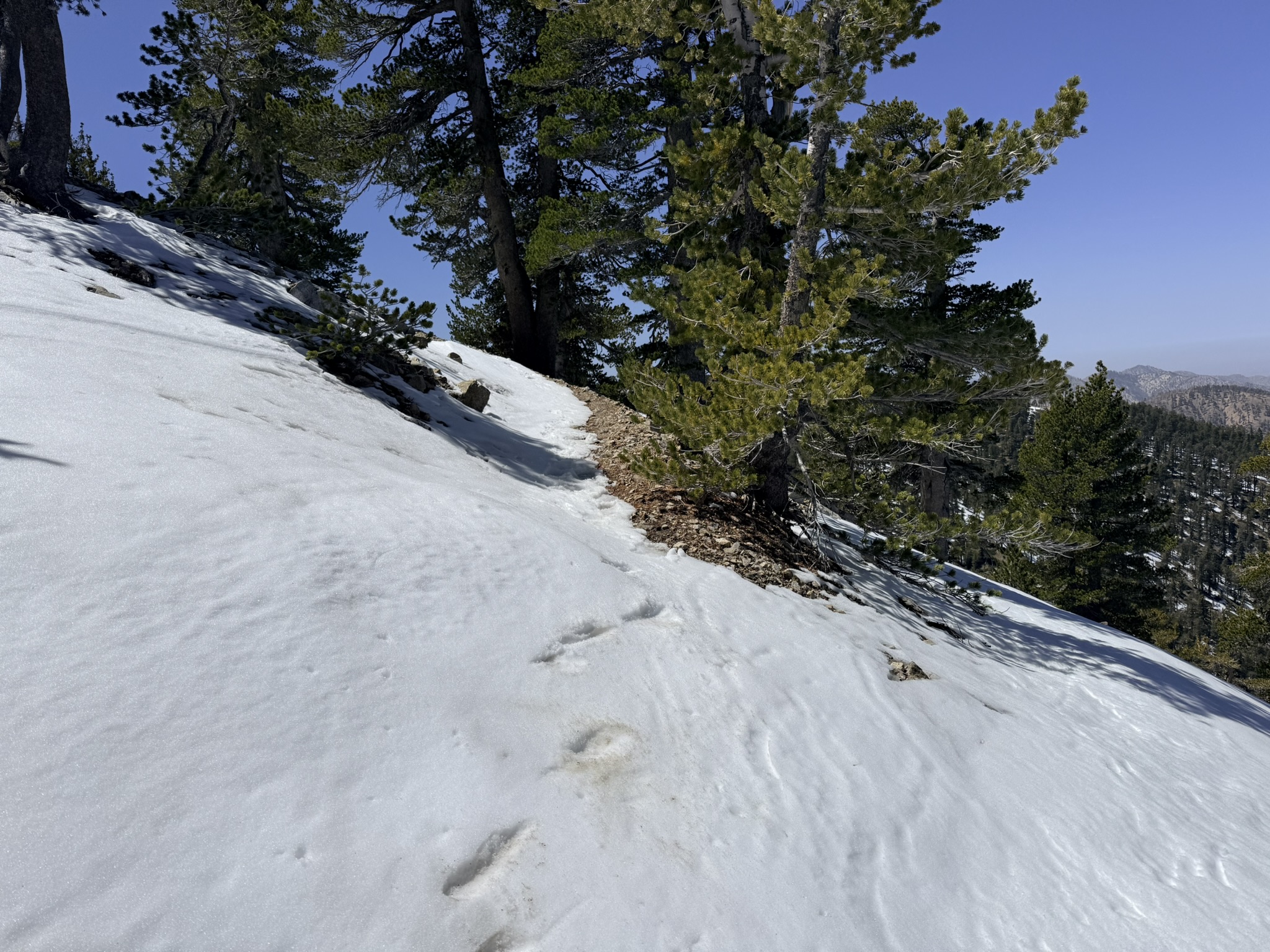
That morning started cold enough that I delayed hiking until around 9 AM. The higher elevation held onto winter conditions, and patches of snow covered sections of the trail.
Before starting, I made two decisions:
Leave my microspikes behind
Leave my stove behind
Both were mistakes.
As I climbed, snow began covering the trail more consistently. Without traction, every step required focus. Twice, I slipped.
Neither fall was serious, but both were enough to get my attention.
On exposed sections, I found myself angling my body toward the trees while crossing snowfields, thinking through what would happen if I lost footing completely. It wasn’t panic, but it wasn’t comfortable either.
That kind of mental load adds up.
Despite that, the summit delivered.
Clear views stretched across the San Gabriels and into the desert beyond. What stood out most wasn’t the scenery, but the people.
I had barely seen anyone on the trail all day, but at the summit, there were around 20 hikers. It felt disconnected from the solitude of the climb.
Even stranger, I ran into the same hiker I had met back in my first week.
This was the fourth time our paths had crossed.
The trail has a way of reshuffling people in ways that don’t seem to make sense.
That night, I stayed at Little Jimmy Campground.
There were about 30 people camped there, one of the busiest nights I’ve seen so far. The temperature dropped quickly, and it was another cold night.
But this time, something changed.
Another hiker showed me how to properly strap my quilt to my sleeping pad to eliminate drafts.
It worked.
For the first time in cold conditions, I stayed warm enough to sleep consistently, getting around 5–6 hours.
That felt like progress.
Road Walks and Mental Tradeoffs
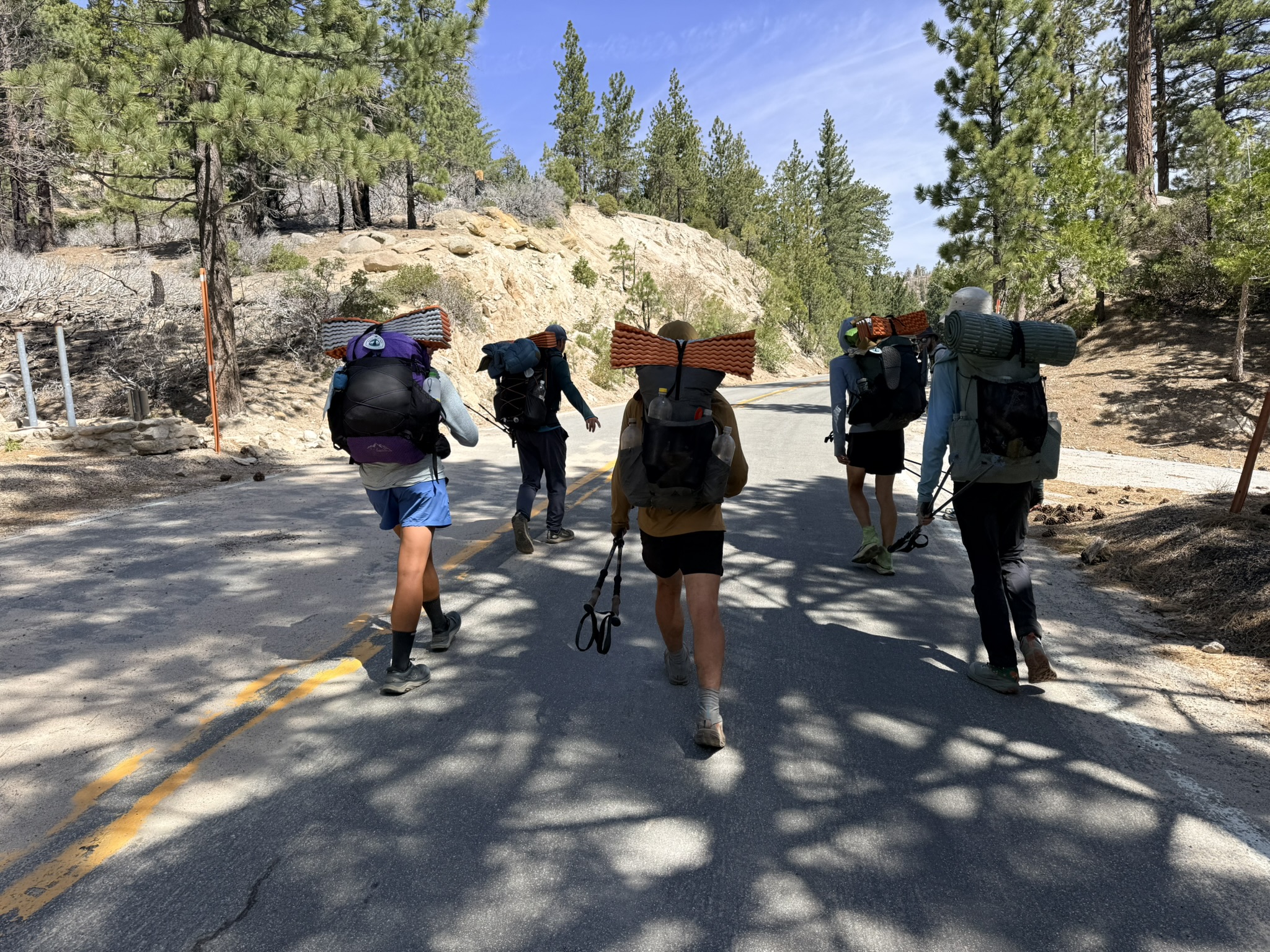 The next day introduced a different kind of challenge.
A four-mile section of trail was closed due to an endangered frog habitat, forcing a road walk.
Physically, it wasn’t difficult.
Mentally, it was.
Hard pavement replaced trail. The scenery flattened out. Every step felt repetitive, and my feet started to get sore in a way they hadn’t on dirt.
The only thing that made it manageable was people.
I ended up walking with a few other hikers along the road, and the conversation carried the miles. It was one of those reminders that sometimes the experience matters more than the terrain itself.
Efficiency vs Experience
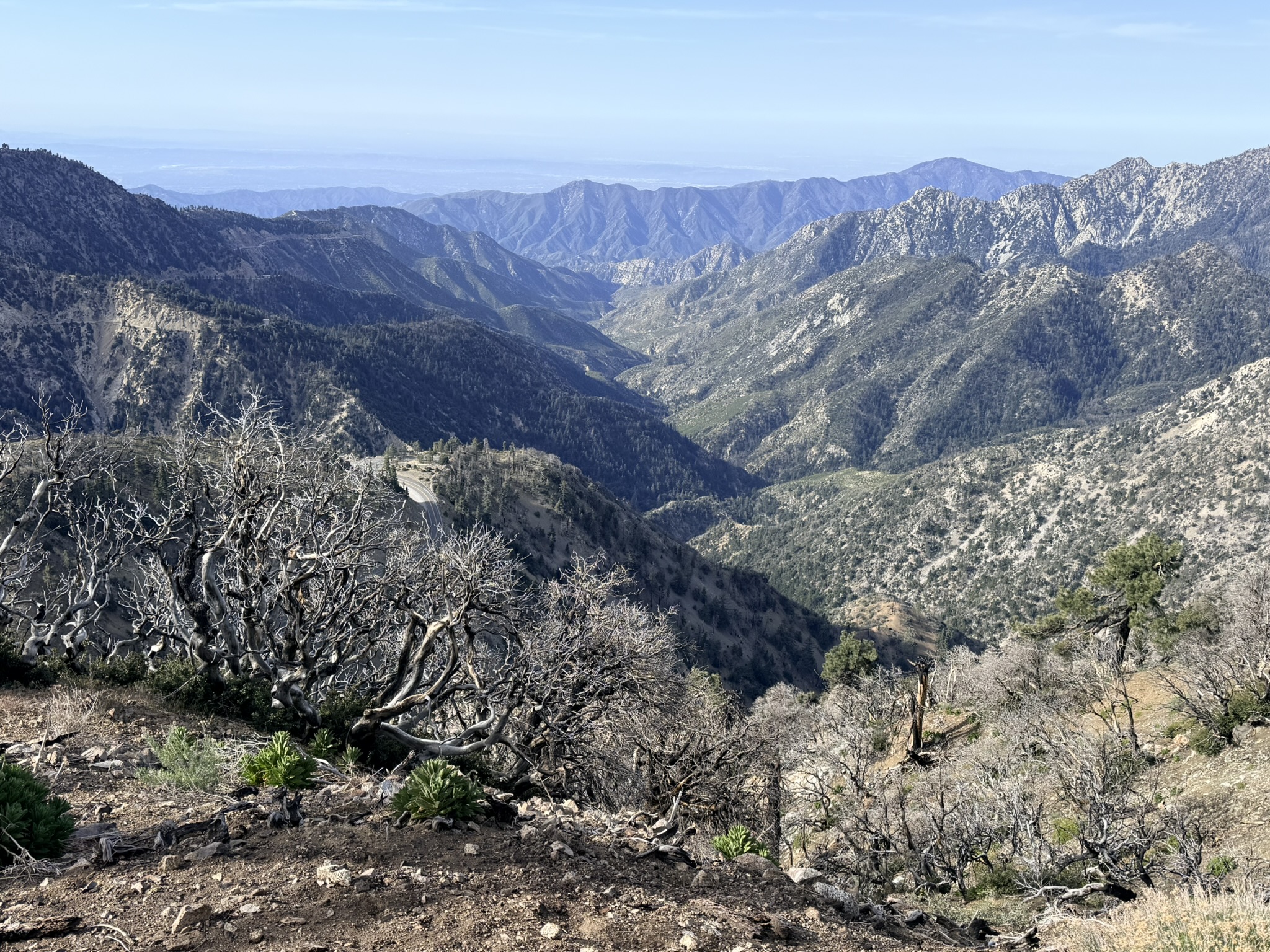 As the section continued, I returned to my hybrid approach.
Using my RV as a base, I switched back to a lighter setup and began trail running sections again. The difference was clear. I moved faster, felt stronger, and recovered better.
Miles 418 to 444 through the Angeles National Forest were a good example of this.
This stretch was smooth, exposed in parts, but far less technical than earlier sections. Long ridgelines, gradual elevation changes, and more consistent footing made it ideal for moving quickly. I was able to settle into a rhythm, run the flats and descents, and cover distance efficiently without constantly watching every step.
It felt controlled.
But it also highlighted the tradeoff.
I was spending more time passing people than hiking with them. Conversations were short, just a few words in passing before moving on. I wasn’t part of a group, and I wasn’t really building trail relationships in the same way.
At the same time, my setup is shaping that experience even more.
I’ve been day hiking a lot of these miles and returning to my RV at night, especially when temperatures drop. I don’t enjoy sleeping in a tent in cold conditions, and avoiding those nights has made the overall experience more comfortable.
But it raises a question.
Am I skipping something important?
The Sierra is coming, and cold, exposed camping won’t be optional there. By avoiding those conditions now, I might be missing the opportunity to build experience when the stakes are lower.
Right now, the system works.
But it’s becoming clear that efficiency and comfort come with a cost.
Finishing Strong
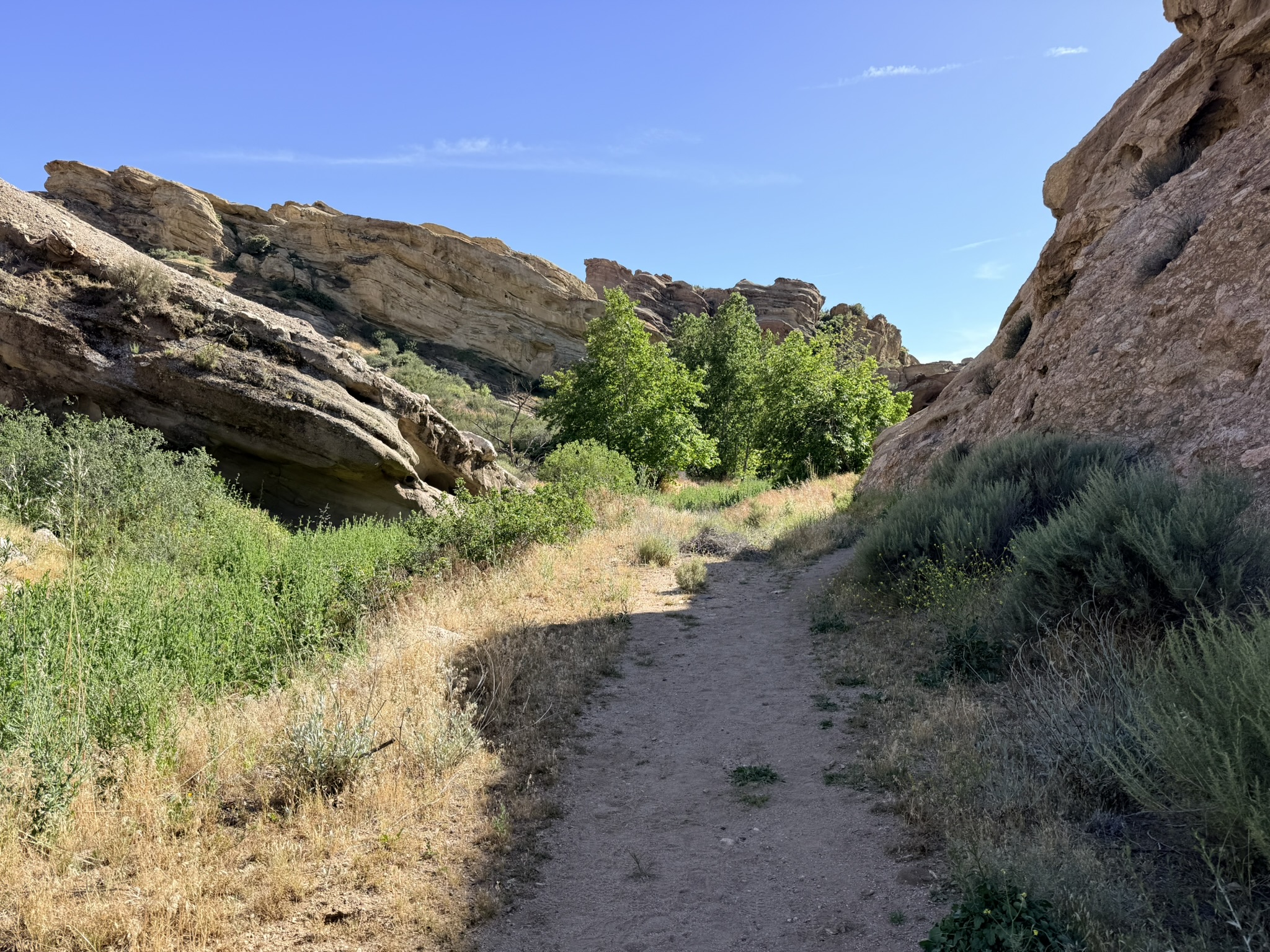 By the final stretch into Agua Dulce, something had shifted physically.
I wasn’t hurting the same way anymore.
After longer days of hiking and trail running, my body recovered faster. The same mileage that used to leave me sore now felt manageable.
That doesn’t mean it was easy.
It means I’m adapting.
The terrain began to open up into rolling hills and high desert as I approached the end of the section. The trail felt less technical, more about movement than navigation.
One of the last highlights was Vasquez Rocks Natural Area Park.
The rock formations rise sharply out of the desert, angled and jagged, looking almost unnatural against the landscape. It’s one of those places that feels familiar even if you’ve never been there.
A fitting landmark to close out the section.
Gear Decisions (Spikes & Stove)
Left behind key gear to reduce weight
Resulted in unsafe footing and cold conditions
Lesson: weight savings shouldn’t compromise safety
Snow Travel Without Traction
Increased mental stress and slowed movement
Lesson: conditions matter more than mileage goals
Road Walking Fatigue
Caused foot soreness and mental fatigue
Lesson: terrain type affects impact more than distance
Social Tradeoffs of Speed
Faster pace reduced interaction with other hikers
Lesson: efficiency changes the experience
Snow Still Exists at Elevation: Even in Southern California, higher elevations like Baden-Powell can hold snow well into spring.
Cold Nights Require Proper Setup: Temperature drops quickly. Small adjustments to sleep systems can make a significant difference.
Trail Closures Happen: Detours, including road walks, are part of the experience and need to be factored into planning.
Hybrid Approach Still Viable: Frequent road access points continue to support a work + hiking schedule, but that may change in later sections.
 Section D wasn’t about learning new systems.
It was about improving within the ones I already have.
Fewer mistakes. Better recovery. More awareness of how small decisions impact the day.
At the same time, a new tension is becoming more obvious.
Moving efficiently feels good. Covering miles quickly, reducing strain, and staying on schedule all make sense.
But there’s a tradeoff.
The faster I move, the less I experience the trail with other people.
That balance is becoming harder to ignore.
Because at some point, the question isn’t just how I finish the PCT.
It’s how I want to experience it along the way.