
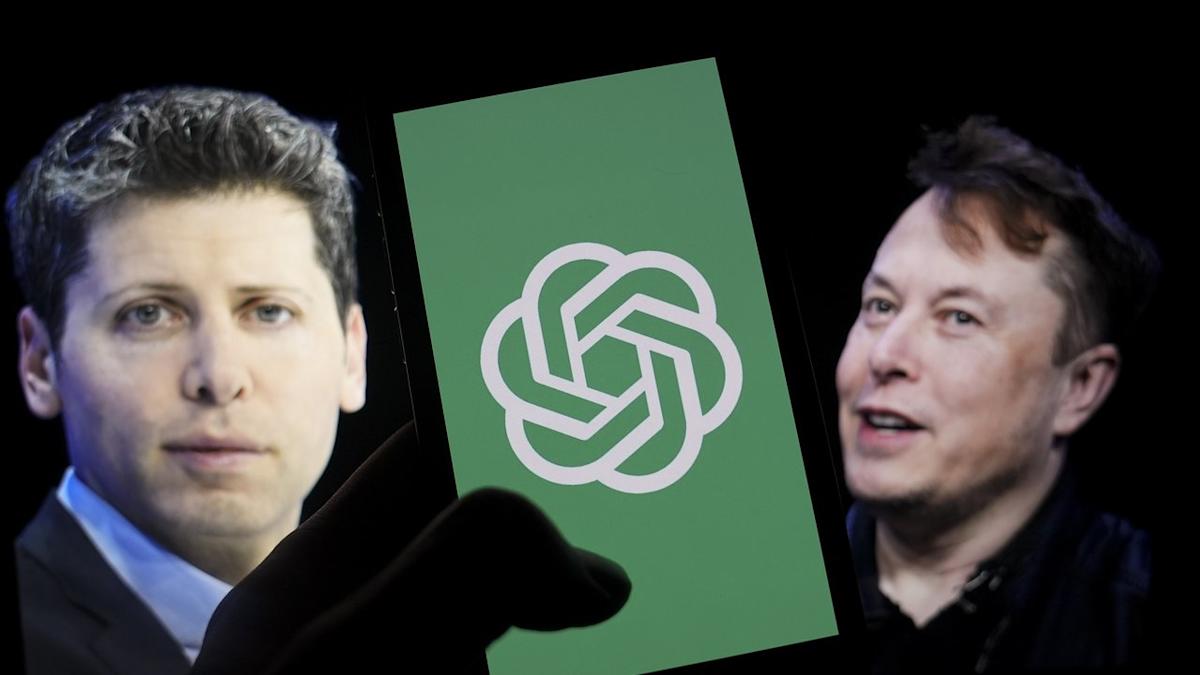
Jury selection begins Monday in federal court in Oakland, California, in a civil trial pitting Elon Musk against OpenAI CEO Sam Altman over the company’s transformation from a nonprofit research lab into a for-profit enterprise.
Opening arguments are scheduled to follow jury selection, with the full proceeding expected to run approximately four weeks. Among the witnesses scheduled to take the stand are Musk, Altman, Microsoft CEO Satya Nadella, and a number of current and former OpenAI board members. Judge Yvonne Gonzalez Rogers of the U.S. District Court for the Northern District of California is presiding.
Central to Musk’s 2024 lawsuit is his claim that Altman and other OpenAI leaders acted illegally by steering the organization — established in 2015 by Musk, Altman, and a small group of others — away from its nonprofit roots and toward a commercial structure. Musk says he was deceived into donating tens of millions of dollars under the promise that OpenAI would remain a public-interest enterprise. Court documents cited by NPR show that Musk was the largest individual donor to OpenAI during its founding period, with his contributions to the startup exceeding $44 million.
OpenAI completed a recapitalization in October that left the nonprofit with a controlling stake in its for-profit business. According to court filings cited by NPR, OpenAI puts its current worth at roughly $852 billion and reports that close to a billion people use its products each week.
Among the remedies Musk is pursuing: forcing the return of profits from the for-profit conversion to OpenAI’s charitable foundation, stripping Altman and co-founder Greg Brockman of their positions, and reversing the structural shift that created the for-profit entity. Attorneys for Musk put the potential damages figure at $134 billion in a January filing targeting both OpenAI and Microsoft, the latter of which is named as a co-defendant on the theory that it helped enable the alleged breach of charitable trust, according to CNBC. A subsequent filing amended that request to direct any disgorged funds to OpenAI’s charitable arm rather than to Musk personally.
A November 2024 complaint that initially contained 26 separate claims has been whittled down to four heading into trial: unjust enrichment, fraud, constructive fraud, and breach of charitable trust, per CNBC.
OpenAI has dismissed the litigation as a campaign rooted in jealousy and competitive spite, describing it publicly as a harassment effort aimed at slowing the company down. The company argues that Musk was aware of — and at times advocated for — the for-profit conversion, and that he pushed to fold OpenAI into Tesla before leaving the board in 2018 after a power struggle with Altman and others.
The court will empanel nine jurors for the proceeding, and the judge has determined that no alternate jurors will be added. Because the jury’s role is purely advisory, ultimate authority over the liability determination rests with Judge Gonzalez Rogers. A finding of liability would trigger a remedies phase set to open May 18, during which Judge Gonzalez Rogers — without the jury — would weigh what damages and other corrective measures are appropriate.
xAI, the artificial intelligence venture Musk started in 2023 to rival OpenAI, has since been folded into SpaceX; CNBC reported the combined company carries a $1.25 trillion valuation. Separately, OpenAI has set its sights on a possible stock market debut in the fourth quarter.