
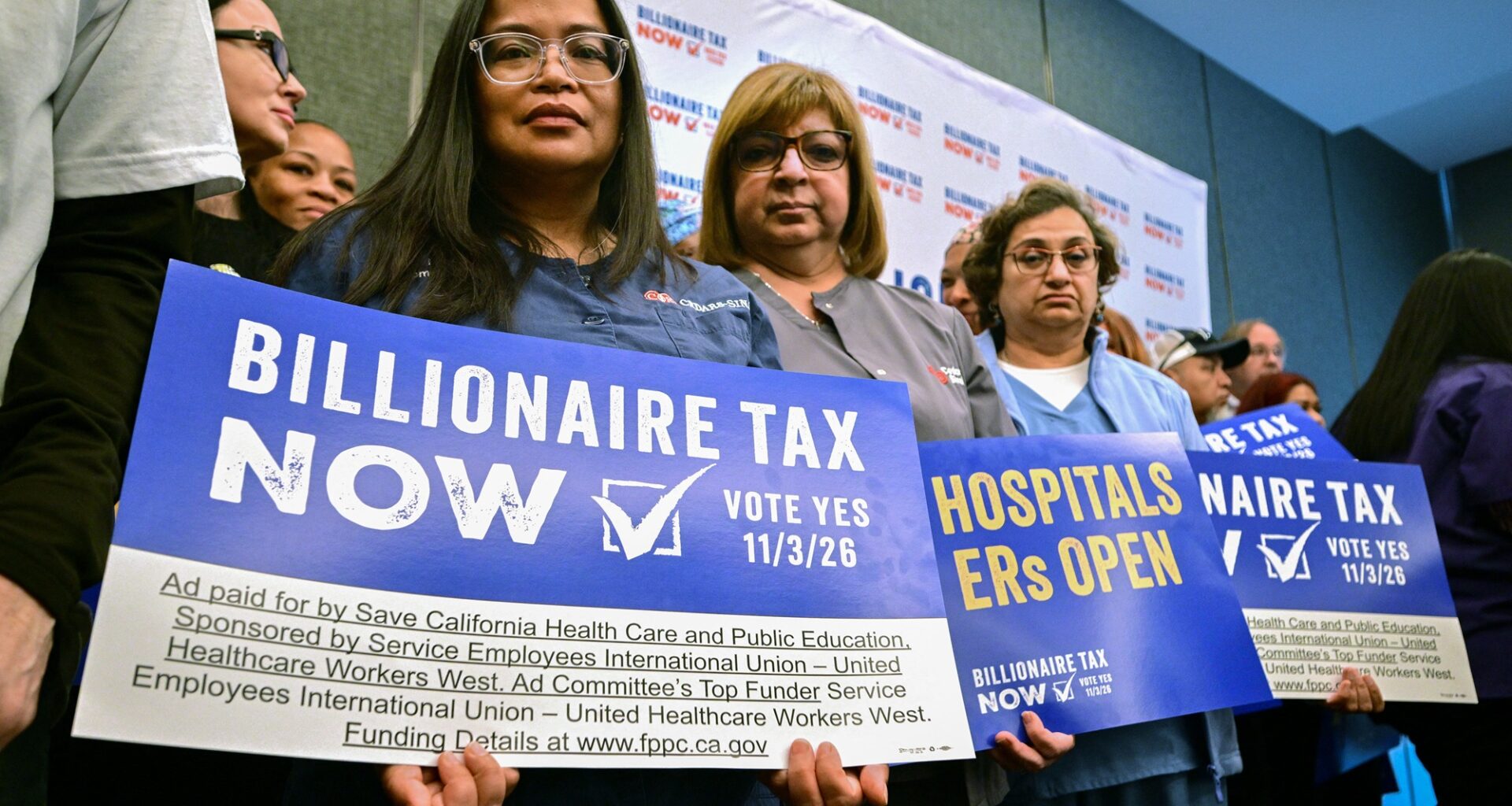
Voters will then decide whether to impose a one-time, 5% tax on the assets of California’s roughly 200 billionaires, who would have the option to pay either in a lump sum or over five years.
At a press conference on Monday held by the Service Employees International Union-United Healthcare Workers West, which represents more than 120,000 healthcare workers in California, the union’s chief of staff, Suzanne Jimenez, said that the measure “is really about solving a problem that is making sure hospitals, clinics, and ERs stay open.”
She added that the tax act is a direct response to the federal healthcare cuts in President Donald Trump’s H.R. 1 spending plan.
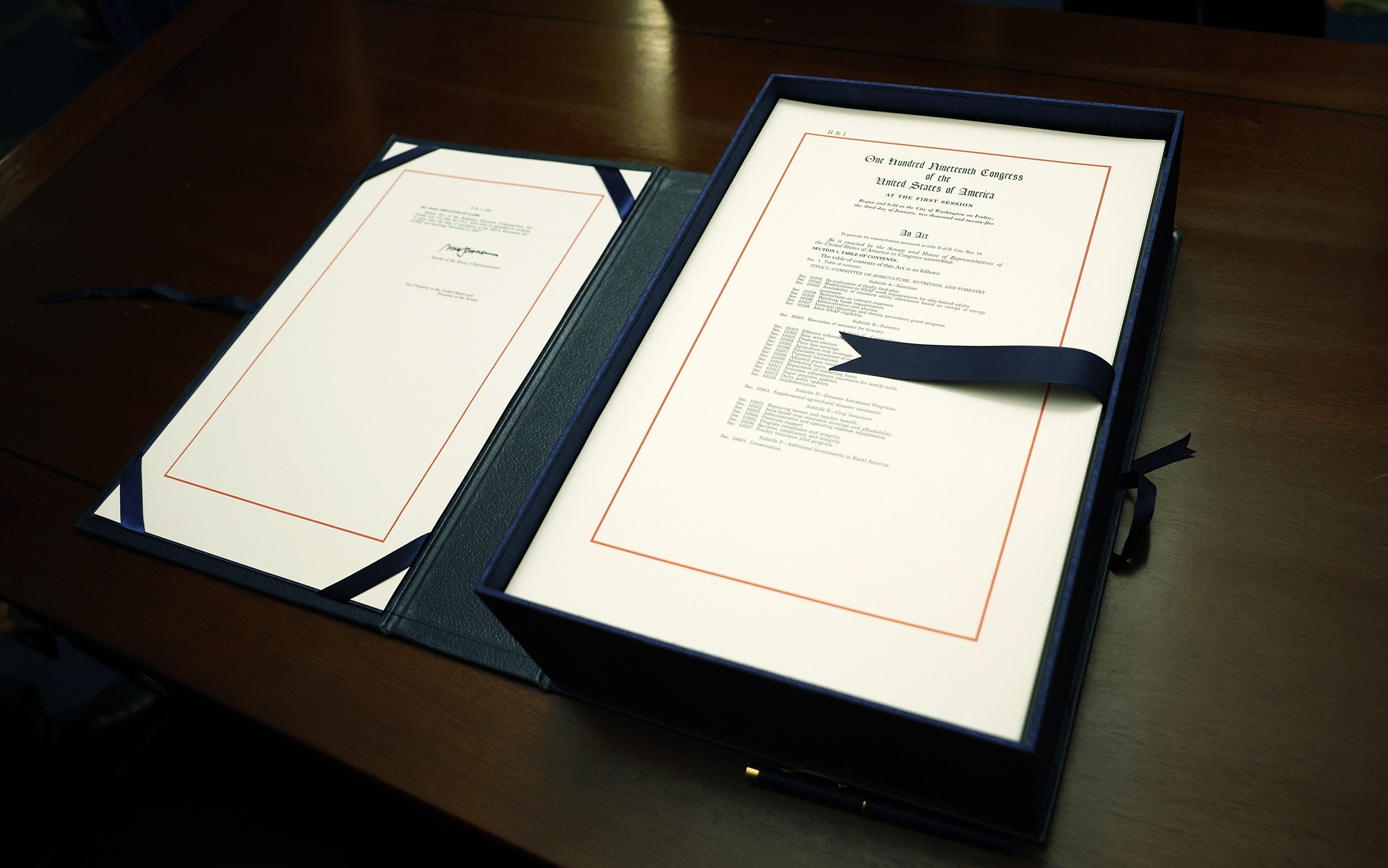 H.R. 1, the One Big Beautiful Bill Act, is seen during an enrollment ceremony at the U.S. Capitol on July 3, 2025, in Washington, D.C. The House passed the sweeping tax and spending bill after winning over fiscal hawks and moderate Republicans. (Kevin Dietsch/Getty Images)
Most of the revenue from the tax would go toward funding Medi-Cal, with the remainder designated for public K-12 education and community college programs, including food support programs like CalFresh.
But opponents plan to submit a rival measure on Wednesday.
Called the Transparency Act of 2026, the measure is funded by Silicon Valley billionaires, including Google co-founder Sergey Brin. As it would require ongoing audits of programs funded by new state special taxes, the act is being framed as a check on wasteful state spending.
Notably, the measure includes a provision that directly conflicts with the billionaire tax and could nullify it. If both measures qualify for the November ballot and are passed by voters, the one with more votes will supersede the other.