

Matthew Decker’s North Oakland tattoo parlor has been open nearly two decades. The clientele, drawn to the shop through its positive reputation, has stayed steady.
But everything else is a struggle: rent, utilities, and city fees like waste collection costs have all gone up — even though trash festers in piles outside the door on Broadway.
“Nothing gets cheaper,” Decker said.
Premium Tattoo is just one of thousands of Oakland businesses struggling with new burdens and increasingly ringing the alarm.
Measure C, which Oakland voters will weigh in on at the June 2 primary election, aims to lighten the load for small and new enterprises in the city.
Called the Oakland Business Relief Program, Measure C would give small businesses — those grossing under $1 million annually — a year off from paying the city’s business tax in 2027. And brand new businesses, small and large, would get to skip paying up to $1 million in taxes their first year.
The City Council voted unanimously to place the measure on the ballot. It needs a simple majority to pass in June.
“These are the kids of ground-level businesses that drive foot traffic and promote neighborhood vibrancy,” said councilmembers Zac Unger and Janani Ramachandran and Mayor Barbara Lee in a statement about the measure when they introduced it in November.
If Measure C passes, the council could decide to extend it, giving the same businesses additional tax breaks for up to three more years.
Decker said he’d support the measure — especially the incentive for new businesses in corridors that haven’t seen many new shops open lately, like the stretch of Broadway where his shop is.
“Anything to help us out,” he said. But he called the potential tax break more of a “moral win” than a life-changing financial victory.
How many Oakland businesses would benefit from Measure C, and what would happen to the city budget?
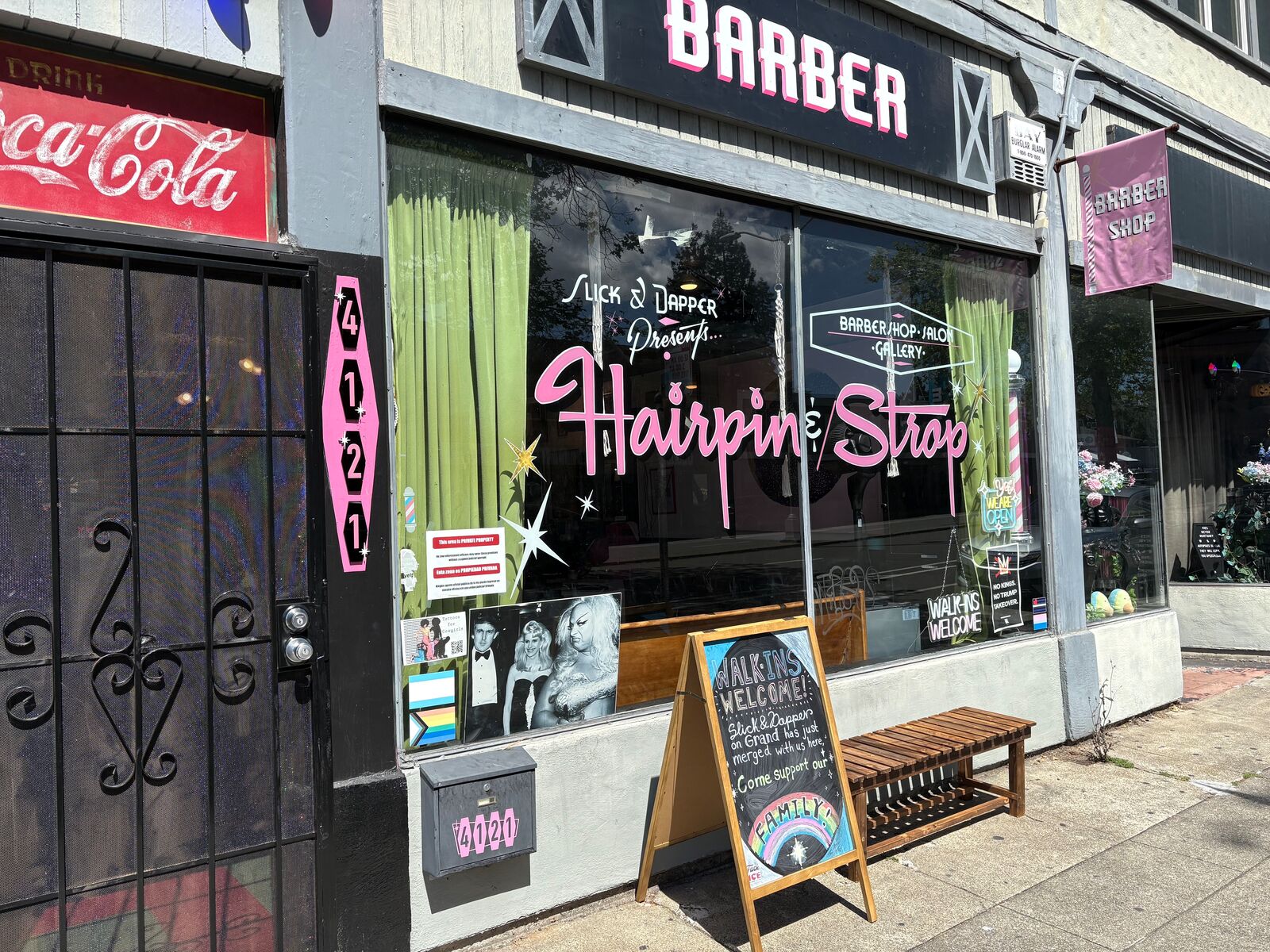 Hairpin & Strop on Broadway is reportedly Oakland’s only trans-owned barber shop. Credit: Natalie Orenstein/The Oaklandside
Numerous types of businesses would be eligible for the one-year tax relief, including grocers, restaurants and bars, retail stores, entertainment businesses, personal services, and manufacturers. Those not eligible include hotels, cannabis businesses, landlords, utility companies, and more.
The city estimates that 12,000 existing businesses could claim the temporary tax break, plus others that will open their first locations in Oakland in 2027.
One downside is the city would lose approximately $2.2 million in revenue if the measure passes. Oakland would also spend $20,000 notifying businesses of the new rules.
This amount represents a fraction of the total money the city brings in from taxing businesses. In the 2024-2025 tax year, the city collected about $130 million in business tax revenue.
But business tax revenue goes into the city’s general fund, which has seen big deficits in recent years leading to painful cuts. The largest chunk of that fund goes toward paying salaries and benefits for city employees — primarily police officers, firefighters, public works employees, and other service providers.
Neither of the city’s largest worker unions, SEIU 1021 and IFPTE 21, have taken a stance on Measure C yet. The city has also not published official pro and con arguments.
Another June 2 ballot question, Measure E, proposes a new parcel tax that would raise $34 million annually to patch the budget gap.
Business tax rates in Oakland are determined through complex formulas and differ depending on the type of company or service. For example, a restaurant that grosses $700,000 in a year pays $630 in annual city business taxes, whereas an entertainment company making the same amount pays $2,940. The city has an online calculator to help owners estimate their costs.
Previously, businesses of all sizes had the same tax rate — like a small hotdog shop making under $1 million or a big, fancy restaurant making much more. In 2022, voters approved a “progressive business tax” for Oakland, charging higher-grossing businesses at a higher rate. This change was expected to yield an additional tens of millions for the city annually.
But a recent audit found that Oakland failed to collect a lot of this money. The report was prompted by concerns from councilmembers and city unions that Oakland might have been leaving tens of millions on the table. However, the city’s attempts to rectify that failure has also caused criticism from business owners who say they’ve been hit with fines and late fees even though they weren’t notified of their tax obligations in the first place.
Small businesses embrace Measure C but say it’s not enough
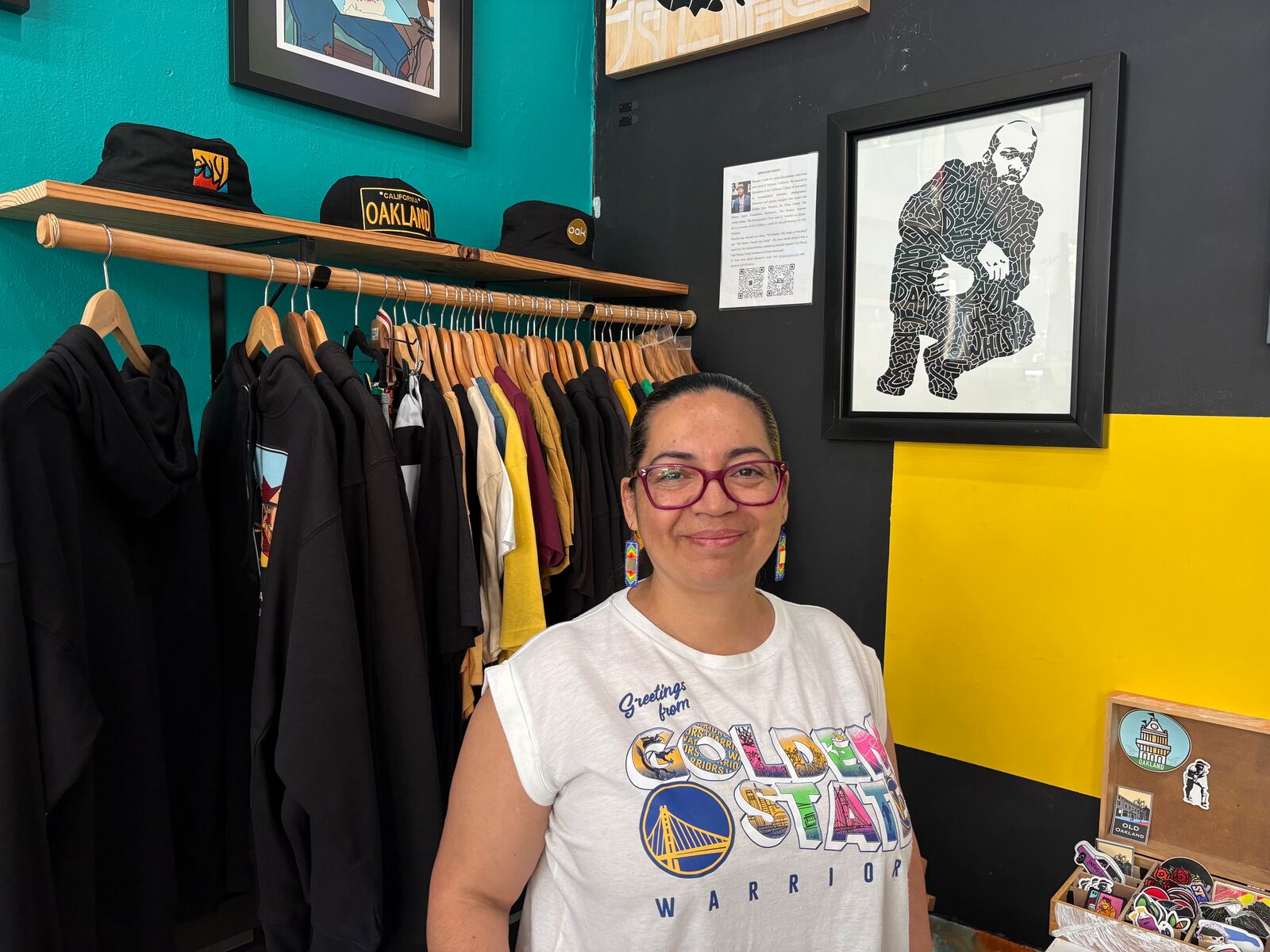 Viviana Rodriguez Smith owns E 14 Gallery on 9th Street. Business has been tough since the pandemic. Credit: Natalie Orenstein/The Oaklandside
Several business owners we spoke with shared tattoo artist Decker’s feelings about Measure C. They welcome a measure that brings any sort of relief, but said one year off their city taxes isn’t all they need to survive.
Across the street from the tattoo parlor, Hairpin & Strop owner Nick Slick said he’d support the tax break, “considering this economy and how everyone is trying to hang on.”
He recently moved his retro-style barber shop from Grand Avenue — where it was called Slick & Dapper — to Broadway. At the old location, where the shop operated for over a decade, break-ins had become “constant” and issues arose with the landlord.
The shop, which Slick and his stylists believe is the only trans-owned salon in Oakland, pays $600 or $700 a year in business taxes. Avoiding that for a year would be nice, he said; it would cover a couple months of PG&E.
“I’d feel a little more seen by the city,” Slick said.
The five or so stylists at the shop are all independent contractors who rent booths from Slick, so they’d also benefit from the tax break.
But getting some relief on parking costs would be even more helpful, Slick said. The shop doesn’t have a parking lot and Slick and his staff don’t have special parking permits, so he pays metered parking all day at work.
Down in Old Oakland, Viviana Rodriguez-Smith of E 14 Gallery has similar feelings about the city’s business climate and what the tax relief could mean.
“It’s not a lot for small businesses, but anything is helpful,” she said.
The gallery and shop, which showcases local artists and artists of color, has operated on 9th Street for about a decade.
Running the business since the pandemic has been especially challenging. The COVID-19 crisis decimated foot traffic, forced a temporary closure, and led to an increase in bipping that scared customers away from the area, said Rodriguez-Smith.
The gallery owner worries she’ll “have to face reality” soon, but the prospect of closing weighs heavily on her. The types of artists she works with have a hard time getting in the door at other galleries, which often require impressive resumes, a catch-22 for a new artist seeking their first show.
At E 14 Gallery, entry is predicated on “quality of the work and your passion as an artist.” The art selected by Rodriguez-Smith reflects Oakland’s values, she said: “history, culture, resistance.”
Shoppers can pick up a print of a local icon by Oakland artist Shomari Smith, Black Panther Party art by Emory Douglas, Ghanaian jewelry, children’s books, and tote bags and keychains repping Fruitvale and Jingletown and, of course, E. 14th Street — also known as International Boulevard.
Like shop owners in many commercial corridors, those in Old Oakland have recently formed a merchants’ association, to support one another and the community. Beginning in May, they’ll have fourth-Friday “summer strolls,” shutting the street down and bringing in live music.
Measure C wouldn’t only support existing businesses; it would also try to entice new ones to open without an immediate tax burden.
“Oakland has a lot to offer,” said Barbara Leslie, CEO of the Oakland Chamber of Commerce, which supports the measure. “If we can provide a better value for businesses considering us versus another jurisdiction, we’re letting them know they’re welcome here.”
Shari Godinez, director of the Koreatown Northgate business district, said a tax break would help, but it should be paired with greater regulation of the types of businesses welcomed in Oakland. In her district, there’s been a proliferation of smoke shops, which, she said, leads to a lack of diversity in businesses and can attract public safety issues.
“Measure C brings businesses in,” Godinez said in an email. “Policy determines what kind of business environment we create. If we want thriving, safe, and balanced commercial corridors, we need both.”
“*” indicates required fields