
In an era where phones are an extra limb, a new club at UC Berkeley is trying to sever it to build real connection.
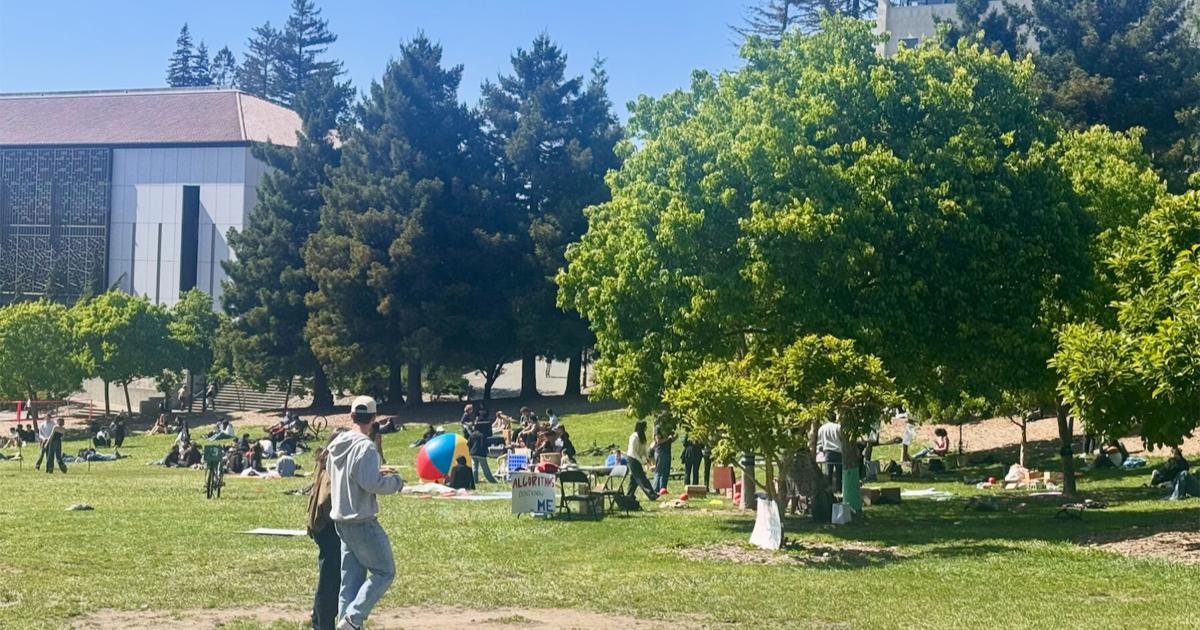
Project Reboot aims to help young adults develop a better relationship with technology in order to reclaim their time and attention. This past Friday, Project Reboot hosted “A Big Party Without Big Tech” on Memorial Glade, inviting students to put their phones away and interact with their peers directly.
The event included a giant game of Twister, volleyball, dodgeball, juggling balls, frisbees, Connect 4, friendship bracelets and a creation station. Project Reboot’s Director of Advocacy Jonny Vasquez described it as “every fun birthday party you went to as a kid.”
Project Reboot’s origins start with Dino Ambrosi, a campus alumnus whose relationship with technology caused him to struggle academically and lowered his self esteem.
Ambrosi said he confronted his use of technology and reshaped his life by ensuring that technology was serving him, not the other way around. He claimed his mental health, attention span and grasp on his own autonomy and identity improved drastically following this shift.
However, he admitted that the lack of education and open discussion regarding technology use still persists.
Ambrosi established and taught a course at UC Berkeley that challenged students to question and reform their relationship with technology. In fall 2025, campus junior and Project Reboot President Dawson Kelly adopted Ambrosi’s mission and founded Project Reboot.
“What we’re doing here on the Glade today is demonstrating what social media stole from us and ensuring that it’s not the birthright of future generations,” Kelly said.
The club collaborates with Cognitive Science 175, “Mind, Machine, and Meaning: Living Intentionally in the Digital Age,” which is taught by cognitive neuroscientist and Haas School of Business faculty member Sahar Yousef.
Through Project Reboot, Kelly focuses on reclaiming agency and shifting cultural norms regarding technology. According to Kelly, social media has divided our society and stolen our time, leading to tangible harms upon this generation.
Project Reboot aims to tackle the problems that arise as young people are given unregulated access to addictive technologies with little education or guidance.
“When I see this group of young people coming together to address this and make a difference, I see hope,” Vasquez said.