
Grade: 4.0/5.0
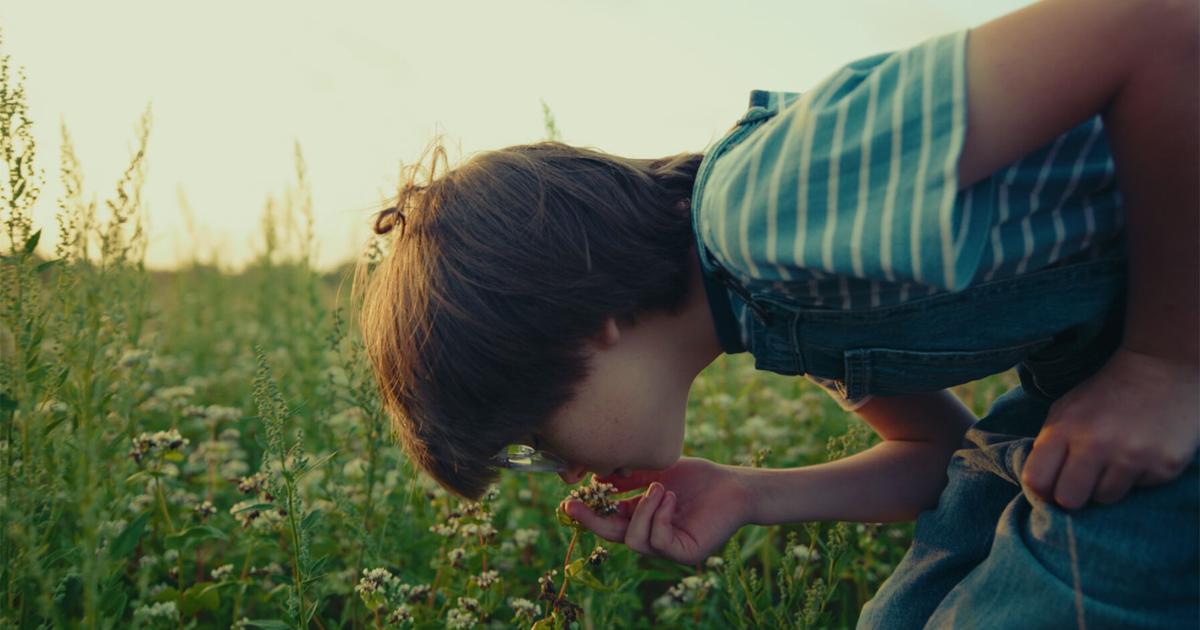
At its core, “Little Things” — the short film by UC Berkeley freshman Noam Rignault Clement screening at SFFILM’s San Francisco International Film Festival — feels like a plea to preserve innocence. The film follows Leftie, a 9-year-old boy who recently moved from the city to the countryside, played by the director’s younger brother, Luca Rignault Clement. Taking his mother’s advice to “find happiness in the little things” with literal intensity, he forms a bond with a garden gnome. This object becomes both companion and test subject, symbolizing his attempt to understand the world on his own terms and distinguish abstract wisdom from something more concrete. The film is refreshing in its depiction of a childhood that doesn’t revolve around screens, but rather teaches a valuable lesson in life’s meaning.
From the first moments of the film, the influence of filmmaker Wes Anderson is undeniable. The pastel-toned palette, delicate attention to sound and child narration evoke the curated innocence of films such as “Moonrise Kingdom.” Yet “Little Things” establishes its own identity through a more intimate, fragile exploration of childhood perception, made all the more resonant by its real-life sibling collaboration. Noam Rignault Clement’s direction often places the viewer just behind Leftie, quietly trailing him through his routines. This perspective, paired with meticulous sound design — the crunch of sand, the slosh of water and the swoosh of a kicked ball — creates a sensory immersion that mirrors a child’s heightened awareness, where even the smallest action feels monumental.
Visually, the film captures youth through soft pastel and warm light, contrasting with darker tones that hint at the urban life that has been left behind. Shots of Paris act as brief glimpses at the life that Leftie has moved away from. However, we’re never left in these moments for long, as immediately we are thrown back to the present, forgetting our momentary sorrows as children often do.
Beneath its whimsical surface, “Little Things” carries a subtle tension about growing up. The garden gnome becomes central to Leftie’s shifting understanding of life. Leftie expects the gnome to see, hear and smell just as any other living thing does. But it remains still, both magical and tranquil, much similar to childhood itself: rich with imagination, yet bound by reality. The film’s nostalgic cinematography reinforces this emotional arc. Daylight and soft evening hues represent the warmth of youth, while darker imagery hints at the inevitability of change.
Leftie’s reflections — “The day goes faster if (you) don’t enjoy the little things,” followed later by “maybe it’s good that the days go by faster” — reveal a child grappling with time. His older brother, Rhys, embodies the endpoint of that trajectory. When Rhys offers him an alcoholic, “adult” drink, Leftie spits it out, a small but decisive act of resistance against growing up. At that moment, adulthood does not appear exciting, but disappointing, even gross. Leftie’s reluctance to move forward feels deeply relatable. Many share the desire to return to a time when life felt simpler and the world still held a sense of effortless awe. Less explored, however, is the inverse — the way children often long to grow up. It’s a dynamic that lingers in Rhys’ presence and suggests a dimension that the film only begins to touch.
The conclusion echoes the mother’s closing advice: “Every good thing ends.” This ending introduces the bittersweet truth that makes the search for little things both necessary and fleeting. After Leftie returns the gnome in the closing scene, a tiny bug lifts off his arm and the story comes full circle. Childhood, just as the gnome, cannot be held indefinitely; just as quickly as we find little things, we recognize their impermanence. “Little Things” succeeds not by imitating its influences, but by understanding what gives youth emotional weight: attention to small details. Noam Rignault Clement captures the delicate space between innocence and awareness, where a child begins to sense time moving forward and quietly decides, at least for now, not to rush along with it.