
Museums in San Diego’s Balboa Park are sounding the alarm over a sharp decline in attendance, even as city officials say that visitors to the storied park have begun to fork over millions in new parking fees.

In a report published last week, Balboa Park Cultural Partnership said that visitation to the park’s cultural attractions was down an average of 34% in the first quarter of 2026 compared with last year. Smaller museums are seeing an even larger visitor deficit, as much as 60%. Revenue for the museums collectively is down by $5 million over the same period, Peter Comiskey, executive director of the Balboa Park Cultural Partnership, told SFGATE.
“Paid parking continues to have a direct and devastating impact on the cultural organizations in Balboa Park. The impact is not improving over time — it is getting worse,” the organization said in its report.
Article continues below this ad
At 1,200 acres, or about one and a half times the size of New York’s Central Park, Balboa Park is one of San Diego’s top attractions and the home to 24 museums and institutions focusing on everything from art to aviation. But following the controversial introduction of paid parking inside the park earlier this year, the institutions are blaming the new fees for making an already brewing attendance problem worse.
A general view of a parking lot at Balboa Park
Olivia Harden/SFGATE
The San Diego City Council approved charging for parking at Balboa Park in September 2025.
Olivia Harden/SFGATE
Meters have been installed at parking lots across Balboa Park.
Olivia Harden/SFGATE
The city council voted to adopt paid parking fees in September. Comiskey told SFGATE that even before the parking charges officially took effect in January, local outrage had already led to calls to boycott Balboa Park.
Article continues below this ad
Make SFGATE a preferred source so your search results prioritize writing by actual people, not AI.
Add Preferred Source
“Even though the actual charge for parking had not started in the park, that message was lost amongst the negative association with the introduction of paid parking into the park,” he said.
Previously, the Balboa Park Cultural Partnership said that a 20% decline in attendance could lead to between $20 million and $30 million in lost revenue. After its first-quarter showing, the partnership projects it will lose $10 million this year compared to last year, and looming budget cuts proposed by city officials to balance the budget could further exacerbate the problem. At a city council meeting on April 20, San Diego Mayor Todd Gloria proposed an $11.8 million cut to its arts budget, an 85% reduction.
“That loss of earned revenue for these organizations means one of two things or three in disastrous cases,” Comiskey said. “It either means there’s a loss of staffing. It means there’s a loss of program or exhibition — or they can be one and the same depending on what the program is.”
Article continues below this ad
People pay to park at Balboa Park.
Olivia Harden/SFGATE
Despite the local anger over the fees, which was so intense that some of the new parking meters were targeted with feces, visitors are still coming to the park, and some are paying to park there.
Though city of San Diego spokesperson Benny Cartwright said there is no way to quantify the number of visitors due to the park’s many entry points and the various transportation options to get there. Meanwhile, meter revenue continues to climb.
Article continues below this ad
Since introducing paid parking, city records show that San Diego has collected nearly $2 million in revenue from meters and more than $334,000 in paid parking permits. In January, meter revenue was around $380,000. In February, that number rose to nearly $495,000. In March, that number grew to almost $635,000.
The San Diego City Council originally projected that new parking fees would generate about $15 million in revenue for the 2026 fiscal year, which runs until June 30. But that number was drastically reduced to only $3 million. Cartwright said the city projects parking fees bring in around $2.5 million by the end of the fiscal year, and around $4.4 million in 2027.
The city started issuing tickets only at the end of March, following a two-month grace period. Between March 23 and April 22, the city issued citations totaling $41,564.50.
File: Vehicles fill the Pan American parking lot in Balboa Park on Sept. 15, 2025, in San Diego, Calif.
K.C Alfred/The San Diego Union-Tribune/Getty Images
Comiskey, however, said that the increase in parking revenue is an unreliable measure of the program’s success and park attendance. Some visitors may have only so much money to spend on a visit, and the Balboa Park Cultural Partnership believes that overall, parking fees have created a barrier to entry.
Article continues below this ad
“The process is also quite challenging, both online beforehand for residents and for visitors, and then even when they get to the park, it’s not an easy process to follow,” Comiskey said. “From a local’s perspective, and people have many, many demands on their time, anything that causes barriers, anything that causes blockages that will negatively impact their consideration of coming to visit.”
Though it’s unclear where drivers are going beyond the museums, the park’s free attractions are likely destinations. In a San Diego Reddit thread, residents cited the price of museum tickets, which can go as high as $35 for a single adult ticket to some museums, and the quality of exhibits as reasons to go elsewhere.
“I love Balboa Park and I will continue to support the park,” Reddit user EducationalScheme439 wrote. “But museum admission has gotten ridiculous. I hate the pay for parking but a family of 4 is paying well over $100 to go to one museum.”
As of March 2, San Diego residents can park for free in seven of the park’s 12 parking lots, but they still have to register with the city two days in advance, choose the day they plan to visit, and pay a $5 processing fee. Those steps have made spontaneous visits less likely, and the resident benefits have not led to an uptick in museum visitors.
Article continues below this ad
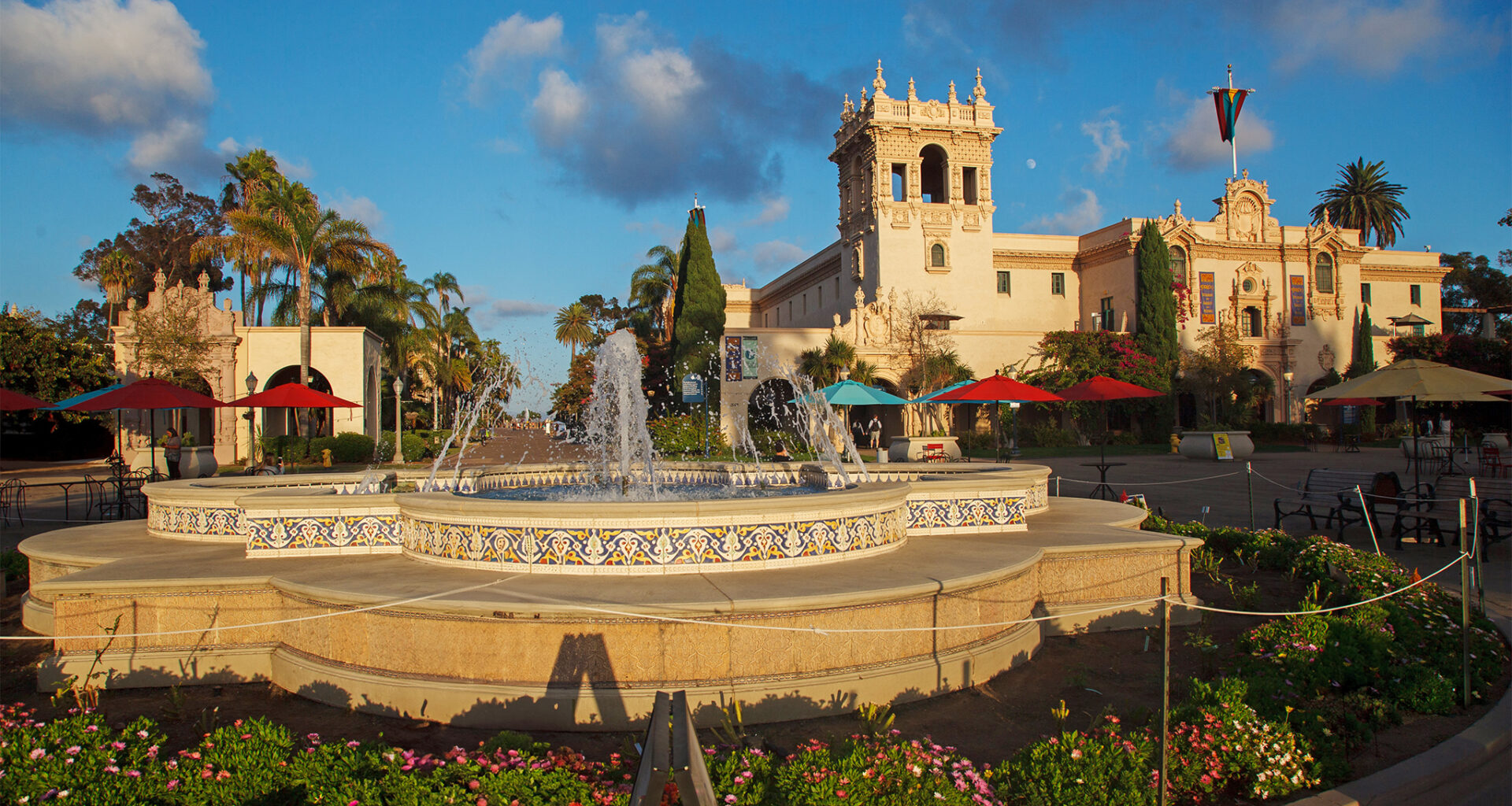
The Plaza de Panama fountain and the Ornate Facade of Casa del Prado in Balboa Park, San Diego, Calif.
AlexandreFagundes/Getty Images
“The smaller, more niche and medium attractions within the park, who rely very strongly on foot traffic, people walking past their door, discovering the experience, and going in and experiencing — they’re the organizations that are down between 40 and 60%,” Comiskey said.
Local officials across San Diego County have argued that all county residents contribute to the city’s economy and should also receive parking benefits. Still, it’s unclear how much of the missing revenue was coming from city residents, county residents and tourists overall.
“Balboa Park must be a welcome cultural destination for our whole region, that includes [the] county as well,” Comiskey said. “How we get there, we look forward to kind of working with the city, but that needs to be the outcome.”
Article continues below this ad
San Diego County is one of California’s largest tourism economies, according to Visit California. In 2025, 32.4 million visitors came to the city of San Diego, San Diego Tourism Authority spokesperson Paul Garcia told SFGATE in an email, and named Balboa Park in the city’s top five tourism attractions.
“We will continue to monitor the program, make adjustments as needed, and work with park stakeholders to ensure it is working as intended,” the city of San Diego told the San Diego Union-Tribune. “Balboa Park’s paid parking program creates a reliable source of funding to support the care and operation of the park.”