
The Berkeley City Council will vote May 7 on a surveillance and police technology program that, if approved, would renew and expand its contract with the surveillance company Flock Safety.
Flock Safety provides a range of different devices to aid police work, including automatic license plate readers, or ALPR, drones and community video streams.
The vote, originally scheduled for March 25, was delayed to May 7. Multiple public commenters expressed privacy concerns during the meeting.
If approved, the city would maintain Flock’s current network of 52 ALPRs and approve integration of community video streams and a Drone as First Responder program for Berkeley police.
In a supplemental file attached to the council’s March 24 meeting agenda, Mayor Adena Ishii — alongside Councilmembers Cecilia Lunaparra and Igor Tregub — called for a complete rejection of Flock, citing the company’s “impermissible data sharing with federal law enforcement agencies, including federal immigration enforcement agencies.”
“Flock has failed to proactively safeguard data, ensure compliance with contracts, and uphold the legal and ethical standards of the communities it serves,” said Melissa Male, communications director for the mayor, in an email.
Neighboring jurisdictions, including Santa Cruz, Mountain View and Los Altos Hills, have already terminated their contracts with Flock due to concerns over data breaches. The San Francisco Standard and KQED reported that the federal government and other outside agencies had accessed data collected by Flock cameras in the Bay Area.
“Our immigrant, queer, and activist communities — already targeted by systemic violence — should not be made to feel even more unsafe in their own neighborhoods,” Lunaparra wrote in an email. “These communities are disproportionately impacted by surveillance, further eroding trust in institutions that claim to serve and protect us.”
However, other Bay Area cities, including Richmond and San Jose, have continued their contracts with Flock with additional safeguards against data sharing.
The mayor’s office said that it remains open to the forms of surveillance proposed in Flock’s expansion — just not in partnership with Flock. Male said that these devices can “play an important role in emergency response” with the right controls.

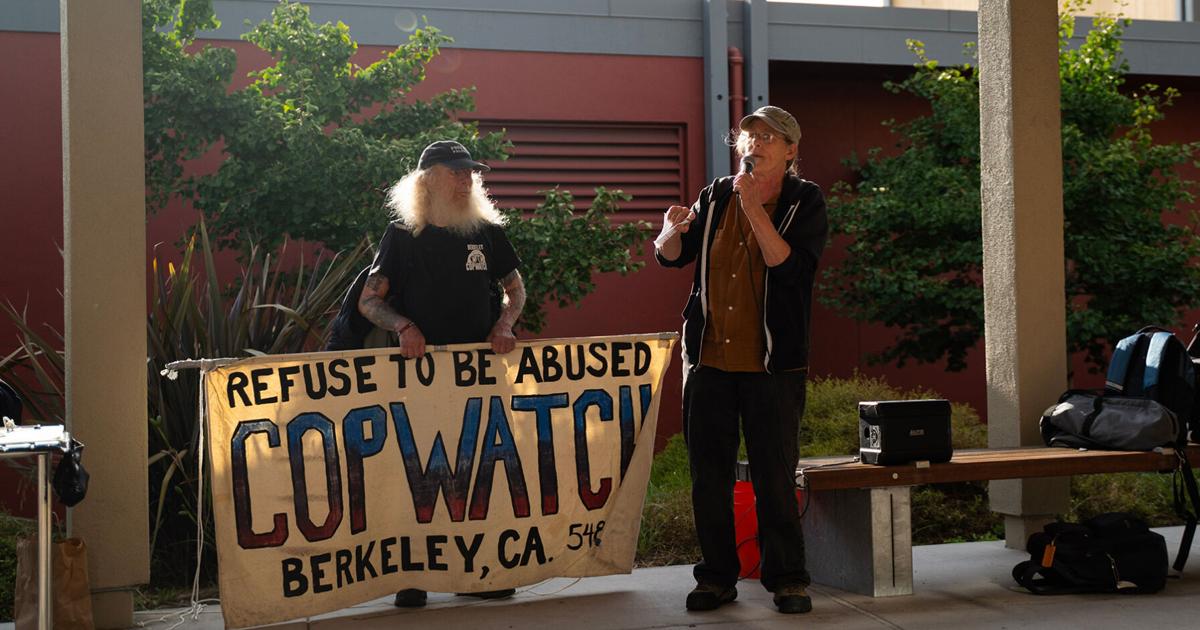
However, Jordan Harger, a volunteer with Berkeley Copwatch and a first-year student at UC Berkeley Law, said they fundamentally disagreed with the claim that surveillance technology such as Flock can be properly and transparently managed.
“While the mayor’s proposal does make some compromises in terms of rejecting the flawed contract, it fundamentally continues the path of police militarization,” Harger said.
If city leaders vote to deny Flock’s renewal, all existing license plate reading cameras will immediately stop collecting data and soon after be taken down, according to Male.
“Regardless of whether or not the city approves a contract with Flock, we still need to ensure we adopt strong use policies,” Male said in an email. “This will create the parameters within which these types of surveillance tools may be used, which is necessary to protect public privacy and safety from abuse and/or improper use.”