
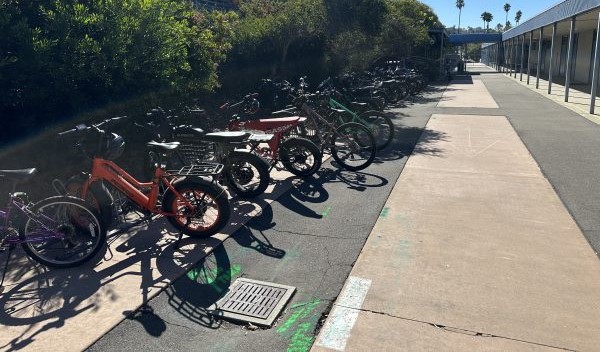
A trio of bills with a focus on electric bicycles is circulating in the California Legislature and getting mixed reviews from La Jolla residents and bike shops.
The proposed laws are being labeled as everything from the “right approach” to “knee-jerk” in aiming to solve safety issues associated with e-bikes.
Here’s a look at the three bills introduced this year.
Senate Bill 1167
In early April, SB 1167 by state Sen. Catherine Blakespear (D-Encinitas) was approved unanimously by the Senate Transportation Committee. The bill is intended to “address misrepresentation in the e-bike marketplace and strengthen consumer protections around how electric bicycles are marketed and sold.”
The legislation would prevent manufacturers and sellers from labeling a vehicle as an e-bike if it doesn’t meet the requirements for an e-bike. California law defines an e-bike as having no more than 750 watts of power and in one of three street-legal classes:
• Class 1: equipped with a motor that provides assistance when the rider is pedaling and can reach speeds up to 20 mph
• Class 2: equipped with a motor that may be used exclusively to propel the bicycle (with a throttle) and can reach speeds up to 20 mph
• Class 3: equipped with a motor that provides assistance when the rider is pedaling and can reach speeds up to 28 mph
Electric motorcycles, also known as e-motos or e-dirt bikes, sometimes are mistaken for e-bikes but are legal in California only for off-road use and are distinct from e-bikes in that there are no pedals and they can reach speeds of 50 mph or more.
“E-bikes are a wonderful addition to the world of personal transportation,” said Blakespear, whose 38th District includes La Jolla. “SB 1167 brings clarity to the e-bike marketplace so consumers know if they are buying an e-bike or something else that goes much faster.”
“Faster two-wheeled vehicles, such as mopeds or motorcycles, require licenses and specific safety gear, while e-bikes are regulated essentially the same as bicycles,” according to a statement from Blakespear’s office. “Many people don’t know what class of e-bike they are buying, what its top speed is or whether it is even an e-bike.”
Series story gallery: Charged Up: The Rise of E-bikes
SB 1167 aims to require sellers of faster and/or more powerful vehicles to inform consumers that the vehicles don’t meet the definition of an e-bike and therefore require registration and a license to operate. It would mandate further that every e-bike sold in the state have a label on its frame identifying what class it is and the maximum speed it can go.
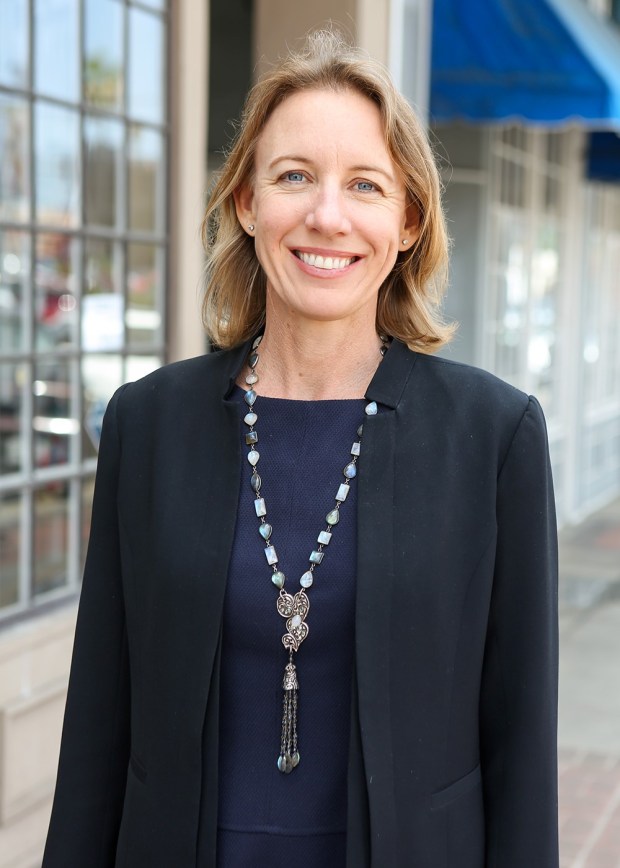 State Sen. Catherine Blakespear is the author of Senate Bill 1167, which aims to prevent manufacturers and sellers from labeling a vehicle as an e-bike if it doesn’t meet the requirements for an e-bike. (Provided by Catherine Blakespear)
Bird Rock resident Harry Bubbins, a cycling advocate who also is a board member of the La Jolla Community Planning Association, called the bill “the right approach,” saying it “doesn’t punish families with DMV registration or arbitrary wattage limits. Instead, it requires manufacturers to clearly label what they’re selling, tells consumers when a vehicle is actually a motorcycle that needs a license, and makes false advertising of e-motos as e-bikes an offense. It’s about education and disclosure, not punitive overreach.”
Assembly Bill 1557
While SB 1167 has had general support so far, AB 1557, authored by state Assemblywoman Diane Papan (D-San Mateo) is facing more pushback from sellers and riders.
The proposal would amend California’s vehicle code to redefine what can be labeled and sold as an e-bike.
Specifically, it would lower the maximum speed of Class 1 and 2 e-bikes from 20 mph to 16 and state that any vehicle capable of exceeding 750 watts of power cannot be labeled and sold as an e-bike. It would levy heavy penalties on those who sell non-conforming e-bikes.
Pedego Electric Bikes La Jolla called the legislation “very distressing.”
“The bill is designed to choke electric bicycles even more than they have already been in recent years,” according to an email from Pedego. “This is largely aimed at the illegal e-motos and electric dirt bikes but does nothing to directly address those illegal bikes. This would fundamentally disrupt the electric bike market in California and potentially the nation. This bill would eliminate the 95% of the electric bikes that most retailers sell.”
The e-mail further states the bill would subject California to different standards than those used nationwide.
“By deviating from the federal definition of low-speed electric bicycles and the widely adopted three-class model used in 45 states, AB 1557 would create a California-only standard that forces manufacturers to re-engineer products … modify their advertising practices and absorb significant new compliance costs,” Pedego says. “These changes would increase prices, reduce product availability and create confusion for retailers and consumers alike.”
AB 1557 has passed through Assembly committees and must move to the Senate for approval.
Assembly Bill 1942
AB 1942, authored by Assemblywoman Rebecca Bauer-Kahan (D-Orinda), would require Class 2 and 3 e-bikes to be registered with the Department of Motor Vehicles and require riders to display a special license plate issued by the DMV.
“The bill would require the department to adopt regulations to implement these requirements and would make a person operating a Class 2 or Class 3 electric bicycle in violation of these requirements guilty of an infraction punishable by specified fines,” according to the legislation.
AB 1942 also would create an Electric Bicycle Registration Fund and require all money received related to the law to be deposited in the fund to administer the program.
Bubbins contended that AB 1942 and AB 1557 do not address the real safety issues associated with e-bikes and e-motos.
“Pedal-assist bikes are the best things to happen to transportation in decades,” he said. “They get people out of cars, cut emissions and give families a real alternative to a second SUV. But instead of celebrating that, we’re seeing a wave of knee-jerk legislation like AB 1557 and AB 1942 that treats e-bikes like a crisis while completely missing the real problem.
“The actual culprit here is e-motos — high-powered electric motorcycles that are illegally marketed and sold as e-bikes. That’s a labeling and enforcement problem.”
“Cars come from the factory with a 140 mph speedometer and kill over 40,000 Americans a year,” Bubbins argued. “Trucks and SUVs are the danger on our roads. Parents don’t need more laws — they need to ride with their kids, teach them well, and we need smart legislation like SB 1167 that targets the actual problem instead of scapegoating legitimate e-bikes.” ♦