
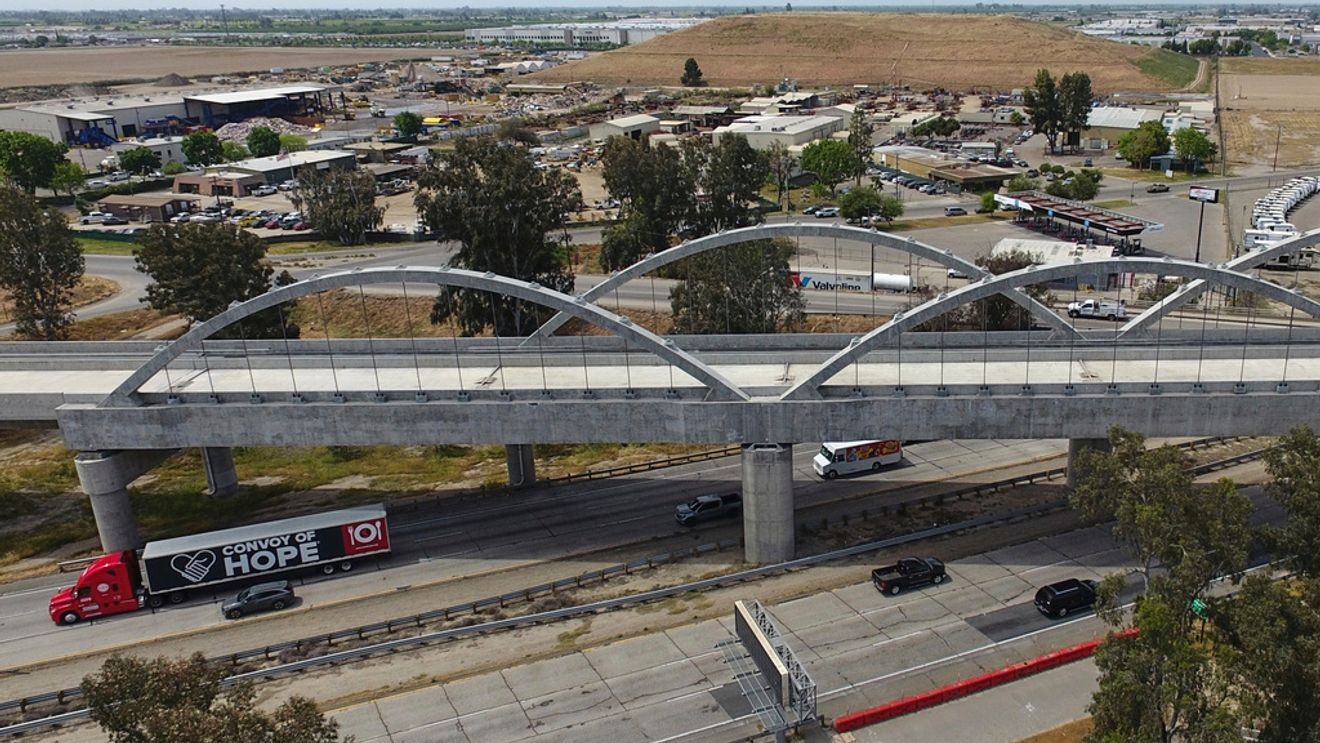
CLOVIS, Calif. (FOX26) — California’s high-speed rail project is facing renewed criticism after Assemblyman David Tangipa condemned the latest draft for the project, which places the cost of Phase 1 at approximately $231.3 billion, up from the original $33 billion voter-approved estimate in 2008.
The assemblyman, issued one of the most direct rebukes yet of the project’s updated financial outlook, arguing the state has strayed far from its original commitments and is no longer presenting a realistic or transparent plan.
“In what world is it acceptable to be 580% over initial estimated cost,” Tangipa said. “This is a textbook plan to fail. It is over budget, it is misleading to the public, and its goals are simply unachievable.”
Tangipa also raised concerns about what he described as undisclosed reductions in project scope, including changes to the Central Valley segment that now reportedly runs only from outside Merced to outside Bakersfield. He argued those changes materially alter what voters were originally promised in 2008.
The assemblyman further said the project is not in compliance with AB 377, which he claims requires a more detailed and transparent financial framework, and criticized what he called inconsistent cost methodology used in the plan’s benefit calculations.
[RELATED] California high-speed rail price tag jumps to $231B, nearly seven times 2008 estimate
The criticism comes as broader skepticism continues to grow in Sacramento over the rail authority’s long-term financial strategy and reliance on future funding sources and private investment to complete the system.
The California High-Speed Rail Authority, in its draft 2026 Business Plan, continues to defend its approach, describing the Merced-to-Bakersfield segment as the core “starter” line for eventual statewide expansion and future private-sector participation.
Still, lawmakers like Tangipa argue that escalating costs, shifting project boundaries, and evolving timelines have significantly eroded public trust.
“This isn’t what Californians voted for,” Tangipa said, calling for increased oversight and a full reassessment of the project’s financial assumptions.
Under current projections, partial service in the Central Valley could begin around 2033, though completion of the full Los Angeles-to-San Francisco system remains dependent on future funding, construction progress, and private investment participation.
As debate intensifies, state officials face growing pressure to reconcile rising costs with voter expectations nearly two decades after the project was first approved.