
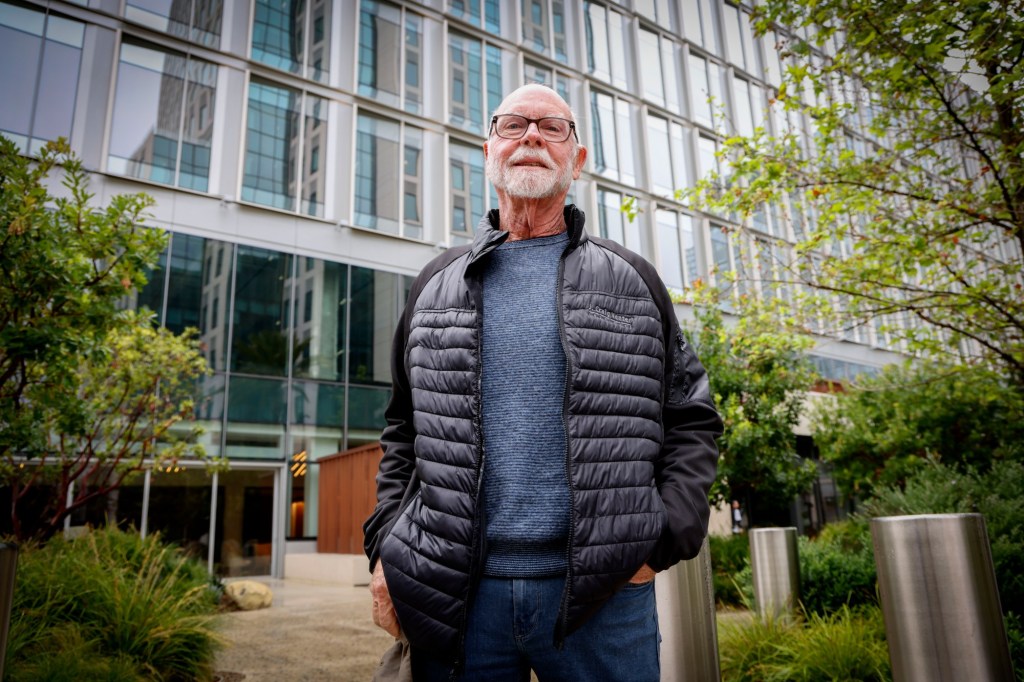
Craig Venter, the hard-charging San Diego biologist who co-led the sequencing of the human genome, leading to better ways treat everything from heart defects to Alzheimer’s disease and further raised the curtain on human evolution, died Wednesday in a local hospital due to cancer, according to a statement from The J. Craig Venter Institute in La Jolla. He was 79.
His death came “following a brief hospitalization for unexpected side effects that arose from treatment” of a form of cancer that had only recently been diagnosed, the institute said in its statement.
Venter described himself as self-retired in an interview with the Union-Tribune last year. But he was in the process of moving his institute to a new science park on San Diego Bay. And he told the paper two years ago, “I don’t see any reason why I can’t live another 10 years. I have things I want to do.”
He found out in 2016 that he had prostate cancer, which he discovered at his own company, Human Longevity Inc., in La Jolla, which uses genomics to hunt for early signs of disease. The cancer was successfully removed and he continued pursing his two great interests, science and wandering around in sailboats.
Venter evolved into a scientist at UC San Diego, where he earned a bachelor’s degree in biochemistry and a doctorate in physiology and pharmacology in the 1970s. His interest in medicine arose in the late 1960s when he served as a Navy medical corpsman in Vietnam.
He went on to lead companies that specialized in advancing the field of genomics. And he did so with great speed and self-assurance, which antagonized some members of industry and academia.
In 1998, he kicked off a private effort to sequence the human genome using a new technique called whole-genome shotgun sequencing. He was effectively competing with a huge public effort to do the same thing. Two years later, Venter and the Human Genomic Project announced that they had jointly produced the first draft of the genome — or so called “book of life.”
The fete was announced at the White House by President Bill Clinton, who said, “Today the world is joining us here in the East Room to behold a map of even greater significance… without a doubt, this is the most important, most wondrous map ever produced by humankind”.