
San Francisco Unified School District’s Superintendent Dr. Maria Su said she has a plan to potentially close some city schools by fall 2030.
Jessica Christian/The Chronicle
San Francisco schools will revamp its loathed student assignment lottery system and consider closures by fall 2030 under a new plan to address two of the district’s most contentious issues.
Superintendent Maria Su is expected to announce the outline and timeline for these changes at the May 12 school board meeting. She told the Chronicle on Thursday the first step will be to address the lottery-based assignment system over the next year and then, based on the end result, close and/or merge schools by the end of the 2029-2030 school year.
“We are ready for this,” Su said. “And it’s about time. We’ve been trying to do this for many years now.”
Article continues below this ad
After previous efforts to initiate closures failed under previous leadership, Su has spent the last 18 months getting the district ready for these massive changes and address the 14,000 empty seats in schools.
SFUSD Superintendent Dr. Maria Su wants to fix the district’s contentious student lottery system.
Benjamin Fanjoy/For the S.F. Chronicle
Shutting schools is arguably the most contentious issue in public education while, in San Francisco, the school assignment system is the second given families want both choice and predictability, which often conflict. Both would likely have significant and long-term repercussions for families, communities and the district, specifically in terms of students choosing district schools or opting for private or charter options.
San Francisco Chronicle Logo
Make us a Preferred Source to get more of our news when you search.
Add Preferred Source
Efforts to close or merge sites, which have led to protests, petitions and even hunger strikes, have increased across California in recent years as districts grapple with declining enrollment and significant budget deficits as the state budget waned and pandemic recovery funds dried up.
Article continues below this ad
Nearly 70 of the 80 principals in Oakland, warning of dire classroom conditions, last week called on district leaders to close schools to ensure educators have the resources they need — an unprecedented show of support for closing sites in a district where the community has historically fought against the idea.
“All principals understand as hard as it is on the community it’s the right thing to do,” said one Oakland school leader who requested anonymity because of concerns related to their job.
Previous efforts to address closures and school assignment in San Francisco have either exploded in chaos, as was the case with a plan to close schools in 2024, or died a slow death, which happened to a new school assignment system initially approved by the board in 2020.
This time will be different, Su said.
“We’ve spent the last 18 months trying to stabilize the district and thankfully we have,” she said.
Article continues below this ad
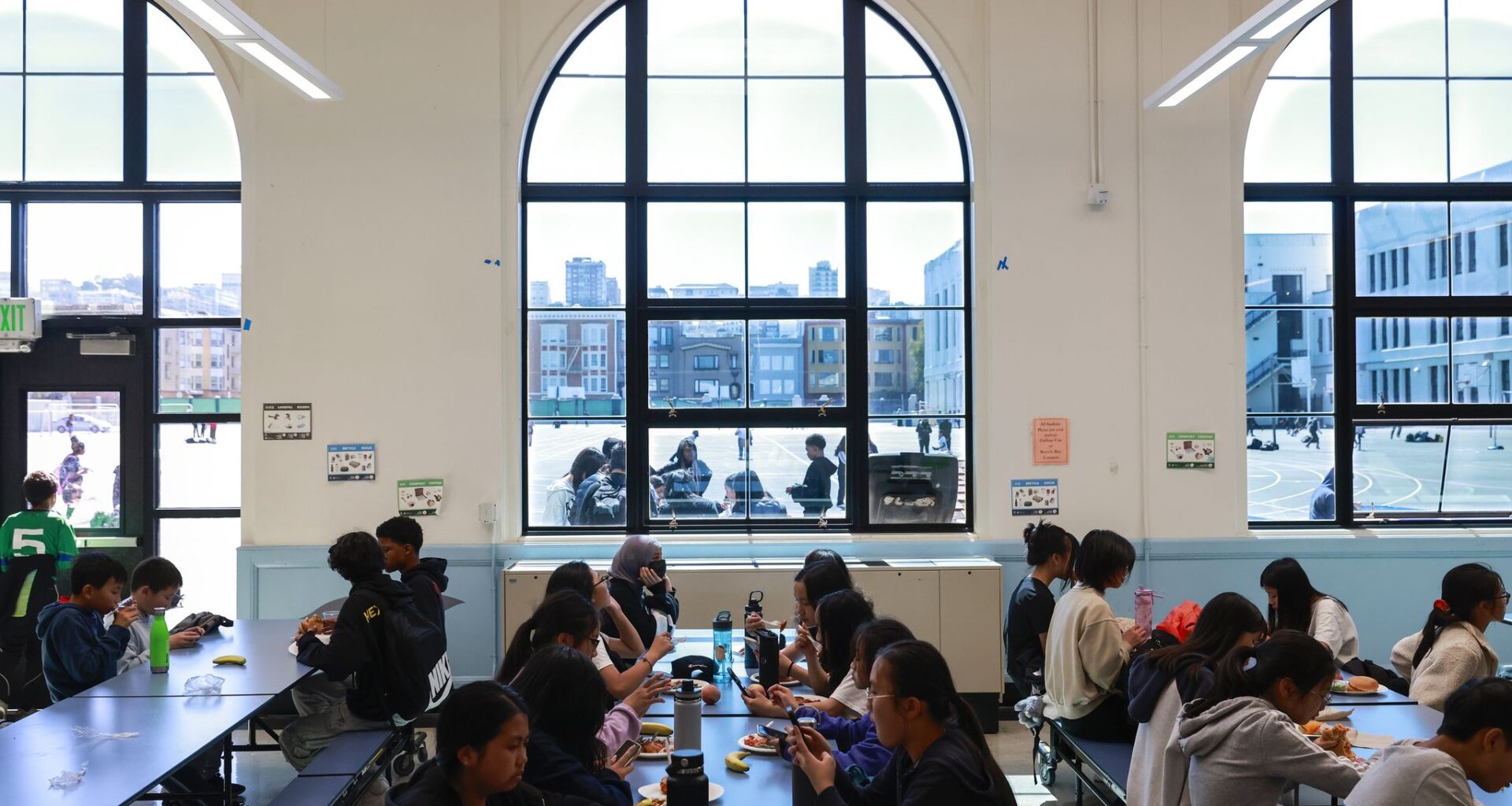
Students play on the playground during recess at Hillcrest Elementary School in San Francisco, in 2024.
Jessica Christian/The Chronicle
For years, San Francisco Unified has been beset by chaos and controversy, with a payroll fiasco, a political recall, contentious labor contracts, imminent insolvency and an $87 million lawsuit against the district filed by an elected board member, among other eye-popping scandals and the pandemic.
The district, however, is on firmer ground, district officials said, with an overhaul of payroll and other systems, a nearly balanced budget, a better-trained school board, new math, language arts, history and social studies curricula and recently settled labor contracts.
But better is not perfect. Dysfunction and divisiveness continue, with recent turmoil over ethnic studies content as well as school board waffling over how to put Algebra I back into middle schools.
The efforts to change the student assignment system and reduce the number of schools is unlikely to proceed without conflict.
Article continues below this ad
Su said the plan is for the district to develop and adopt a modified or overhauled assignment system a year from now, which would be in place for families who want to enroll a student in the Fall 2028.
Staff will be looking at various ways to increase the predictability of assignments while still serving families who want a choice beyond their neighborhood schools, Su said.
“Everywhere I go the one thing parents complain about the most is how difficult it is to come to SFUSD,” Su said. “Why is it you need to do mathematical gymnastics just to enroll?”
The district abandoned a neighborhood school model decades ago, choosing instead to offer families a wide array of choices and an application that allows them to list as many schools as they want in the order of preference.
There are often more applicants than seats at many schools, with a complicated tiebreaker process to assign spots. The result is an unpredictable outcome for a large number of applicants, with long waiting lists at some of the most popular schools and empty seats at others.
Article continues below this ad
SFUSD teachers were on strike in February before the union signed a new contract.
Bront? Wittpenn/S.F. Chronicle
While the vast majority get one of the schools on their list, some are assigned to a school they didn’t request at all and one that’s located far from home.
Su described it as a “quagmire,” saying that too many families find the assignment system too big of a barrier and give up.
“We want to make sure we have a system that meets the needs of our families,” she said. “So that’s what we’re going to focus on first.”
That could mean changing lottery tiebreakers or changing attendance areas, district officials said. Or it could be a big policy shift like moving to a neighborhood system with a choice of schools within a zone and a lottery for specialized programs in other schools. Or it could be something not yet considered.
In years past, changes to the system have provoked heated debates, with some families pushing for spots at schools close to home while others advocated for prioritizing desegregation.
The school board adopted a new student assignment system based on a neighborhood zone idea in December 2020, with implementation expected in 2023. But it was delayed, with implementation scheduled for the fall of 2026, then delayed “indefinitely,” according to district officials.
While coming up with the new plan, the district is also expected to expand special education programs to reduce the number of students bused out of San Francisco to receive services, while also increasing Mandarin immersion programs and transitional kindergarten seats.
After the new assignment system is in place, then the district can see where schools will be needed, where programs will be placed and see the impact of the new policy, Su said.
In other words, that’s when the bigger conversations about school closures and mergers would happen.
“The reality of declining enrollment is happening across the state and across the country,” Su said. “San Francisco is not immune to it.”
Students at Burton High School wait to be picked up after school in San Francisco, in 2022.
Justin Katigbak
It’s possible that there could be decisions made for individual sites, based on local feedback or specific circumstances, resulting in closures or mergers, as was the case for The Academy closure earlier this year, district officials said.
But a districtwide conversation about mergers and closures is planned for after the student assignment changes, with those decisions made during the 2029-2030 school year, with all changes implemented by the fall of 2030, Su said.
This is the right sequence, Su said of the plan, and the timing is right.
“I believe we can do this now,” Su said. “I want to do this now.”