
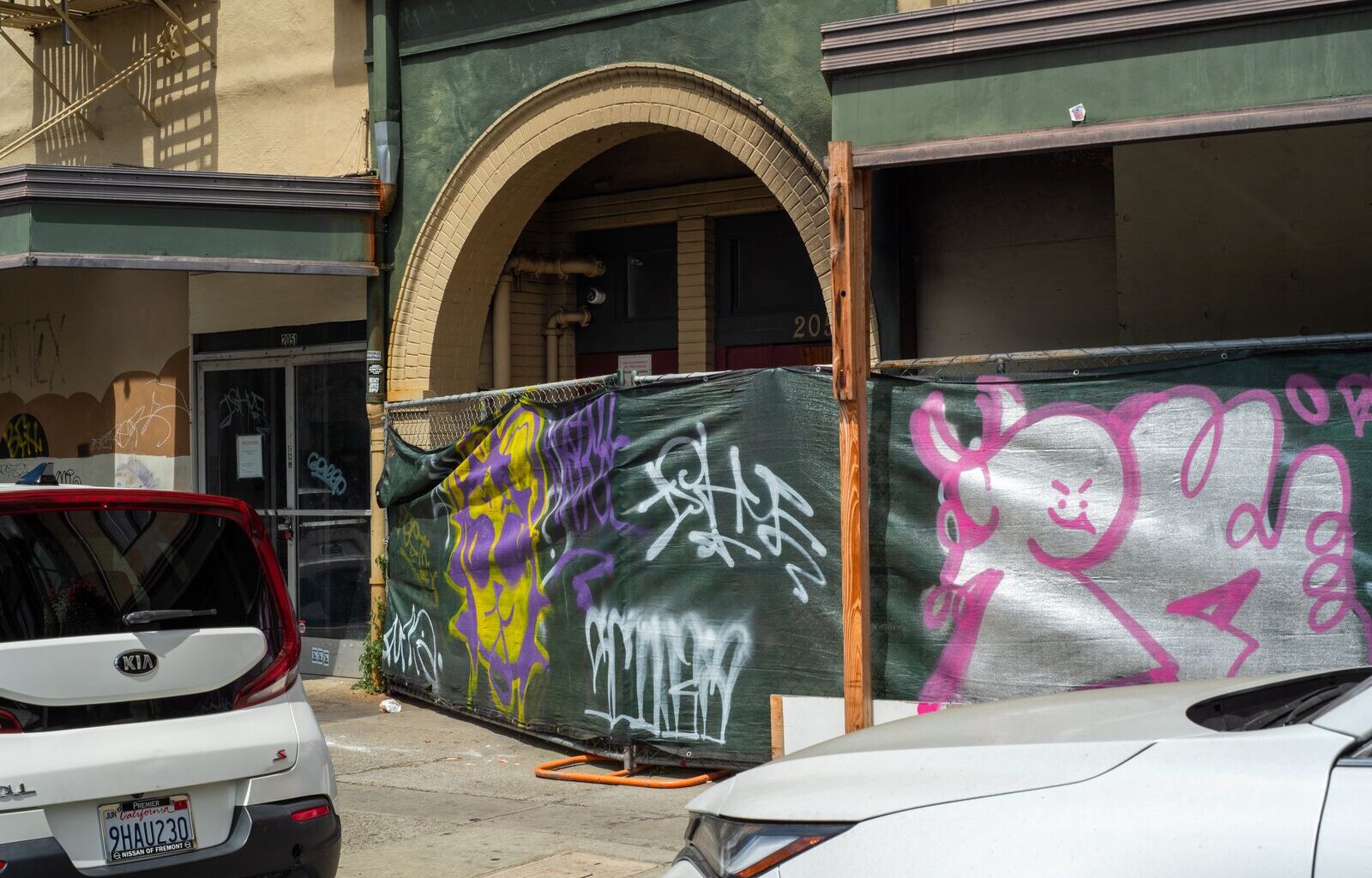
 An empty 51-unit apartment building at 2057 University Ave. was exempted from Berkeley’s new tax on vacant housing for two years. Credit: Ximena Natera for Berkeleyside
The owners of two empty Berkeley apartment buildings were set to owe nearly $1.4 million over the first two years of the city’s new tax on vacant housing. But Berkeley officials let them off the hook for those charges by interpreting the law in a way two people who helped write it said was generous to landlords and contrary to the intent of the tax.
Other property owners, meanwhile, have stiffed the city on more than $1.5 million worth of payments they owed under the vacancy tax last year, as a legal battle that could strike down Berkeley’s law plays out in a state appellate court.
The city has taken in about $404,000 as of this spring from charges for vacancies in the first year of the tax — well short of the multi-million-dollar annual revenue estimates its backers predicted, and scarcely more than the $372,000 the city has spent to implement the policy.
Berkeley voters approved the empty homes tax by a nearly two-thirds margin in 2022, and it went into effect in 2024. The tax charges most owners of housing that is vacant for at least half of a calendar year $3,000 to $6,000 per unit, depending on the size of the building; charges double for properties that remain unoccupied for a second year in a row. The first tax bills were sent out to property owners in the fall.
Empty apartment buildings weren’t taxed
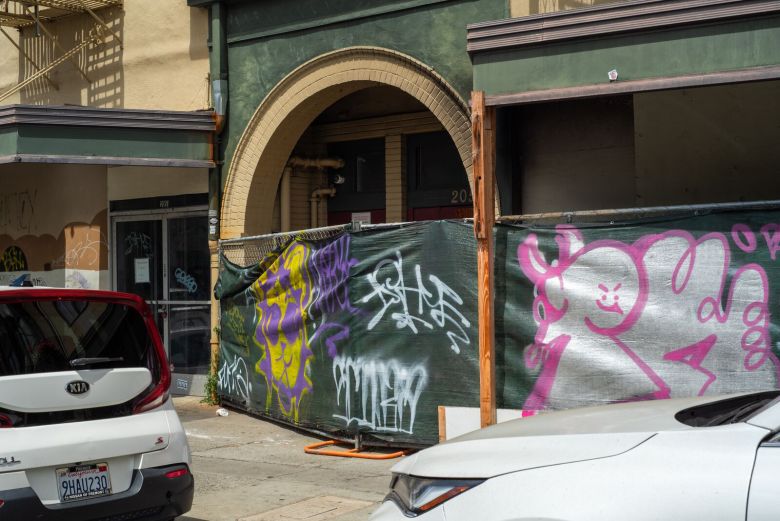
The city identified an unoccupied 51-unit apartment building at 2057 University Ave. as the property with the most vacant homes in Berkeley in 2024. That earned the downtown building’s owner — a Central Valley cardiologist named Hanumandla Raj Reddy, whose family ranks among the city’s largest private property owners — a bill for $306,000. The building, empty since a fire at a construction site next door damaged it in late 2020, remained vacant last year, which meant Reddy could’ve expected another $612,000 charge a few months from now.
The fifth-biggest vacancy tax bill went to the Chandler Building, which has sat unoccupied at the corner of Dwight Way and Telegraph Avenue since a fire in 2015, and racked up a $144,000 tab for its 24 empty units. The building is owned by brothers Greg and Chris Hoff, and also stayed vacant last year, which could have meant another tax bill for $288,000.
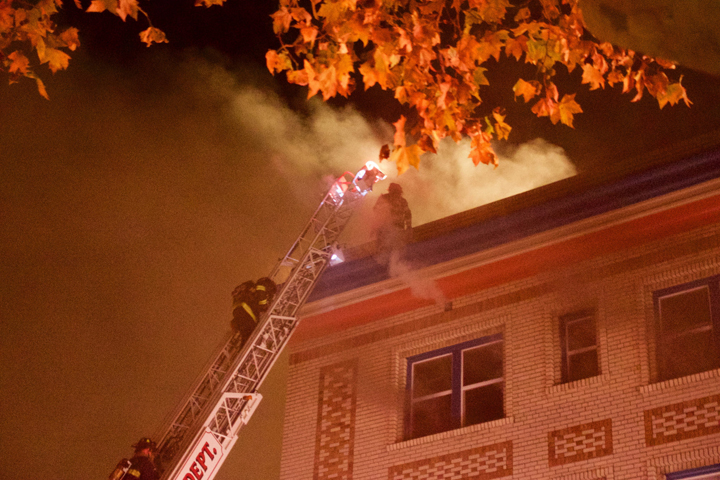 Crews fight a fire at the Chandler Building, an apartment building at Dwight Way and Telegraph Avenue, in 2015. The fire caused widespread smoke damage, and the building has been vacant ever since. File photo: Ted Friedman
But neither Reddy nor the Hoff brothers will have to pay those charges because of how Berkeley chose to apply a provision of the vacancy tax that excludes properties where homes have recently been made uninhabitable by a disaster. That’s one of several types of vacant housing that are carved out from the tax — units that are undergoing permitted renovation work, or are owned by nonprofits, for example, are also exempt.
The Empty Homes Tax ordinance states that vacant housing is exempted for “the two-year period following the date that a residential unit was made uninhabitable or unusable due to fire, natural disaster, or other catastrophic event.”
At first glance neither 2057 University Ave. nor the Chandler Building appear to fit that bill, since both disasters happened more than two years before the vacancy tax went into effect in 2024.
When Greg Hoff tried to seek an exclusion from the tax last September, a staff member in Berkeley’s Rent Stabilization Board, which was charged with implementing the law, told him he wasn’t eligible.
“Since the fire happened in 2015, [the property] does not qualify for the disaster period in 2024,” senior planner Lief Bursell wrote in an email, which Berkeleyside obtained through a records request.
Two months later, though, rent board staff reversed that decision for the Chandler Building, exempting it from the tax for two years. Reddy’s University Avenue building received the same two-year exemption.
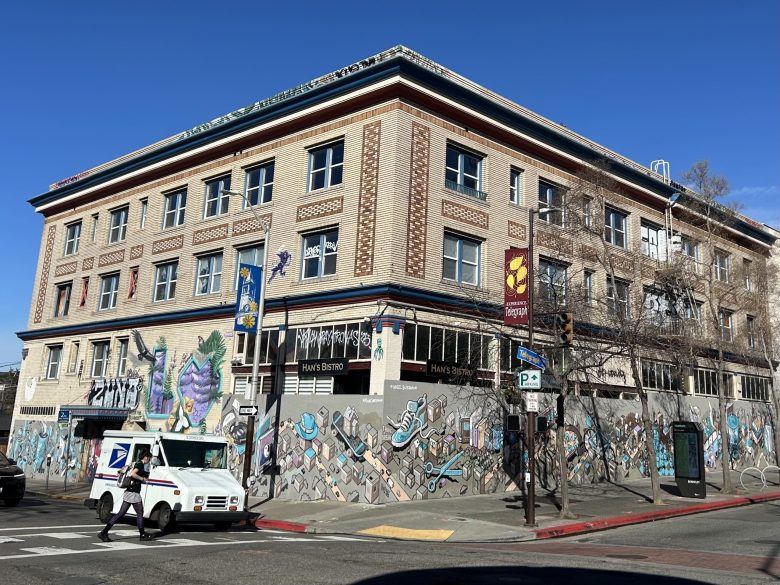 The city has approved plans to demolish most of the Chandler Building and build a new eight-story apartment building behind its brick facade. Credit: Nico Savidge for Berkeleyside
Bursell told Berkeleyside that was a decision made by the offices of Berkeley’s city manager and finance division, which opted to apply the two-year disaster exclusion period starting at the beginning of 2024, when the law went into effect, regardless of when the disaster occurred.
City spokesperson Matthai Chakko said officials made that interpretation “in order to give sufficient notice of this new and novel tax.”
The decision means Berkeley will forgo $1.35 million in potential revenue from vacancies in 2024 and 2025 for the buildings owned by Reddy and the Hoff brothers.
Rent Board records obtained by Berkeleyside show the city also excused tax bills for six other properties, with a total of 13 units, under the disaster provision. Several of those properties appeared to be undergoing permitted work that would have also entitled them to exemptions from the tax, however.
Vacancy tax authors oppose exemption
Former Councilmember Kate Harrison and Rent Board Chair Soli Alpert, both of whom worked to draft the vacancy tax, each told Berkeleyside they envisioned the exclusion period applying based on the date of the disaster, not the effective date of the ordinance, so that properties like the Chandler Building and the apartments at 2057 University would be taxed.
“That is a very generous standard,” Alpert said of the city’s interpretation. “It’s not the decision I would have made.”
At a time when Berkeley is considering painful job and service cuts to address a nearly $30 million budget deficit, he said, it was particularly disappointing to see the city give landlords so much leeway.
“That’s $1 million that could have gone to any number of things, including preventing layoffs,” Alpert said.
Chakko did not respond to Alpert’s comments.
In his email to Bursell, and in comments sent to Berkeleyside, Greg Hoff wrote that denying his property the disaster exclusion for 2024 would amount to making the law apply retroactively, which he argued would have been illegal. Hoff also contended that exempting properties for only two years after a disaster wasn’t fair.
“The timeline for getting a permit is impossible for a building like mine,” Hoff wrote to Bursell. “We have been working diligently and it has taken years.”
The brothers have spent much of the decade since the fire battling with their insurers, Chris Hoff told Berkeleyside, which has delayed their plans to address the vacant and graffiti-covered building. The Hoffs won approval from Berkeley’s Zoning Adjustments Board earlier this year to tear down all but the structure’s two exterior walls along Telegraph Avenue and Dwight Way, and build an eight-story, 63-unit building at the site. Tenants who had to leave the Chandler Building after the fire will have the right of first refusal for units in the new building.
Veronica Vasquez, a representative from the Reddy family property management firm Raj Properties, told a Rent Board staff member the company has sought permits to rehabilitate the building, however a city database does not show any active plans for work at the property. Reached by a reporter, Vasquez said she was not authorized to speak with the press; Reddy did not respond to multiple requests for comment.
Legal battle puts vacancy tax in limbo
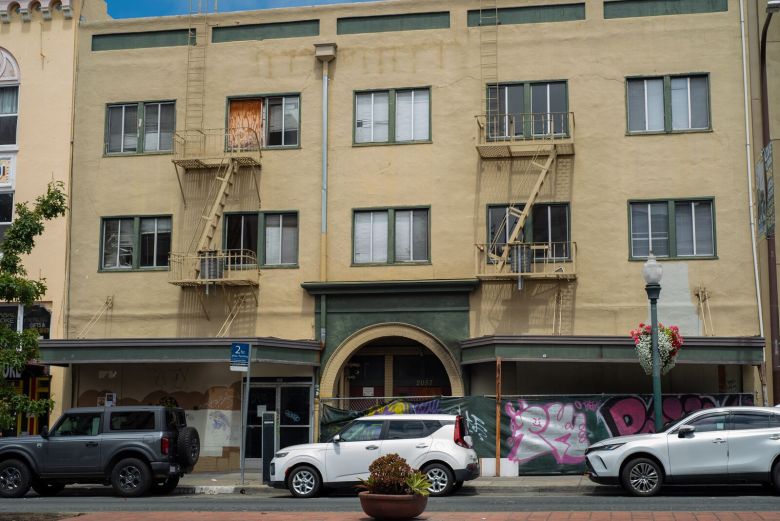 The owner of the empty apartment building at 2057 University Ave. would have owed more than $900,000 during the first two years of Berkeley’s vacancy tax. Credit: Ximena Natera for Berkeleyside
Chakko noted in an email to Berkeleyside that the two properties will be subject to the tax starting this year. But it’s unclear whether the law will still be in effect by the time the city would send out bills for those vacancies.
A case challenging a similar tax on empty housing that was approved by San Francisco voters the same year as Berkeley’s law is now before California’s First District Court of Appeal. San Francisco’s tax has never been enforced because a trial court judge ruled in favor of landlords who challenged the measure, and if the appellate court agrees that decision could spell doom for Berkeley’s tax as well.
The case already appears to be having an effect in Berkeley, Bursell told members of the Rent Stabilization Board at a meeting this month: The deadline for property owners to pay their vacancy tax bills was last November, he said, but as of January the city had yet to collect most of the money it was owed.
“We have heard from several owners that they’re monitoring the San Francisco court case before they’re going to pay,” Bursell told the board.
Outstanding tax revenues stood at over $1.5 million as of March, according to Chakko. The unpaid bills are subject to a 10% late payment penalty and accrue interest at a rate of 1% per month.
Berkeley Property Owners Association executive director Krista Gulbransen said her organization has advised its members to pay any taxes they are subject to. But Gulbransen suggested some may be concerned about getting a refund for vacancy tax payments if the court strikes down Berkeley’s law.
“I could understand why someone may not want to hand their money over to the government if they think there’s any possibility the tax is going to be overturned,” she said.
It’s not clear when the court of appeal will rule on the San Francisco case; attorneys for each side submitted briefs arguing their positions late last year, the case docket shows, but oral arguments have not yet been scheduled.
Backers of the vacancy tax maintain it has had a positive impact. According to Bursell, some landlords have told city staff they are fixing up empty properties so they can be rented out, while others have registered previously unreported leases with the board. Harrison, Alpert and other supporters have said the tax ultimately aims to push housing back onto the market, rather than be a cash cow for the city.
“The legal uncertainty will go away and the exclusion periods will expire,” Alpert predicted, “and I think [the tax] will be even more effective than it is now.”
berkeley’s vacant homes
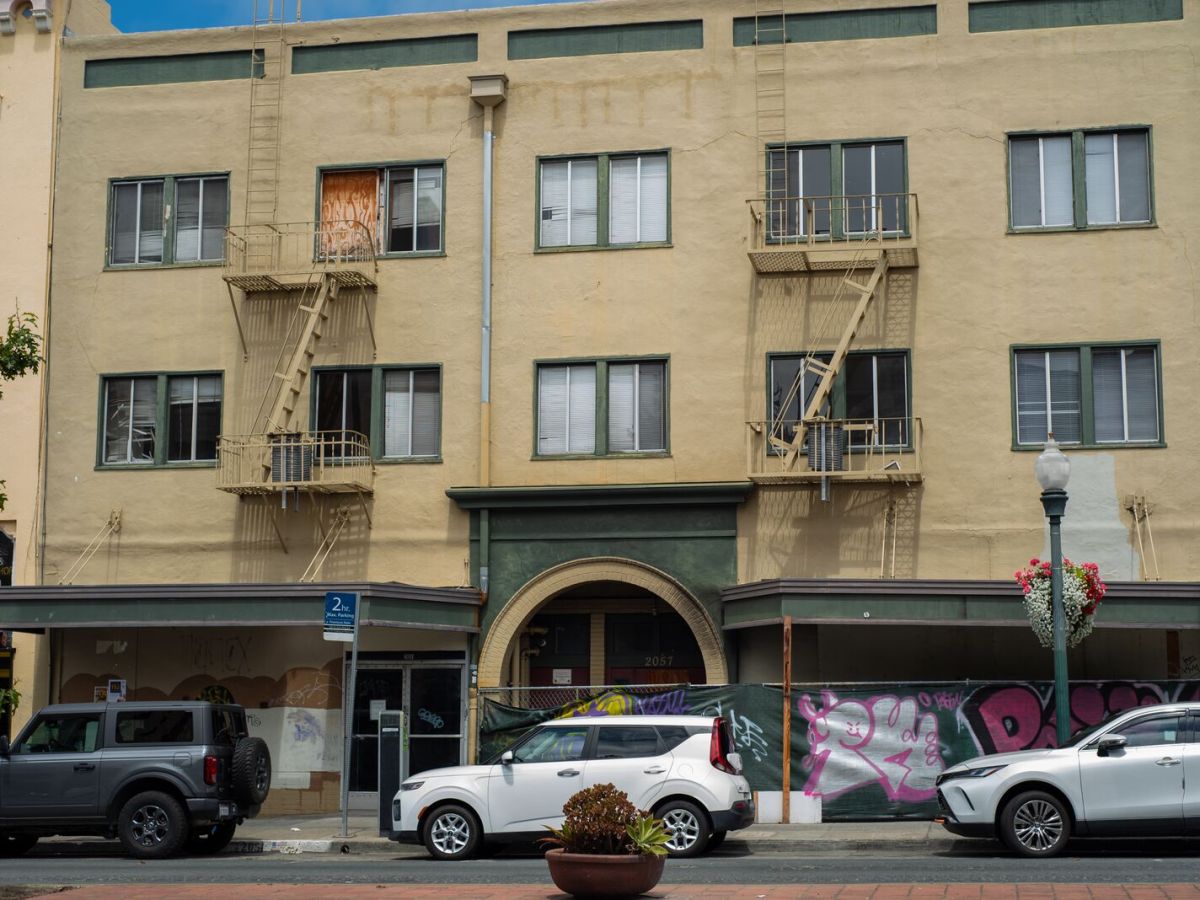
The Berkeley buildings with the most vacant housing units
September 4, 2025April 30, 2026, 4:32 p.m.
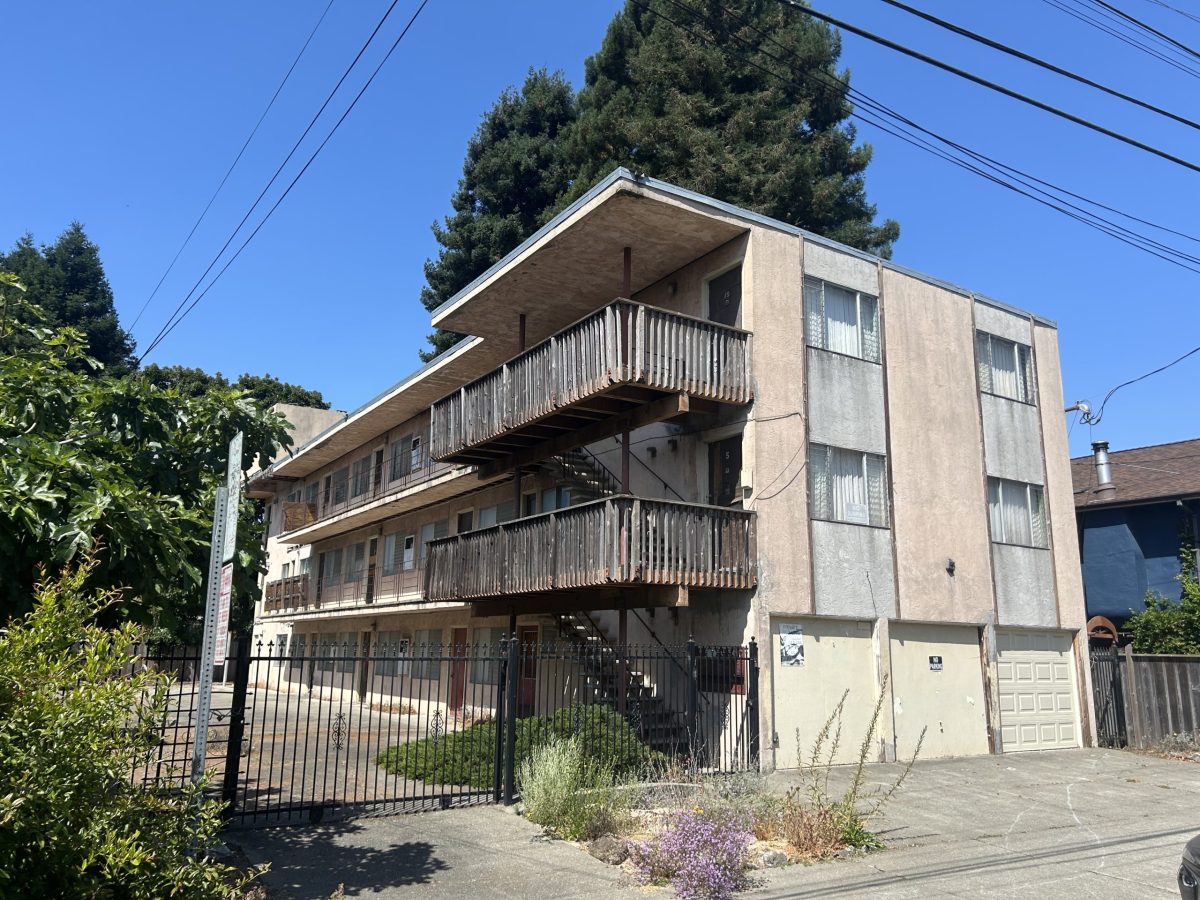
Empty empires: A few Berkeley landlords are sitting on several vacant buildings
September 5, 2025April 30, 2026, 4:36 p.m.
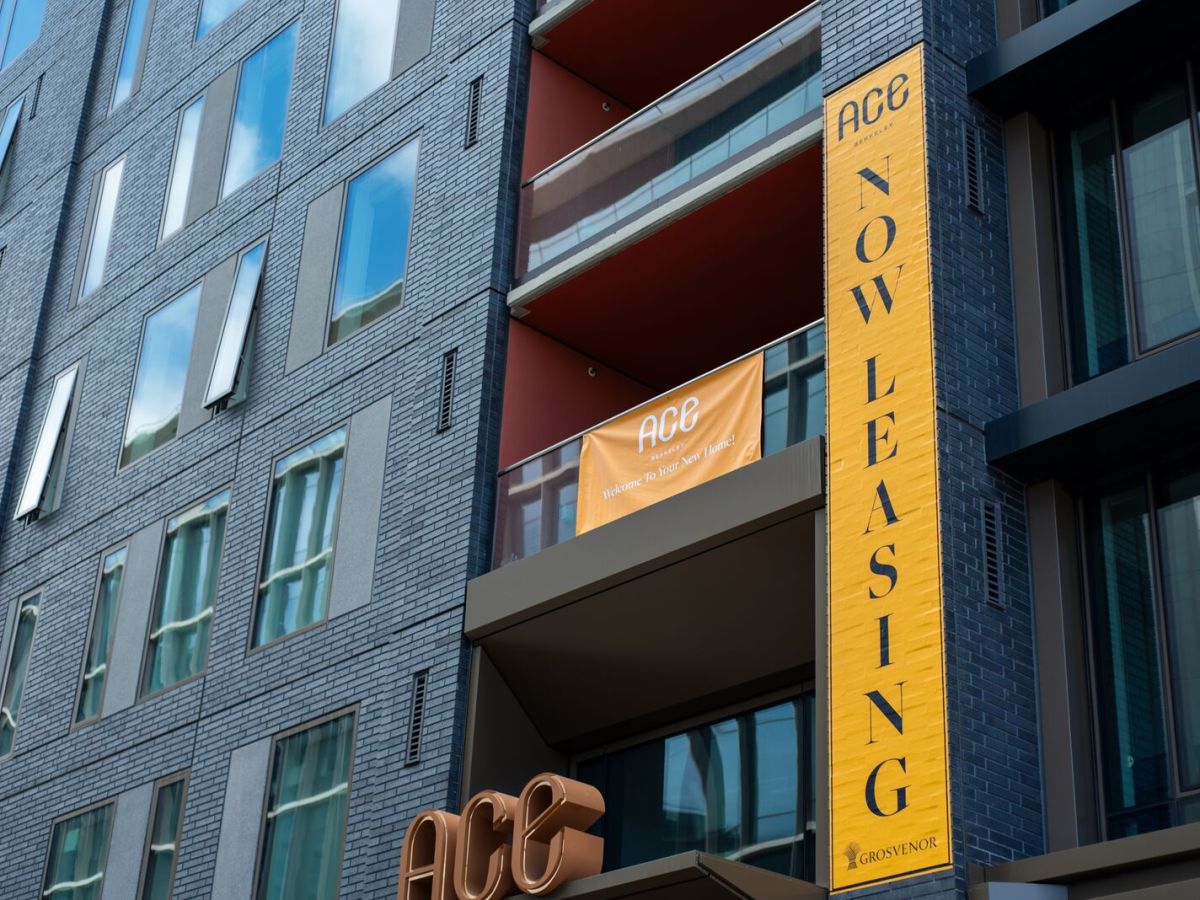
No, new Berkeley apartment buildings aren’t plagued by vacancies, data show
September 8, 2025April 30, 2026, 4:32 p.m.
“*” indicates required fields