
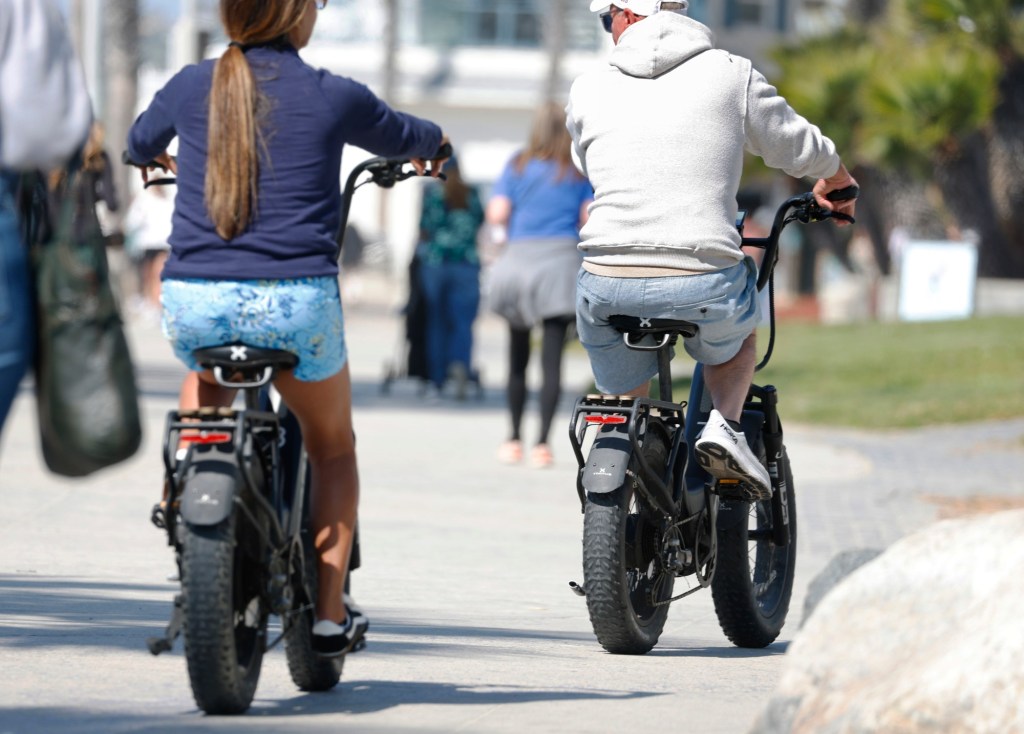
Imagine swiping a card at a corner station, unlocking a bicycle, riding to the store or your office or the park or the beach and locking the bike at another station. That is bikeshare. More than 300 American cities have it. San Diego does not.
San Diego is one of the only major U.S. cities without a bikeshare program. That is a failure of follow-through and a missed opportunity.
Some remember a failed attempt called DecoBike. It used heavy three-speed bikes that struggled on hills. Today, pedal-assist e-bikes have transformed the market. Hills disappear. A commute no longer requires a shower.
San Diegans already ride when given safe infrastructure. Protected lanes on 30th Street more than doubled cycling to over 130,000 annual trips. The Rose Canyon Bike Path recorded 162,052 rides in 2024. University Avenue recorded 112,921. Bikeshare would extend that success citywide.
Here is what bikeshare actually saves: time. Shawn Strande, a UCSD commuter, tried Spin bikeshare on campus. “It has reduced my commute by about 10 minutes each way. Shaving 20 minutes off a daily commute is fairly significant for me.” That is 20 minutes back in his day — every day.
Bikeshare also creates jobs. North America’s micromobility industry employs over 8,200 people. Every 75 shared bikes creates one local job. A 3,000 e-bike system would support 40 full-time, career-track roles.
It drives local business. D.C. research found 70% of business owners near bikeshare stations reported a positive impact, and 20% saw increased sales. With 32.5 million annual visitors, a tourist on an e-bike can visit Little Italy, Balboa Park and the beaches in one day — spending everywhere.
There are health savings, too. Insurers reimburse bikeshare fees like gym memberships. Regular activity lowers heart disease and depression. Even a fraction of residents replacing short car trips with bikes delivers public health returns that justify the cost. For families watching gas prices, especially these days, every car trip replaced is money back in their pocket.
No one demands sidewalks turn a profit. They are infrastructure. So is bikeshare. But it can generate revenue. Portland secured $18 million from Nike. Boston’s Bluebikes returns up to $3 million surplus annually. The city of San Diego’s Mobility Board has identified seven funding streams. The money is there.
So why did DecoBike fail? A 2016 Grand Jury report found three culprits: an uncooperative transit agency that blocked stations near trolleys, a city that refused to move underperforming stations, and a small coastal clique whose objections were based on aesthetics and unfounded fears. The jury found that 44% of beach-area rentals occurred outside traditional bike shop hours — bikeshare was not stealing customers; it was serving them when shops were closed.
DecoBike invested $8 million a decade ago. Today, private capital is ready. We just need to say yes.
The climate case is overwhelming. Transportation is San Diego County’s largest source of emissions. Nationally, 35% of bikeshare trips replace car trips. In 2024, micromobility offset 101 million pounds of CO2.
The equity case is just as strong. The letter that the city Mobility Board sent recently to Mayor Todd Gloria asks for stations in “Communities of Concern” and affordable pricing for CalFresh recipients. Last time, no kiosks were installed in La Jolla, while inland transit communities like City Heights advocated for better representation. This time, equity comes first.
We have the weather, transit, climate goals and proven technology. We have local proof on 30th Street. The only thing missing is the green light. Let us build a bikeshare system that is cleaner, healthier, more connected — and ready for San Diego.
Bubbins is vice president of the La Jolla Community Planning Association and a city of San Diego Mobility Board member. The views expressed are his own and do not necessarily reflect those of the organizations with which he is affiliated.