
LOS ANGELES — Fight over AI data centers grows in LA County
A growing pushback against hyper-scale AI data centers is taking hold across Los Angeles County, with one city already approving a ban — and others now watching closely.
What You Need To Know
Monterey Park became the first California city to ban hyper-scale AI data centers
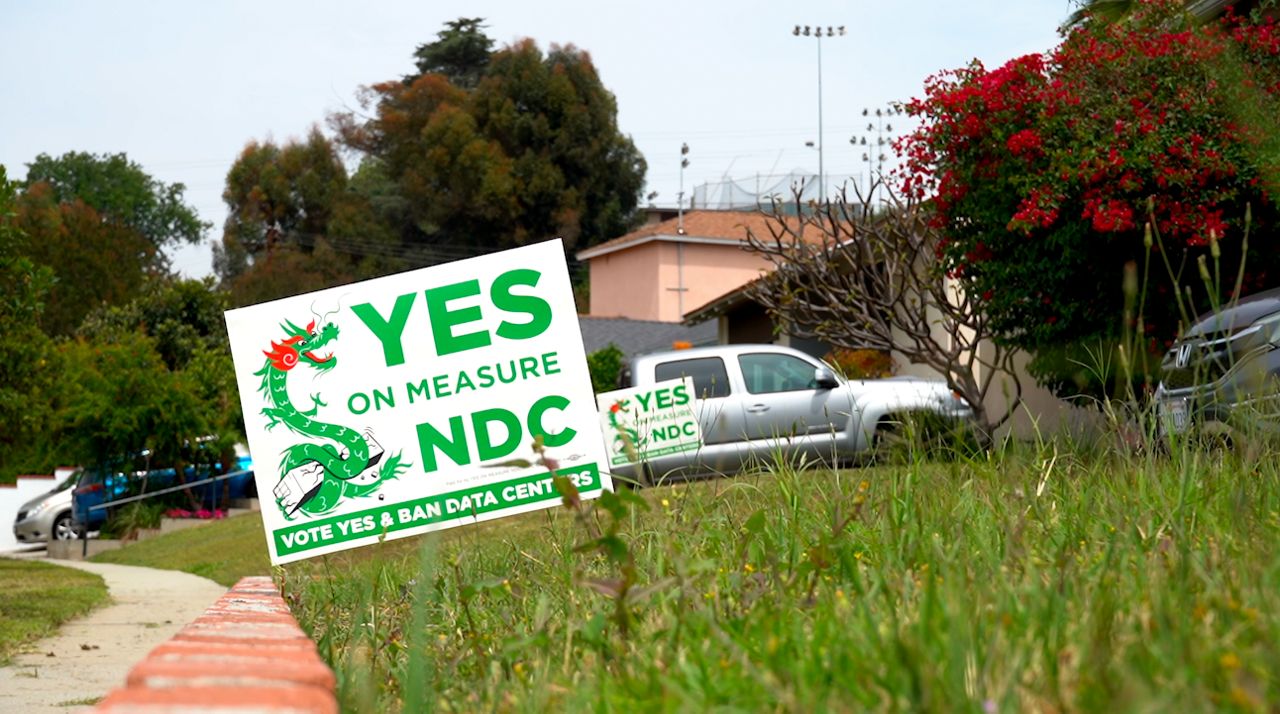
Voters will decide in June whether to fortify that ban through a voter-approved amendment to the city charter
Concerns include water use, power strain, noise and air pollution
LA County launched a 120-day study on health and environmental impacts
Monterey Park became the first California city to ban hyper-scale AI data centers.
Voters will decide in June whether to fortify that ban through a voter-approved amendment to the city charter.
Concerns include water use, power strain, noise and air pollution.
LA County launched a 120-day study on health and environmental impacts.
In Monterey Park, residents who successfully fought off a proposed data center project are now working to make that victory permanent.
“I’m surprised. Very surprised… shocked,” said Carrie, a Monterey Park resident who asked that her last name not be used. “But obviously happy… extremely happy… but cautious because we don’t really know what their plans are.”
Following community opposition, the developer behind the project withdrew its proposal. The city then passed an ordinance banning new hyper-scale AI data centers.
Now, residents are campaigning for a June ballot measure — known as Measure NDC, or “No Data Centers” — which would cement that ban through voter approval, protecting it long-term.
“So the fight is not over,” said resident Yun Wang. “And we’ve been busy knocking on doors.”
A growing regional issue
The debate unfolding in Monterey Park is part of a broader trend playing out across Los Angeles County and beyond.
Residents in communities like the City of Industry, Avocado Heights, and Bell have also raised concerns about proposed data center developments in their neighborhoods.
Many worry about the long-term environmental impact of hyper-scale facilities, which require significant amounts of electricity and water to operate.
Others point to potential health concerns, including constant noise and emissions tied to diesel-powered backup generators.
Those concerns recently prompted action from the Los Angeles County Board of Supervisors.
Supervisor Hilda Solis introduced a motion directing several county departments, including public health, public works, regional planning, and the fire department, to study the potential impacts of data centers.
“These developments have been happening nationwide,” Solis said. “And there will no doubt be an impact in Los Angeles County… in the very near future, if not already.”
The county’s report is expected back within 120 days.
Weighing risks and benefits
According to county officials, there are currently 74 data centers operating in Los Angeles County. Fewer than six are considered hyper-scale facilities, most in Vernon, El Segundo and Burbank.
Public health officials say some of the most common complaints tied to large data centers are noise and air pollution.
“These facilities include substations that create a constant hum,” said Dr. Barbara Ferrer, director of the LA County Department of Public Health. “Additionally, almost all large data centers rely on backup diesel generators, which cause both noise and air pollution.”
Still, industry leaders say the facilities can bring major economic benefits.
Liz Schwab, who leads data center development for Google, said a single data center can generate hundreds of millions of dollars in economic activity.
“For every one job at our data center, we support nine additional jobs in the broader economy,” she said.
“This is a community we’re fighting for”
For some residents, however, those economic promises are not enough to outweigh their concerns.
Carrie said she and her neighbors had even discussed leaving if the project had moved forward.
“We probably would have needed to sell our homes… because we didn’t feel comfortable staying here,” she said.
Wang said his family had similar conversations.
“My wife said if this data center gets built, then we’re moving,” he said. “And I said, I don’t want to move. I love Monterey Park.”
Instead, he chose to stay and fight.
“I’ve been fighting for my family, my home, my neighbors, my community,” Wang said. “Because this is a community we’re fighting for.”
With the June vote approaching, residents say the outcome could shape not just Monterey Park’s future — but serve as a model for other communities navigating the rapid expansion of AI infrastructure.