
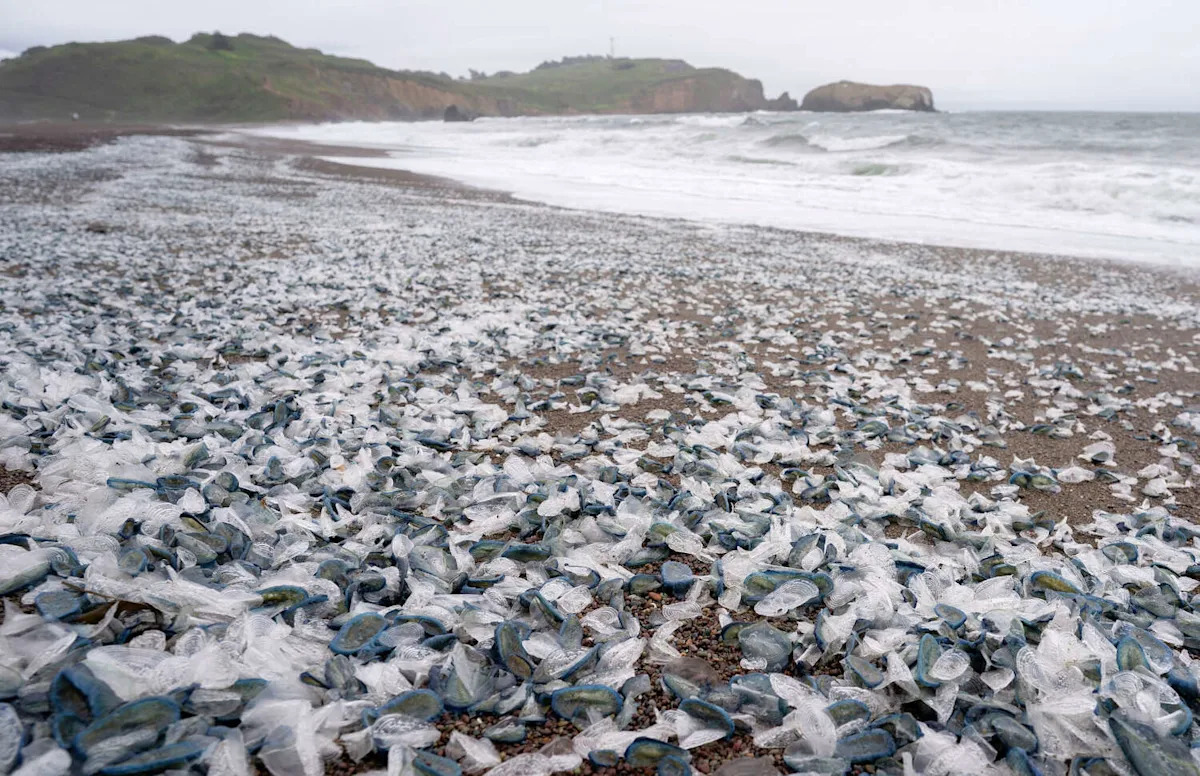
Thousands, or potentially millions, of tiny blue sea creatures have shown up along the California coast in recent weeks.
The creatures with a brilliant blue bottom and clear sail-like structure are called Velella velella, also known as “by-the-wind sailors.”
“Blooms” of these jellyfish-type animals tend to show up along California beaches in the spring as coastal winds blow their tiny “sails” directly onto the sand, said Chrissy Piotrowski, senior collections manager of invertebrate zoology at the California Academy of Sciences.
“They wash ashore en masse, because that’s sort of how they move around in the ocean,” she told SFGATE. “So you’ll see large blooms and mass strandings.”
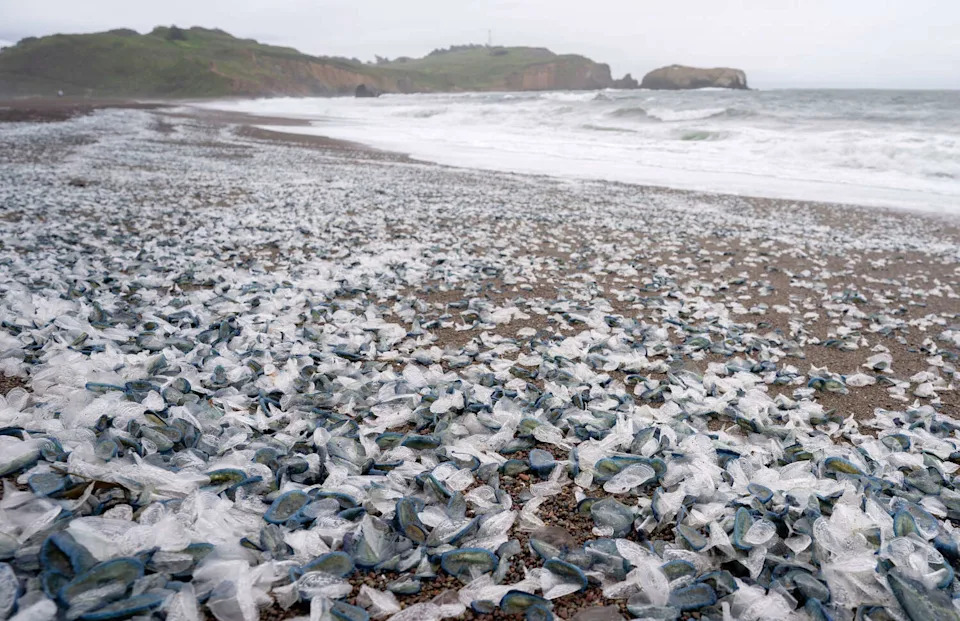
FILE: Hordes of Velella velella, or by-the-wind sailors, wash up on Northern California beaches on March 27, 2024, in Marin County. (Liu Guanguan/China News Service via Getty Images)
On social media, beachgoers have snapped photos showing the creatures in large piles on Bay Area beaches.
Piotrowski said no one is counting the strandings, so it’s unclear if there’s more of these creatures washing up along the coast this year, but she said they can be linked to a brewing oceanic phenomenon.
“They can be associated with El Niño events,” she told SFGATE.
In April, the National Oceanic and Atmospheric Administration forecast a 61% chance of El Niño developing as soon as this month. There is a 1 in 4 chance that El Niño could be “very strong,” according to NOAA.
Piotrowski said that in general, marine animal behavior can change during El Niño years as the water temperature increases.
“Species that don’t usually occur in our area … start to occur in our area because the water temperature is so different,” she said of El Niño years.
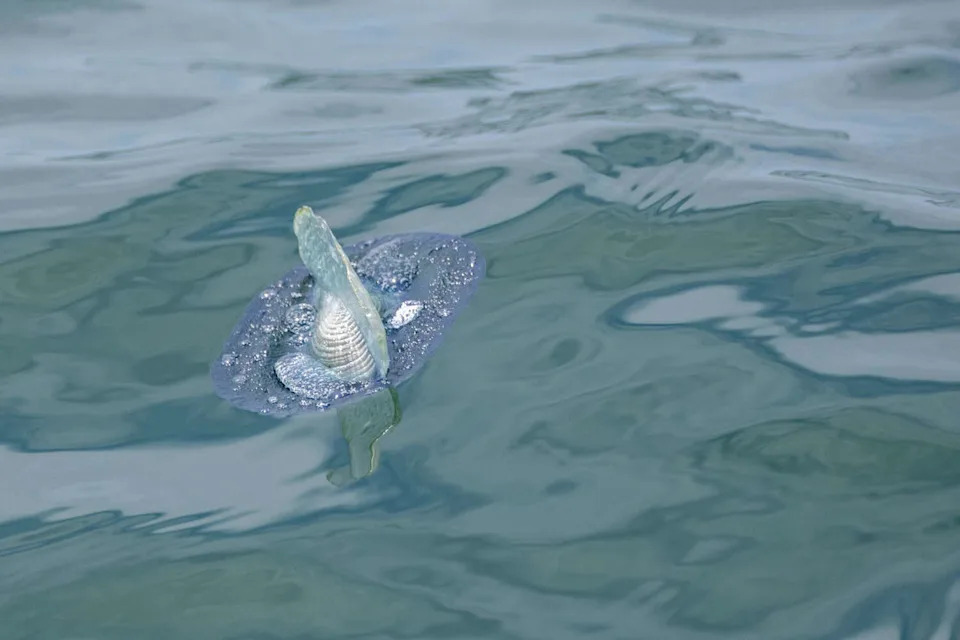
FILE: A Velella velella, or by-the-wind sailor, on the Pacific Ocean. (Michael Nolan/robertharding/Getty Images/Collection Mix: Subjects RF)
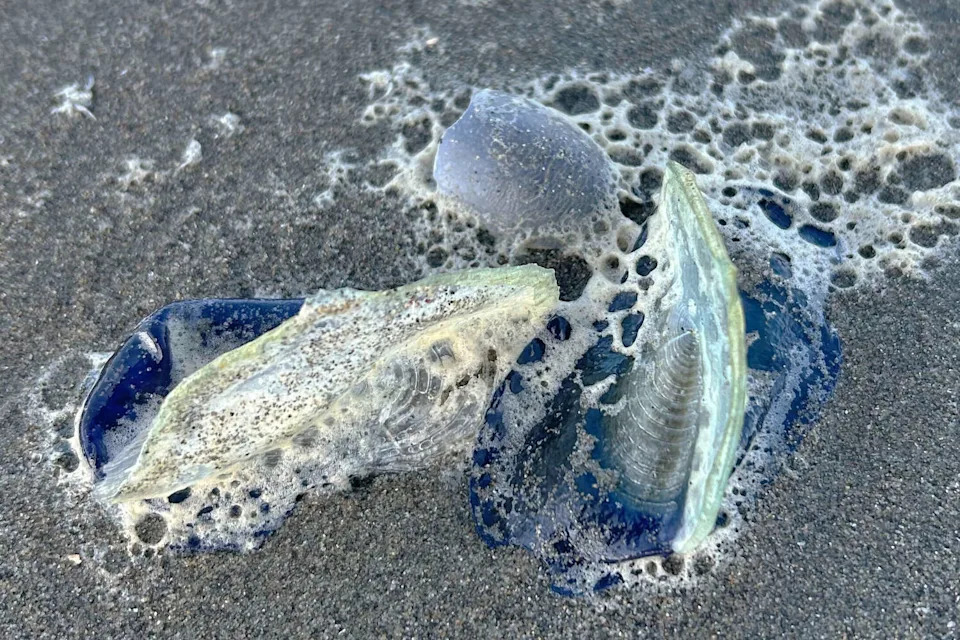
A Velella velella, or by-the-wind sailor, washed up on Ocean Beach in San Francisco, on April 27, 2026. (Gillian Mohoney/SFGATE)
El Niño is the warm phase of a natural climate pattern called the El Niño-Southern Oscillation, or “ENSO,” and occurs when there are “above-average sea surface temperatures” in the central and eastern parts of the tropical Pacific Ocean. As the ocean warms, trade winds weaken or, in some cases, blow in the opposite direction.
The way the Velella velella deal with warmer ocean temperatures, due to either El Niño or a changing climate, remains a mystery.
“We don’t know a lot about where velella are at all times and places,” she said, but since they are from tropical and temperate locations, they probably have “a thermal tolerance that’s relatively high.”
Piotrowski said the alien-looking creatures are pretty unique even in the animal world: They are the only species in their genus. While they look similar to a jellyfish, each “sail” structure is actually a colony of tiny creatures called hydrozoans. As they travel through the ocean, small stinging tentacles on the bottom gather food, including plankton and fish eggs.
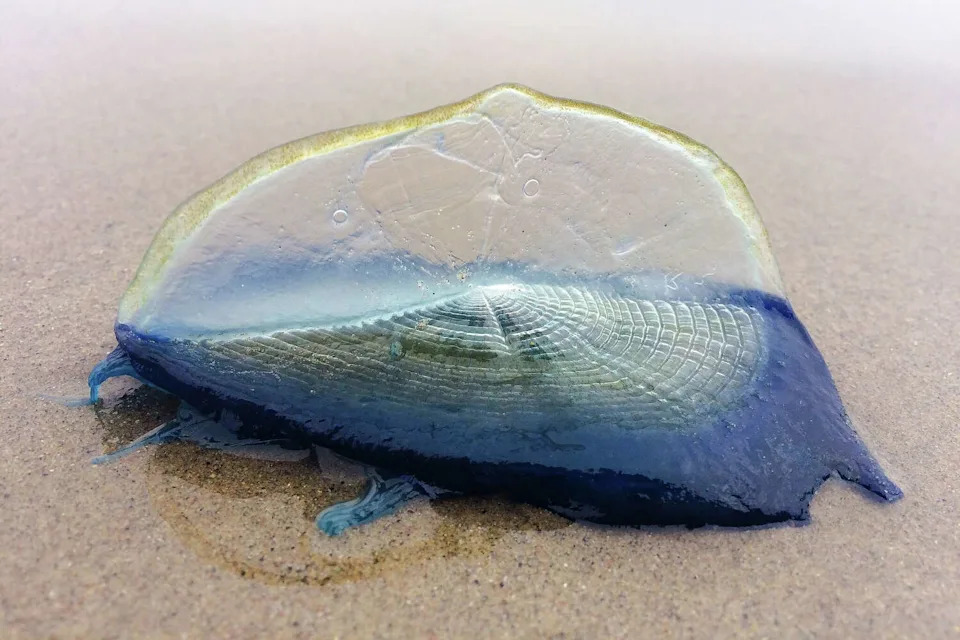
FILE: Close-up of a Velella velella sitting on sand after washing up on the shore. (Autum Sasala/Getty Images)
If they run out of food, Piotrowski said, they can use symbiotic algae to process sugars to survive. Their brilliant blue color comes from pigment related to their food and helps to protect them from UV rays and give them camouflage on the water. And although they are well adapted to survive the harsh conditions at sea, after the wind sends them onshore, their time quickly runs out.
“They just start to disintegrate and blow away,” she said.
SFGATE climate and science reporter Anna FitzGerald Guth contributed to this report.
This article originally published at Thousands of sea creatures stranded on California shores as El Niño brews.