
Noah Ravenscroft stabbed his wife to death in 2017 inside their Commerce Township residence — while their three children were in the home.
Isaias Porras killed his 15-month-old son by severe and ongoing beatings, then hid his body under a pile of blankets in a Farmington Hills motel room in 2021.
Kelli Bryant allegedly left her two daughters and son to live alone for years in a filth-ridden Pontiac condominium with broken plumbing, reportedly forbidding contact with the outside world.
These are a few of the hundreds of criminal cases in Oakland County from recent years which resulted in judicial referrals for psychiatric/psychological evaluations to assess the defendants for criminal responsibility and competency to stand trial.
And the evaluation orders are on the rise in the county — and statewide.
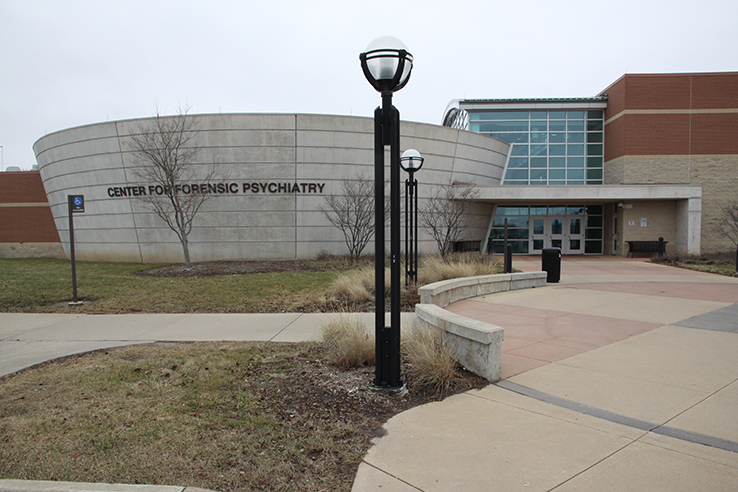
Conducted at the state’s Center for Forensic Psychiatry in Saline, assessments generate reports for judges to determine whether a mental disorder is a mitigating factor in a case and, if so, how to pursue justice as required by law.
Criminal responsibility is determined by the defendant’s ability to “know right from wrong” at the time when a crime was committed, explained Lindsay Abramson, deputy chief public defender of Oakland County’s public defender’s office. An example would be someone afflicted with schizophrenia who commits a crime while off their prescribed medication, she said.
To be competent for trial, a defendant must be mentally capable to assist in his or her defense in a rational manner, Abramson said. That includes demonstrated understanding of his or her rights, criminal charges he or she is facing, and the nature of the proceedings. If incompetent, the evaluator will assess whether or not the defendant is likely to have competency restored — through medication and/or other intervention. Treatment at the CFP typically maxes out at 15 months; if necessary, the defendant can be transferred to another facility for continued treatment.
 Lindsay Abramson (photo provided)
If a defendant is determined to be incompetent but not restorable — which Abramson said is rare — criminal charges are typically dismissed without prejudice, which gives prosecutors the option of refiling the case, sometimes depending on how much time has elapsed. But for homicides or other cases punishable by life in prison, there’s no time limit for the prosecution to petition the court to refile charges.
The assessments, also known as forensic evaluations, are conducted as ordered by judges, who either initiate them or act on request of a defense attorney or prosecutor. The defense and prosecution can challenge evaluators’ opinions as to a defendant’s competency or criminal responsibility, and petition the court for an independent assessment — but ultimately, the presiding judge has the final say.
As explained by Lynn Sutfin, public information officer for the Michigan Department of Health and Human Services — which manages the CFP — most evaluation orders are for felony cases, though they can be requested “across the full spectrum of criminal charges, from minor misdemeanor offenses to the most serious, violent felonies.”
According to MDHHS data, from 2021 to 2025 there was a 50% increase in forensic evaluation orders for Oakland County cases:
• 2021 – 238 orders
• 2022 – 307 orders
• 2023 – 311 orders
• 2024 – 349 orders
• 2025 – 357 orders
It’s a similar trend seen statewide during the same years, where 17,543 evaluations — or an average of 3,508 per year — were ordered. This year, as of early April, the CFP had received 956 competency evaluation orders.
The percentage of referrals for misdemeanor cases continues to rise, she added: In 2021, 12% of competency evaluation orders received by the CFP were for misdemeanor cases, while in 2025, 20% of the orders received were for misdemeanor cases.
Sutfin said approximately 20% of criminal responsibility evaluations issued result in opinions of not guilty by reason of insanity, though “the number of defendants adjudicated NGRI remains low and relatively steady over the last several years.” The opinion rate for incompetent to stand trial is approximately 33%. “Misdemeanor cases are more likely to be opined incompetent” — 36%—compared to competency exams for felony cases, at 28%.
‘A right to evaluation, treatment’
CFP evaluations are conducted by psychiatrists and psychologists, while social workers are also utilized to conduct competency to stand trial evaluations. Sutfin said assessments typically include a “detailed clinical interview,” review of medical and mental health records, police reports, jail information and sometimes psychological testing.
Approximately 36 staff members are assigned to the CFP’s evaluation department — some on a part-time basis. There are also four former employees contracted to conduct evaluations.
By state law, assessment reports must be submitted to the court within 60 days from the date they are ordered, but delays aren’t uncommon. Abramson said “more often than not” the deadline isn’t met and a new hearing is scheduled for several weeks out, or longer, and that weighs on a jailed defendant awaiting adjudication. It also postpones justice for victims, she said.
“I’ve tried and tried to get repercussions but haven’t been successful,” she said. “I’ve personally filed motions for orders to show cause as to why — it’s a large problem. Some judges grant the motions for the (CFP) to explain why, but some judges accept (the delays without further action).
Abramson attributes much of the time lag to the CFP being shorthanded, and said that needs to change. “I don’t question they are understaffed, but the law is the law,” she said.
“More funding is likely needed, possibly a statute change is needed…something needs to happen,” Abramson said. “Clients have a right to evaluation and treatment. The forensic center not complying with a court order — I ask for consequences. It’s a system-wide problem.”
Sutfin acknowledges a backlog; it peaked after the COVID-19 pandemic’s rebound in referrals and a staffing shortage, she said. However, she added, it’s being successfully addressed.
“The waitlist has been reduced significantly, and scheduling continues to improve due to the implementation of several strategies,” Sutfin said. These include performing evaluations via video conferencing, prioritizing felony cases and in-custody defendants, and increasing staffing.
Also, evaluations for competency to stand trial are prioritized over those for criminal responsibility which “devotes evaluation resources to the greatest demand and minimizes delays in court proceedings,” she said.
The CFP’s budget has also increased over the past two years, but Sutfin said this is primarily to offset inflation and “cost of living pressures associated with patient census and acuity, such as pharmacy, food and payroll.”
The average patient census was at 247 for fiscal year2024 compared to 268 for fiscal year 2026 through this past January. Gross appropriations rose from $100,300,000 for fiscal year 2024 to $114,200,000 for fiscal year 2026.
Outcomes vary
Noah Ravenscoft’s case never made it to trial. Approximately 15 months after he murdered his wife, Kristy, an Oakland County judge accepted a plea of not guilty by reason of insanity, buoyed by results of his CFP evaluation and an independent assessment.
In his court file, the CFP evaluator concluded that Ravenscroft was competent to stand trial but that he “met the statutory criteria for mental illness” when he killed his wife. His mental illness “caused him to lack substantial capacity to appreciate the nature and quality” of his criminal actions — and that he was legally insane.
The independent evaluator had a similar conclusion, stating, in part, that Ravencroft’s behavior appeared to be “the product of mental illness” and that he “didn’t have substantial capacity to appreciate the nature and quality of the wrongfulness of his actions….lacked substantial capacity” to conform his behavior, and met the state requirements for legal insanity. The judge agreed.
Isaias Porras’s case took a different route. He was found to be incompetent for trial but restorable, and eventually regained competency through inpatient treatment including medication, according to court records.
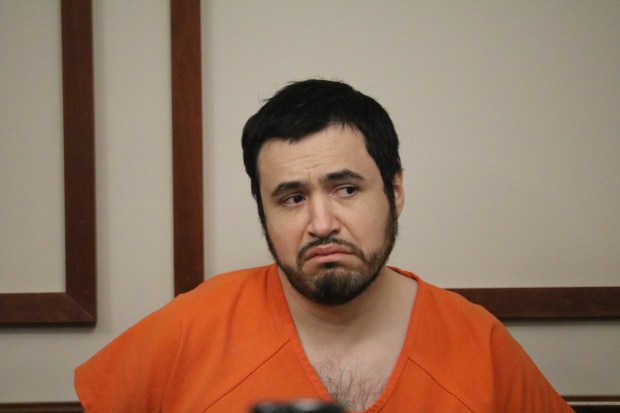 Isaias Porras at his 2022 preliminary exam in Oakland County (Aileen Wingblad/MediaNews Group)
A jury trial was held in late 2024 and Porras was found guilty of first-degree murder and first-degree child abuse for the death of hs son, whose body was found by police during a welfare check.
Isaias Porras is serving a life sentence in prison; the child’s mother, Amanda Jajou, is serving a 15- to 60-year prison sentence for second-degree murder and accessory after the fact to a felony. She pleaded no contest to both charges.
For Kelli Bryant, a hearing in Oakland County Circuit Court is pending for review of her competency evaluation — which has not yet happened. She failed to appear for her evaluation scheduled for April 16, so Oakland County Circuit Judge Mary Ellen Brennan revoked her bond. Bryant was then taken to the Oakland County Jail. The evaluation date will be rescheduled.