
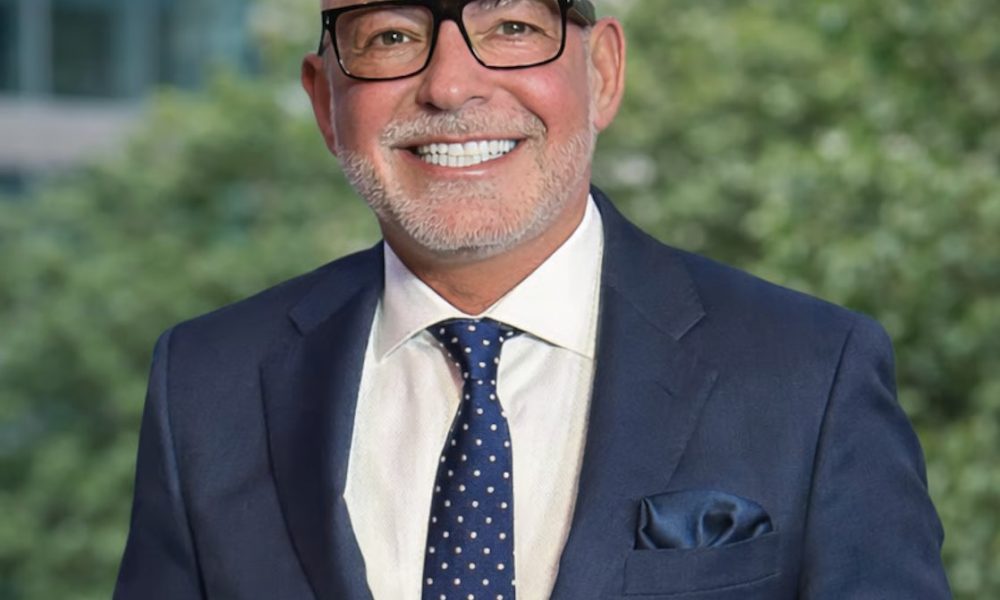
Some people move to West Hollywood and find themselves. Others, like Marco Colantonio, seem to arrive already equipped with their own blueprint for the place and promptly get to work. From founding the hyperlocal media outlet, Weho Times, that would rather proudly snatch the mic than whisper in the margins to building a real estate career grounded in something far more human than square footage and cookie-scented open houses, Colantonio has always worked with intention and heart. And he does this all with a fresh-pressed suit and smile from sea to shining sea.
In our conversation, Colantonio traces a path that’s anything but ordinary. From hospitality entrepreneur to caregiver, from being outed in a cheeky headline to becoming a voice for others who deserved to be heard on their own terms. Along the way, WeHo transforms from backdrop to wingman, a place where personal truth, storytelling, and a well-timed leap of faith all meet up for vodka sodas at Micky’s happy hour. The result is a perspective shaped not just by his accomplishments and accolades but by who he has chosen to be, and the communities he’s helped make just that much more seen and a lot more livable. The house is open.
What first drew you to West Hollywood, and more importantly, what kept you there?
My journey to West Hollywood wasn’t linear—it was deeply personal. I was working in hospitality on the East Coast and eventually developed a small global restaurant company, with Denver becoming our home base. Around that time, my father moved there, and shortly after, he was diagnosed with terminal cancer. I stepped away from a high-profile career to care for him.
When my father passed, something shifted in me. I was tired of looking in the mirror every morning and pretending to be someone I wasn’t, instead of embracing my true self. That was the moment I came out—fully and honestly—and it changed the course of my life. Around that same time, I was “outed” in The Denver Post—and I say that a bit tongue-in-cheek. I was already a recognizable figure in the community, and a friend of mine happened to be the gossip columnist. The headline read something like, “Well-known restaurateur and man about town comes out of the pantry.” It was very Denver… and very of its time. But storytelling and community had always been part of who I am. I even started a gay nightlife blog with a friend called GAY5280.com—which was a lot of fun, though definitely not paying the bills.
After that chapter, I made the decision to move to West Hollywood and start over—completely. I was 40 years old, and WeHo gave me something I didn’t fully realize I was searching for: a place where I could be fully seen, supported, and safe. It was a dream—a queer, tolerant, vibrant community where you could truly begin again.
What kept me there was something even more profound. Early in my real estate career, I was managing a building on Harper Avenue when a young lesbian couple applied for an apartment. They didn’t meet the landlord’s financial criteria—on paper, they didn’t qualify. But they were both working two jobs, determined, and I asked them why this apartment—why West Hollywood?
Their answer has stayed with me forever. They said, “We just want to live in a neighborhood where we can walk down the street holding hands and feel safe—without being judged or harassed.”
I advocated for them, and the landlord approved their application. They became incredible tenants—but more importantly, that moment defined my purpose. That’s what West Hollywood meant to me—and still does.A place where anyone—any two people—can walk down the street holding hands and feel safe. That’s not just a neighborhood. That’s a promise.
And it’s one I’ve carried with me ever since—so I guess, in a way, I did get the key to the city.
Take us back to the early days of WeHo Times… What was the original vision behind it, and what space were you trying to fill in the community with its creation?
West Hollywood embraced me in a way that was transformative. I became close with a Human Services Commissioner—my dear friend, Steven Davis—who encouraged me to apply for a Board for Commission seat. I was ultimately appointed, unanimously, to the Disabilities Advisory Board by the City Council. Sitting across from each councilmember during that process, I was struck by their passion and commitment. It inspired me.
At the same time, I formed friendships with some of the most respected voices in LGBTQ journalism—Paulo Murillo, Karen Ocamb, Tom Senzee, Dana Miller, and James Mills. Their passion for truth, accountability, and community storytelling left a lasting impression on me.
When WeHo News disappeared and WeHoVille emerged as a dominant platform, I became a contributor—but I often felt there wasn’t room for diverse perspectives. West Hollywood may be small in footprint, but it has a global impact. I believed it was too important to have a single voice shaping the narrative.
So late in 2016, I launched WeHo Times. It started light—community features, nightlife, culture—but very early on, everything changed. We broke what became one of the most significant stories in the city’s history: “Sex, Politics, Meth and Death in West Hollywood.” It was the story of Gemmel Moore, who died of a methamphetamine overdose in the home of a powerful political donor.
That story changed my life. It gave a voice to someone who no longer had one and helped spark an investigation that ultimately led to justice. When Ed Buck was finally convicted, Gemmel’s mother, LaTisha Nixon, reached out to me with a message I will never forget—thanking me for listening, for believing her, and for having the courage to publish when others would not.
That remains the single most meaningful accomplishment of my life.
WeHo Times became more than a publication—it became a platform for accountability, truth, and community voice. From there, I was fortunate to see the publication evolve in extraordinary ways. I credit Paulo Murillo, who took over the fledgling platform as Editor-in-Chief and Publisher. With his talent as both a writer and photojournalist, along with his unwavering passion and commitment, he transformed WeHo Times into the #1 online source for news, culture, and entertainment in West Hollywood. I’m grateful to continue contributing today through my real estate column and to remain part of a platform that continues to inform, engage, and serve the community.
How would you describe the energy of West Hollywood during that era in contrast to today? What role did community-driven journalism play in sculpting queer identity and visibility in WeHo during this?
That era was electric! West Hollywood was nearing the end of its 20s as a city and about to enter its third decade, and many of the pioneers who fought for cityhood were still deeply engaged. Activism wasn’t just present—it was amplified. People believed their voices mattered, and they acted on it. You saw it in everything—from John D’Amico’s rise to City Council, to grassroots movements like Save Tara, to Stephanie Harker’s fight to preserve Plummer Park. These weren’t symbolic efforts—they created real change.
Community-driven journalism played a critical role in that environment. It informed, challenged, and amplified voices that might otherwise have been overlooked. It helped shape identity, visibility, and civic engagement within the LGBTQ community. There was a sense that every issue mattered—and that you could make a difference. And people did.
Do you feel some things have been lost while others have been gained regarding how LGBTQ+ narratives are shared? Then vs now?
Be careful what you wish for. We’ve gained visibility, representation, and broader acceptance—and that’s something to be grateful for. But there has also been a shift. The urban village feeling that once defined West Hollywood has, in many ways, disappeared as the city has evolved.
That said, I remain hopeful. West Hollywood is still a beacon for the LGBTQ community—especially for younger generations discovering their voice. My hope is that new voices continue to emerge, stay engaged, stay loud, and remain connected to the core values that built this city: tolerance, acceptance, hope, and community.
Growth is inevitable—but engagement is a choice. And I believe the future depends on a community that continues to care, participate, and hold leadership accountable. West Hollywood should never simply blend into Los Angeles—it should always stand apart.
WeHo has long been seen as the queer cultural hub of the West Coast. When did you first start taking notice of a shift toward Palm Springs?
I’ve been coming out to Palm Springs for about 20 years, but around seven years ago—just before the pandemic—I started to notice a real renaissance. The city was getting its swagger back. The energy was shifting. The crowd was getting younger, the social scene more dynamic, and there was a renewed focus on hospitality and experience.
Then the pandemic accelerated everything. Angelenos and WeHo residents needed an escape—a place that felt open, sun-filled, and livable just a couple of hours away. Palm Springs offered that in a way no other place could. And it hasn’t slowed down since.
To me, Palm Springs is the gayest city there is. It’s evolved into something incredibly special—a sister city to West Hollywood, but with its own rhythm, its own identity, and a lifestyle that feels both elevated and effortless.
You’ve described Palm Springs as something of a “next chapter.” In your opinion, what about this gay oasis is so appealing to the queer community today?
Everything! Palm Springs is truly a happy place. Years ago, someone said something to me at a bar on Arenas that always stayed with me: “If you ever move here, leave the baggage behind—no one wants to hear it.” And there’s truth in that. There’s a lightness here—a reset.
The city celebrates community in a very intentional way. The Pride flag flies high year-round. Modernism Week feels like a season that never ends. There are still clothing-optional resorts, a sense of freedom, and a culture that embraces individuality. Palm Springs doesn’t just welcome you—it lets you be.
Do you think Palm Springs has become LA 2.0 or is it something entirely independent in character and vibe?
Palm Springs is its own world—completely independent in character and spirit. West Hollywood is dense, urban, and immediate. Palm Springs is space, light, and ease. It’s not LA 2.0—it’s something entirely its own. And that’s exactly why people are drawn to it.
How has your background in media influenced the way you approach real estate today?
Journalism taught me that knowledge is power—and more importantly, that integrity matters.
At the end of the day, this isn’t just about transactions—it’s about impact. It’s an honor and a privilege to help people navigate one of the most meaningful decisions of their lives and guide them toward their next chapter.
What are queer buyers today looking for that might differ from previous generations?
Marriage equality changed everything. Before that, queer buyers had to navigate very real concerns around legal protections, ownership rights, and recognition—especially when purchasing property as a couple. Those uncertainties absolutely influenced how, and even if, people chose to buy. Today, that’s no longer the barrier it once was.
What I see now is a shift in mindset. Queer buyers are approaching homeownership with a level of confidence and long-term vision that simply wasn’t as accessible before. They’re building wealth, putting down roots, and making decisions as couples and families with the same sense of security as anyone else.
In a place like Palm Springs, that also translates into lifestyle. Buyers aren’t just looking for a place where they feel safe—they’re looking for a home that reflects who they are, how they live, and the community they want to be part of. It’s no longer just about protection—it’s about possibility.
You’ve witnessed both the nightlife-driven era of WeHo and the more lifestyle-oriented culture of Palm Springs. Do these two worlds intersect?
Absolutely. In many ways, they’re part of the same journey. West Hollywood has always been electric—it’s vibrant, alive, and full of energy. Palm Springs is a different kind of magic—more grounded, more effortless, but no less vibrant.
It really is a tale of two queer cities. One celebrates where you are. The other embraces where you’re going.
And understanding that journey is what allows me to guide my clients—not just to a home, but to the life they’re stepping into next.
For more info, head to MarcoHomes.com