
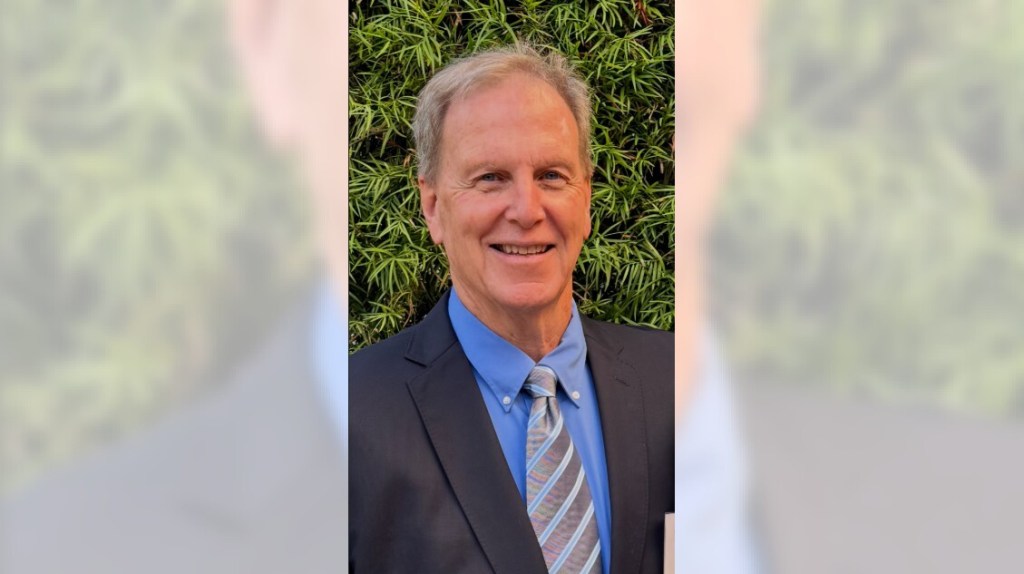
Ahead of the June primary election, the Southern California News Group compiled a list of questions to pose to the candidates who wish to represent you. You can find the full questionnaire below. Questionnaires may have been edited for spelling, grammar, length and, in some instances, to remove hate speech and offensive language.
Name: Tom Woodard
Current job title: Retired CEO
Age: 70
Political party affiliation: Libertarian
Incumbent: No
Other political positions held: None
City where you reside: Carlsbad
Campaign website or social media: woodardforgovernor2026.com
What is your top economic development priority for the state? How will you work with cities to achieve this? (Please answer in 250 words or less.)
Lower energy costs to reduce the cost of living in California. Energy is the primary driver of the high costs that Californians experience today, affecting every aspect of our economy, yet the costs of power and fuels have been made expensive by government regulations meant to reduce CO2 emissions. These regulations, however, have done nothing except force our refining offshore to other countries, where their standards are lower than if we produced our own fuel right here in California. The result is 38% more CO2 emissions and the highest energy and fuel prices in the country.
My plan would immediately eliminate these regulations and rely on our own oil and natural gas, reopen refineries and lower fuel costs below $4 per gallon, restore 200,000 jobs and save Californians $40 billion per year. See my policy for how to do this on my website: “Crush Fuel Costs,” “Abundant Energy” and “Smart Conservation Revival.”
Affordability continues to be top of mind for Californians. What is one specific area where the state could bring about immediate relief for residents? (Please answer in 250 words or less.)
Same answer as above: Lower energy costs on an emergency basis by removing the regulations that have artificially increased costs, yet have done nothing to accomplish the stated goal of reducing atmospheric CO2. Instead, we are now purchasing 30% of our fuel from other countries and have increased our CO2 by 38% in doing so.
Legislative Republicans this year called for a one-year suspension of the state’s gas tax. Meanwhile, another legislative proposal would consider charging drivers based on how much they use the roads as opposed to the fuel consumed. As governor, would you support any of these proposals? How else would you hope to alleviate prices at the pump for California drivers? (Please answer in 250 words or less.)
By immediately suspending the various charges, fees and taxes affecting gasoline/diesel prices, and replacing all of these costs with a program to restore 10,000,000 acres of burned and bark-beetle infested forests, by planting 3 billion trees on 10 million affected acres over the next 25 years.
How do you propose to manage the state’s budget to ensure long-term fiscal stability? What areas would you consider for spending cuts, and, similarly, where would you like to see increased investment and why? (Please answer in 250 words or less.)
I would institute a conversion to AI of many government functions, decreasing the number of non-university state employees to 80,000 by 2031. I would direct 25% of the savings to be invested in a sovereign wealth fund, which would be owned by every Californian alive and would be privately managed by investment firms across the state. This fund would invest in California businesses in order to ensure continued growth of key businesses and technologies for the future, providing employment, opportunity and a reduction of state taxes until no taxes would be required. This fund is estimated to hold $5 trillion dollars by the mid 2050s.
I would also promote a change in our K-12 education system through a modular educational system, where the choice of where, how quickly and on what coursework each student’s education would take, depending on an evaluation of that student and the input of parents. Funding would follow the student, and the modules that were successfully completed and certified would form the lifetime credential of that student. See my website, under “Igniting an Education Revolution.”
One of the main concerns cited by opponents of a proposed billionaire tax is that it would push the state’s wealthiest residents to move elsewhere. Should this tax proposal qualify for the ballot and be approved by voters, what would you do as governor to ensure California remains a place where entrepreneurs and innovators want to live, so that the Golden State can continue to benefit as one of the world’s largest economies? And if it doesn’t pass, how would you propose the state pay for health care amid the Trump administration’s funding cuts? (Please answer in 250 words or less.)
In order to deal with that question, we must first know how fraud has impacted the state’s health care costs. Secondly, we must evaluate the sources of waste within our system. To tax billionaires on money that has already been taxed is un-American, an overreach of government and an incentive for those wealthy to move out-of-state. That would reduce our tax base, not enhance it, but it would also remove investment capital from our state in favor of more welcoming environments. Lastly, California needs to make radical, far-reaching budget and regulatory cost cuts across the board. We have a spending issue as opposed to a revenue issue, and simply finding new taxes to charge without severely reducing spending is not a workable solution.
Speaking of health care, should the state provide free or subsidized health care, such as Medi-Cal, to undocumented immigrants? Should there be any conditions placed on their eligibility? (Please answer in 250 words or less.)
No, the state should not be responsible for the health care of undocumented immigrants, but under my policies, undocumented immigrants who want to live and work in California must enroll in an “Immigrant Health Insurance Plan” until they are either citizens or have left the state.
I am in favor of a newly envisioned path to citizenship for non-criminal immigrants already in our country. This plan includes guest worker programs, clear pathways for immigrants and their families who are here seeking to make a better life for their families and who were enticed to come here by the prior federal administration. It is not their responsibility for being enticed to come here, which even included a bending of historical amnesty laws when entering outside of non-official entry points.
At the same time, California law enforcement agencies should assist in identifying and capturing criminal and subversive immigrants and turning them over to federal agents for deportation. California should give this cooperation in exchange for a deal to create a new pathway to deal with non-criminal, non-subversive immigrants.
Would you continue to implement CARE Court, which is meant to help get people with severe mental illnesses off the streets? What changes, if any, would you make to the program? (Please answer in 200 words or less.)
As the father of an only son, who died after 17 years of fighting mental illness, addiction and at times homelessness, I support the compassionate goal of CARE Court — helping individuals with severe mental illness off our streets and into treatment.
However, the program has fallen far short of expectations. Despite hundreds of millions in funding, California has seen only a few thousand petitions statewide, with limited enrollments, high dismissal rates and very few successful completions in Orange County and elsewhere.
As a libertarian governor, I would not expand this bureaucratic, court-heavy model. Instead, I would strengthen outcomes for every dollar spent.
Pairing mandatory 90-day assessment and detoxification with personalized recovery plans for those with serious addiction and mental health issues who are found to be homeless and camped out in public places, all assessed by the private sector.
Dramatically increasing housing supply through my Housing Revolution: fast-tracked factory-built modular and mini-homes on underutilized state land, CEQA reform and by-right permitting. This creates abundant, affordable options so treatment can lead to stable, independent living rather than perpetual government dependency or higher cost band-aids.
We need humane effectiveness, paired with results that California deserves.
As part of combating homelessness, elected officials often talk about the need to prevent people from losing their homes in the first place. What policies or programs should the state adopt to make housing more affordable for renters and homeowners? What do you propose the state do to incentivize housing development and expedite such projects? (Please answer in 250 words or less.)
There is ample data from studies showing that rent controls have the opposite effect on housing than desired. There are regulations and laws that cause building new homes in California to be the most expensive of all states, and we have the highest average cost of a home in the country. I am opposed to rent controls and any other overreach into the private marketplace for housing supply.
What is a policy or project from the Newsom administration that you’d like to expand or continue? Is there something you’d change about the approach? (Please answer in 250 words or less.)
One area where I see value in the Newsom administration is the increased focus on wildfire prevention and forest resilience. The state has fast-tracked hundreds of fuel reduction and vegetation management projects, treating millions of acres and cutting some red tape through emergency proclamations. Protecting communities from catastrophic fires is common-sense stewardship that benefits all Californians, including rural and working families.
That said, I would change the approach significantly. Too much relies on top-down bureaucracy and massive spending, with mixed results on actual forest health. As a libertarian governor, I would expand proactive forest management but do it smarter: prioritize real reforestation at scale by planting 3 billion trees over 25 years through private companies, NGOs, clubs and municipalities — not the state — on the 1.5 million severely burned acres and beetle-impacted lands, while dramatically reducing regulations.
Conversely, name a policy or program from the Newsom administration that you’d want to eliminate or make major revisions to and explain the changes. (Please answer in 250 words or less.)
A major policy I would make significant revisions to — or largely eliminate — is the Newsom administration’s aggressive suite of CO2-reduction measures, including cap-and-trade (cap-and-invest), the Low Carbon Fuel Standard, carbon recapture mandates, special fuel standards and related taxes and fees.
These programs have imposed tremendous economic costs on Californians through higher energy prices, regulatory compliance burdens and distorted markets. California now has the highest gas prices in the nation, often $1.50 to $2.50 above the national average, crushing working families and small businesses. The policies have accelerated the outsourcing of petroleum production and refining to lower-standard facilities overseas. Refined fuel is then shipped back to California in tankers, increasing overall global CO2 emissions through less efficient processes and added transportation.
California represents only a tiny fraction of worldwide emissions, so these unilateral actions deliver zero benefits while raising the cost of living for every resident.
As a libertarian governor, I would repeal or sharply scale back these mandates, remove the artificial penalties on conventional energy and let markets drive genuine efficiency. Restoring local fuel production and refining would create tens of thousands of high-paying jobs and make us the lowest-cost producer once again.
Artificial intelligence has become a ubiquitous part of our lives. Yet public concerns remain that there aren’t enough regulations governing when or how AI should be used, and that the technology would replace jobs and leave too many Californians unemployed. How specifically would you balance such concerns with the desire to foster innovation and have California remain a leader in this space? (Please answer in 250 words or less.)
I would embrace AI and count on the marketplace to regulate this breakthrough technology. The government is ill-prepared to become the authority over this without limiting the technology itself, and hence creating a barrier to success at home, while abroad, it would not have those restrictions.
I think California should become an industry leader in AI, robotics, modular and mini homes, eVtols, desalination, fusion power and autonomous transport. The government exists to create the environment where these technologies can help Californians to flourish, not limit them for sometimes political reasons, which is always overreach.
Last summer, President Donald Trump not only deployed federal immigration agents to California to carry out his mass deportation policy; he also federalized the National Guard and sent them to Los Angeles. How would you respond as governor should the president deploy more federal agents or troops to California again? (Please answer in 250 words or less.)
This would not happen under my administration. I would propose a very different enforcement of immigration laws, where state and local police identify and capture criminal and subversive immigrants and turn them over to federal agents at their own prisons and jails. This would avoid the conflict of these federal agents going into communities and capturing a broad swath of undocumented immigrants, some criminal and subversive and others not. I would also lobby the federal government to allow California to enact new pathways to citizenship for non-criminal and non-subversive immigrants looking to better their families’ lives, as detailed in my plan on immigration.
What’s a hidden talent you have? (Please answer in 250 words or less.)
I can relate respectfully with people of all stripes, beliefs and perspectives in humility. I do not have to wear my ego on my sleeve, and believe that while we may all be differently gifted, everyone “walks with a limp” as well. That humility allows us to see ourselves and others as fellow human beings, not opponents. We are all shareholders in the future.
Daniel Mercuri, California governor candidate, 2026 primary election questionnaire
Matt Mahan, California governor candidate, 2026 primary election questionnaire
Duane Loynes Jr., California governor candidate, 2026 primary election questionnaire
Alicia Olivia Lapp, California governor candidate, 2026 primary election questionnaire
Dawit Kellel, California governor candidate, 2026 primary election questionnaire