
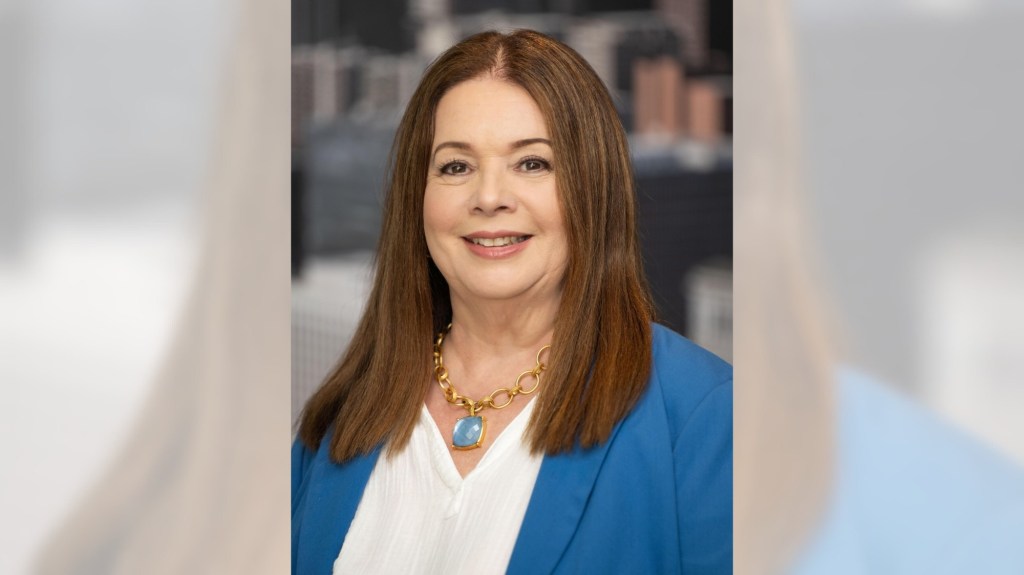
Ahead of the June primary election, the Southern California News Group compiled a list of questions to pose to the candidates who wish to represent you. You can find the full questionnaire below. Questionnaires may have been edited for spelling, grammar, length and, in some instances, to remove hate speech and offensive language.
Name: Hydee Feldstein Soto
Current job title: Los Angeles City Attorney
Age: 67
Incumbent: Yes
Other political positions held: I served on my neighborhood council before being elected as Los Angeles city attorney.
City where you reside: Los Angeles
Campaign website or social media: reelecthydee.com
How do you define the role of the city attorney in shaping city policy versus defending policies adopted by elected officials? (Please answer in 200 words or less.)
The city attorney serves as the city’s lawyer, chief prosecutor and an independently elected officeholder with a duty to the public to:
• Provide honest, accurate legal advice to the mayor, City Council and departments — even when that advice is unwelcome.
• Lawfully defend the city as a vigorous advocate — even when that defense is unpopular.
• Prosecute crimes and administer criminal justice, without fear or favor, to balance public safety, reduce recidivism and achieve justice.
• Vindicate the rights of the public and the people in civil prosecution.
The city attorney’s oath of office requires a deep understanding of federal, state and local jurisdictional boundaries, constitutional and preemptive principles and the arena within which our policymakers make policy. The city attorney has the obligation to draft ordinances to reflect the intent of Council and also has the independent obligation to flag risk and refuse to rubber-stamp actions that are unconstitutional or violate the charter/applicable law.
As chief prosecutor, the city attorney has the discretion to charge a violation of the municipal code as a citation (“fix it” ticket), infraction (non-criminal fines and penalties) or misdemeanor (criminal charges). Prosecutorial independence and discretion are limited by State Bar rules, applicable laws and the courts.
The city attorney has the least discretion in settlements of claims against the city (Charter Section 273) and, irrespective of personal views on a matter, in defending the city against claims and lawsuits (Charter Sections 271(a) and 272)). The key is independence. I have no future political aspirations beyond this office. That allows me to give straightforward legal counsel and take principled positions without worrying about political consequences.
What steps would you take to improve transparency and public trust in the office? (Please answer in 200 words or less.)
Transparency is not just about disclosing information — it is about structuring an office so that accountability and verification are built into every process. Every dollar lost to mismanagement or corruption is a dollar unavailable for city services.
I inherited a broken office — three LA City Council members were caught in a scandalous taped conversation just two months before, in addition to three former members, a deputy mayor and management of DWP convicted of corruption. The DWP scandal hit the office hard with FBI raids, a 595-page scathing Special Master’s Report that concluded at least five lawyers in the office had violated the State Bar rules, the former chief of litigation sentenced in May 2023 and the former chief deputy suspended by the State Bar in February, both for conduct that occurred before I took office.
I made long overdue reforms in the office to:
• Bring the office into legal compliance post-COVID.
• Close possible avenues to corruption.
• Provide accountability, transparency and verification.
• Build an office that works for all Angelenos, responding to our communities, enforcing quality of life crimes and earning the State Bar’s Gold Seal for DEI.
To begin restoring trust to an office and a city reeling from scandals and corruption, I …
• Enforced competitive bidding, ended automatic sole-source contract extensions and implemented conflict of interest certifications in procurement signatories.
• Cancelled thousands of inherited database accounts, emails and badges of individuals who were not on my payroll.
• Established protocols, prohibited remote access and limited in-office access to California Law Enforcement Telecommunications System (CLETS) and other criminal justice information.
• Implemented policies requiring audit logs, cash controls and basic compliance protocols in the office, limiting permission levels and providing greater data integrity and audit trails.
• Established an “open door” policy, hotline and help desks, “Coffee with the City Attorney,” senior services, Community Outdoor Court, Community Law Corps, annual town halls, help desk and other means of communication and outreach.
• Established a separate real estate branch with a new chief deputy and prohibited developer and industry-drafted ordinances from being presented to City Council or the public as if they originated with my office.
• Eliminated referral fees — the payment of money to employees of the office — including those made by law firms who frequently sued the city.
• Implemented cash management and collections practices, lockboxes and ACH payments with a financial audit trail, eliminating the risks of paper checks.
• Required balanced reports to Council rather than the practice I inherited of presenting an advocacy report that left Council with no option other than to approve the city attorney’s recommended outcome.
A candidate for this office, unfettered by management experience, has promised full-time telework with two “drop-in” days a month to all my employees. The statement shows a callow indifference to the accessibility we owe to our clients and constituents and to the transparency and accountability they deserve. That policy — authorizing $250K+ lawyers to be “in office” only 24 days a year — hampers transparency and accountability and erodes client service and public trust.
The city attorney often represents the city in lawsuits involving policing, civil rights and constitutional issues. How would you approach balancing the city’s legal defense with protecting the residents’ civil liberties? (Please answer in 200 words or less.)
I firmly support the First Amendment, including the key function of a free press and the individual freedoms of speech, assembly and right to petition the government, and have settled thousands of claims during my tenure. Where settlement is not possible, my obligation is to defend the city in all matters that are defensible while ensuring that residents’ constitutional rights are respected. Both individual rights and public safety are essential to our functioning democracy and are not mutually exclusive. A city attorney who ignores civil rights and liberties exposes the city to greater legal and financial liability over the long term, while a city attorney who takes the place of judge and jury by deciding not to defend the city or prosecute criminal conduct is simply not doing her job.
I have taken concrete steps to balance these interests. My office was one of the first agencies to implement the race-blind filing required in criminal prosecutions as of 2025, but one of the last to comply with years-old state law mandates on expunging 40,000+ cannabis convictions because no one did it until I learned about it after I took office. I preserved and expanded the Neighborhood Justice Program to give eligible individuals more restorative alternatives, and we opened our first outdoor court in the city — the Community Outreach Court — to provide a court for those without shelter to come without leaving their belongings, kids or pets unattended. The outdoor court connects people experiencing homelessness with services, warrant recall and housing assistance rather than simply cycling them through the system.
Ordinance 41.18 is a clear example of this balance in action. I support and enforce 41.18. When my office receives a referral with evidence supporting enforcement, we act. Our public spaces — sidewalks near schools, parks, libraries and other sensitive locations — must remain safe and accessible for all residents, and the ordinance provides a lawful, structured framework for addressing encampments that interfere with public safety and access.
At the same time, enforcement must be carried out consistent with constitutional protections. My office ensures that the city’s actions comply with applicable law so that enforcement holds up in court and taxpayer resources are not wasted defending avoidable litigation. That means making sure proper notice is given, that services and alternatives are offered where required and that the process respects the dignity of every person affected.
This is also why I created the Community Outreach Court in partnership with the Superior Court, the public defender, Supervisor Solis and Mayor Bass — so that enforcement and access to services work hand in hand rather than at cross purposes. My office also led the Skid Row Housing Trust receivership to preserve more than 2,000 units of low-income housing, ensuring that formerly homeless residents were not displaced from the very housing meant to serve them. Protecting civil liberties means not only respecting constitutional rights during enforcement but also fighting to keep people housed and connected to the services they need.
At the same time, I take public safety seriously. We prosecute all crimes fairly and consistently across the office and often deal in serious matters, including domestic violence, child abuse, including sex abuse from human trafficking, firearms crimes, DUIs, battery, retail theft and other offenses that directly harm residents.
The balance comes from applying consistent principles: Defend the city vigorously when a department or employee has acted lawfully and has assertable defenses, resolve claims when they have not and never lose sight of the fact that the people we serve are also the people whose rights we are required to protect.
How should the city attorney balance enforcement priorities with budget and staffing constraints? (Please answer in 200 words or less.)
By being strategic, breaking down silos that prevent flexibility and building infrastructure that maximizes impact.
When I took office, there was no unit dedicated to bringing actions to exercise our newly minted power to issue investigative subpoenas and enforce against unfair or deceptive practices under Government Code Section 17200. I created the Public Rights Branch — 42 positions focused on enforcement in the areas of environmental justice, consumer protection, nuisance abatement, workers’ rights, civil rights and unfair competition. That structural investment has generated over $50 million in environmental settlements alone, far exceeding the cost of the positions, most of which went directly to restitution to injured parties and communities.
I also created the Real Estate Branch to increase transparency in what had historically been a problematic area and added resources to enforce our laws around oil drilling and capping, illegal protected tree removal and tenant protections. And I restructured the Criminal Branch to focus on high-impact prosecutions: sex crimes against minors and human trafficking, domestic violence, firearms offenses, copper wire theft, price gouging, DUIs and illegal cannabis operations.
One key is making enforcement self-reinforcing to the extent possible. Successful environmental and consumer protection actions generate recoveries that fund further remediation, while case selection and strategic prosecution of repeat offenders and nuisance properties serve as a deterrent and reduce future caseloads. Competitive bidding and eliminating wasteful contracting practices free up resources that can be redirected to frontline work. But we have not allowed the cost of the unit to erode the very real interest of the public in restitution to those most affected by the wrongs.
The responses above are accurate for normal times, but of course, the office must remain responsive to urgent, unforeseen circumstances and extraordinary events. For example, the January 2025 wildfires tested our office’s resources, and I am incredibly proud of our response. From curfew enforcement to helping displaced residents at the city’s disaster relief center to investigating, resolving or litigating thousands of instances of price gouging and working quickly to put in place the resources and prepare for the ensuing civil litigation against the city, we stretched to meet the moment and did so, with every branch and all levels of personnel stepping up to help. The moment was especially difficult for the employees in my office who were themselves displaced and lost their homes in Altadena and the Palisades.
In addition to the wildfires, 2025 also required that I mobilize the office and dedicate resources to strategically protect Los Angeles and our residents in three key areas: the militarization of our streets, the threat to hundreds of millions of dollars in federal grants and the protection of individuals and communities.
I organized and led a coalition of 22+ cities and the county to join forces with individuals and organizations seeking to curb the unconstitutional tactics to round up people in our streets with suspicion or cause and to detain and deprive individuals of their right to counsel. As governmental entities, we assert our independent rights under the Tenth Amendment and other constitutional and federal law to sovereignty, jurisdiction and process. I also joined suits to save over $600 million in federal transportation and housing grants, to preserve the lifeline of SNAP benefits for our lowest-income residents and to protect health care availability and reproductive rights.
Los Angeles has adopted policies limiting cooperation with federal immigration enforcement. What role should the city attorney play in defending and interpreting those policies? (Please limit your answer to 200 words or less.)
The city attorney has the obligation to defend the city’s lawful policies, and that is exactly what I have done.
First, my office drafted an enforceable ordinance that does not interfere in any way with the legitimate interests of the federal government in enforcing immigration laws constitutionally. Second, I organized and am leading a coalition of more than 20 cities and the county of Los Angeles to challenge the Trump administration’s unconstitutional actions, including ICE raids, Marines, National Guard deployment and use of Border Patrol agents in Los Angeles. We continue to expand that coalition and will continue to protect Los Angeles as the city (or its airports) may again become an active staging area.
Los Angeles’ policies limiting resource use and cooperation with federal immigration enforcement are grounded in state law, including the California Values Act, and in sound public safety policy. When immigrant communities fear interacting with local governments, they stop reporting crimes, stop cooperating with investigations and stop accessing services. That makes everyone less safe. Thus, the origins of the misnamed “sanctuary city” structure lie in 1979’s Special Rule 40 implemented by then-Chief Darryl Gates of the LAPD which prohibited officers from taking any action to discover the individual’s immigration status or any violation of civil immigration law in an effort to encourage victims and witnesses to come forward to build trust with the LAPD and ensure that immigrant communities report crimes without fear of deportation.
My role is threefold: to defend the city’s adopted policies in court against federal overreach, to advise the mayor and City Council on the legal boundaries of those policies so they can act with confidence and to ensure that city departments understand their obligations under both state and local law.
I have no interest in making immigration policy a political football. My interest is in ensuring that the city of Los Angeles can protect its residents, enforce its laws and operate within the Constitution. That is what I was elected to do, and that is what I will continue to do.
Rae Chen Huang, Los Angeles mayor candidate, 2026 primary election questionnaire
Nelson Cheng, Los Angeles mayor candidate, 2026 primary election questionnaire
Liam Andres O’Neill Hernandez, CA-26 candidate, 2026 primary election questionnaire
Asaad Alnajjar, Los Angeles mayor candidate, 2026 primary election questionnaire
Bryant Acosta, Los Angeles mayor candidate, 2026 primary election questionnaire