
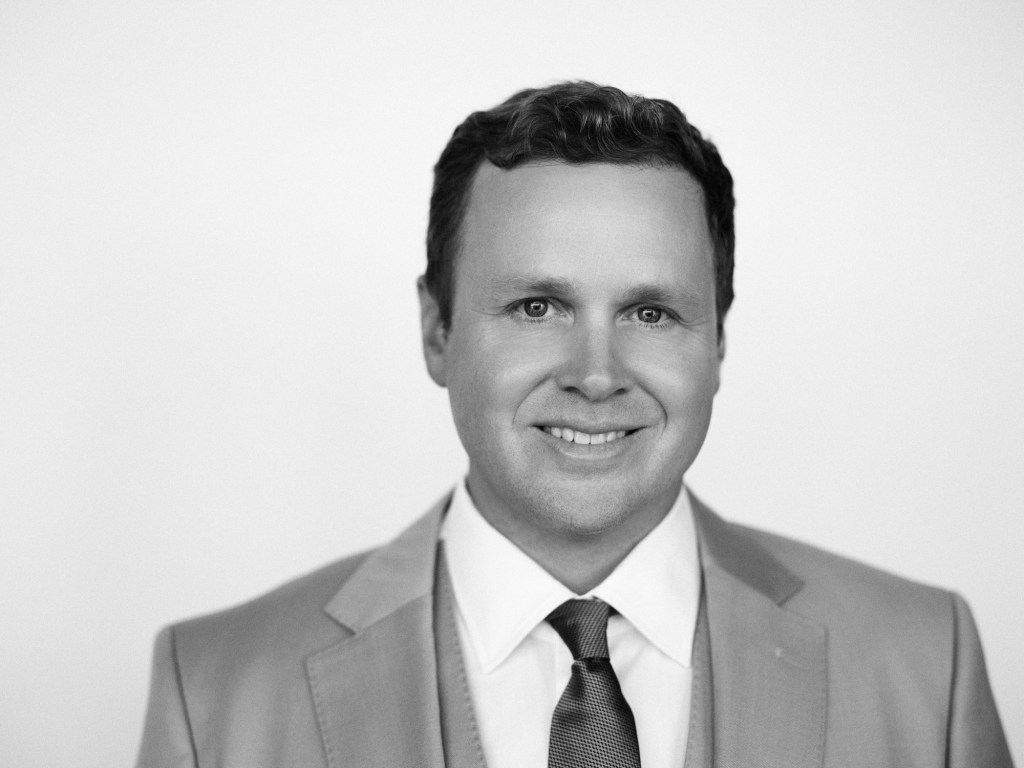
Ahead of the June primary election, the Southern California News Group compiled a list of questions to pose to the candidates who wish to represent you. You can find the full questionnaire below. Questionnaires may have been edited for spelling, grammar, length and, in some instances, to remove hate speech and offensive language.
Name: Spencer Pratt
Current job title: Community Advocate/Business Owner
Age: 42
Incumbent: No
Other political positions held: None
City where you reside: Pacific Palisades
Campaign website or social media: MayorPratt.com
What are the three most urgent challenges facing Los Angeles, and what actions would you take in your first year to address them? (Please answer in 200 words or less.)
Public safety and law enforcement breakdown.
Los Angeles is facing a collapse in basic law and order. There is rising crime, reduced police presence and a lack of accountability within city leadership. In my first year, I will immediately move to hire and deploy 1,000+ new LAPD officers, expand mandatory foot and bike patrols in high-crime areas and establish specialized robbery suppression units. I will also implement zero-tolerance enforcement for graffiti, theft, animal abuse and street disorder.
Homelessness driven by addiction and mental health crisis
In Los Angeles, we do not have a homelessness problem; we have a drug abuse and mental health crisis. When I am mayor, it will no longer be acceptable to do drugs in public, and we will not tolerate our public spaces to continue to be an open-air asylum that scares away the public and destroys commerce in the city. Indulging severe substance-use disorders and allowing people to suffer untreated mental crises in full public view strips them of all dignity, and we have a moral obligation to take care of those who clearly cannot care for themselves.
In year one, we will scale up 5150 holds citywide for individuals who meet the legal standard of being gravely disabled, expand conservatorships and build out 20,000+ treatment and recovery beds. At the same time, we will deploy continuous encampment sweeps with no return policies, backed by enforcement. The goal will be to restore dignity to those suffering while reclaiming public spaces for everyone else.
Government dysfunction and failing basic city services
Angelenos are paying more and getting less. We have broken streets, delayed permits and unaccountable city workers. In my first year, I will overhaul city operations by invoking Section 1022 of the Los Angeles City Charter, so that we can competitively outsource underperforming services, shift infrastructure work to performance-based private contracts and implement strict accountability measures, including performance tracking, field monitoring and enforceable discipline standards. At the same time, we will fast-track housing permits by cutting approval times in half and deploying a fully digital, one-stop permitting system to restore efficiency and unlock development.
Los Angeles faces ongoing budget pressures while demand for funding continues in areas such as public safety, homelessness and infrastructure. How would you approach balancing these priorities? (Please answer in 200 words or less.)
The city is spending at record levels without delivering basic services. We need to prioritize results, eliminate waste and redirect existing resources before asking taxpayers for more. As mayor, I will realign spending toward outcomes that actually improve safety, restore order and rebuild infrastructure.
Hundreds of millions of dollars earmarked for homelessness remain unspent or inefficiently deployed. I will redirect those dollars toward mandatory treatment, staffing and facilities that address the root causes of street disorder, rather than continuing to fund programs that fail to produce measurable results. At the same time, I will aggressively pursue state and federal reimbursements, grants and matching funds to maximize every local taxpayer dollar.
I will also fundamentally restructure how the city delivers services. By invoking Section 1022 of the Los Angeles City Charter and expanding competitive bidding, we can shift large portions of sanitation, infrastructure and maintenance work to performance-based private contracts. This will reduce costs and increase accountability. Savings generated from these reforms can then be reinvested into core priorities, like public safety and infrastructure repair.
Strict accountability must be imposed across all city departments. We must have performance metrics, real-time tracking of work output and enforcement of discipline standards for underperformance. We cannot continue funding systems that tolerate low productivity while basic services deteriorate. Every taxpayer dollar must be tied to measurable results.
I will also focus on accelerating economic growth to expand the city’s revenue base without raising taxes. That means cutting permitting delays, reducing regulatory burdens, supporting small businesses and bringing film and production back to Los Angeles. A stronger local economy will generate more revenue organically, easing long-term budget pressure.
In the aftermath of the Palisades fire, questions were raised about emergency preparedness and transparency. What changes, if any, would you support to improve disaster response and public accountability after major emergencies? (Please answer in 200 words or less.)
I directly experienced the result of City Hall’s prolonged neglect of emergency management during the Palisades fire, when we discovered the LAFD had fewer firefighters and fire stations than it did in the 1960s. Many fire engines are mothballed in city boneyards, and the department has lost nearly 50 more firefighters since the Palisades fire. The mayor and the City Council have been warned for years that these shortcomings were leaving the city unacceptably vulnerable to the very kind of emergency that wiped out my home, killed 12 of my neighbors and burned 7,000 additional structures.
As mayor, I will overhaul emergency preparedness by establishing a citywide Resilient LA Task Force that integrates LAFD, LAPD, DWP and emergency management into a unified command structure. This will include mandatory annual updates to the city’s preparedness plans, real-time public dashboards tracking readiness gaps, expanded early-warning systems and AI-driven risk modeling so we are anticipating disasters instead of reacting to them.
I will also increase firefighter staffing and infrastructure to match the city’s population, conducting regular large-scale multi-agency disaster drills, upgrading the Emergency Operations Center with real-time situational awareness tools and pre-positioning resources like fuel mitigation crews in high-risk areas. I will also implement cross-training of LAPD officers to ensure immediate on-the-ground response capability when seconds matter.
Residents should never be left in the dark during a crisis. I will launch a modern, multilingual alert system with clear evacuation and shelter-in-place guidance, and require transparent, real-time reporting during emergencies. After any major incident, there will be a formal after-action review with publicly released findings, clear identification of failures and enforceable corrective actions tied to department leadership.
When I am mayor, I will also streamline recovery before disaster strikes. By pre-negotiating federal partnerships with FEMA and HUD, securing debris removal contracts and pre-approving modular housing solutions, we will cut rebuilding timelines dramatically and reduce the long-term economic burden on residents.
If elected/reelected, which city department or agency would you prioritize for reform or improvement, and why? (Please answer in 200 words or less.)
LADWP, the Department of Water and Power.
Every year, Angelenos are faced with increasing water and power bills. The city’s own ratepayer advocate warns that rate increases will have “unreasonable adverse impacts on all customers, including low-income customers.” Sewer and sanitation fees are nearly doubling for some residents between 2025 and 2029. For families already stretched by the cost of living in LA, their utility bills are becoming another source of pain, with no improvement in service to show for it.
The Palisades fire showed the worst-case consequence of a department without oversight. The Santa Ynez Reservoir, which should have supplied 117 million gallons of water to the Palisades, sat drained and offline for nearly a year before the fire. Three water tanks ran dry the night homes were burning, and over 1,300 fire hydrants across the city were flagged in various states of disrepair.
The outgoing CEO was paid $750,000 a year, roughly double her predecessor’s salary. Meanwhile, the department operated with no inspector general and only one of nine oversight staff positions was filled.
When I’m mayor, I will appoint the right people to the DWP Board of Commissioners, so that real reform can start. I will fill every oversight vacancy, install an independent inspector general, require public dashboards showing infrastructure status and rate justifications and ensure rate increases are tied to measurable service improvements, not blank checks.
What steps would you take to improve transparency and public trust in City Hall? (Please limit your answer to 200 words or less.)
Angelenos have lost confidence in City Hall because they see rising costs, declining services and no consequences for failure. I will restore the public’s trust by making government performance visible, enforcing standards and ensuring taxpayers are getting results.
We will have real-time transparency through public performance dashboards across all city departments. Every major service (e.g., sanitation, road repair, permitting, public safety) will be tracked with clear metrics that are updated daily or weekly, and accessible to the public. Residents will be able to see exactly what the city is doing, how quickly it’s being done and where it’s falling short.There will be strict accountability standards for city employees and leadership, including mandatory performance indicators tied to evaluations, GPS and field monitoring for city crews and consequences for underperformance. Department heads will be expected to deliver results, and a culture of excellence will define City Hall.
Structural reforms will be introduced to reduce inefficiency and increase oversight. By invoking Charter 1022 and expanding competitive bidding, we will ensure services are delivered based on performance, not bureaucracy. Private contracts will include strict benchmarks and termination clauses, so the city is always accountable to outcomes.
Finally, I will modernize how residents interact with their government. A fully digital, one-stop portal for permitting and city services, with firm deadlines and automatic approvals for delays, will eliminate the black box that frustrates residents and businesses today. Transparency is about making the system work in a way people can see and trust.
Rae Chen Huang, Los Angeles mayor candidate, 2026 primary election questionnaire
Nelson Cheng, Los Angeles mayor candidate, 2026 primary election questionnaire
Liam Andres O’Neill Hernandez, CA-26 candidate, 2026 primary election questionnaire
Asaad Alnajjar, Los Angeles mayor candidate, 2026 primary election questionnaire
Bryant Acosta, Los Angeles mayor candidate, 2026 primary election questionnaire