
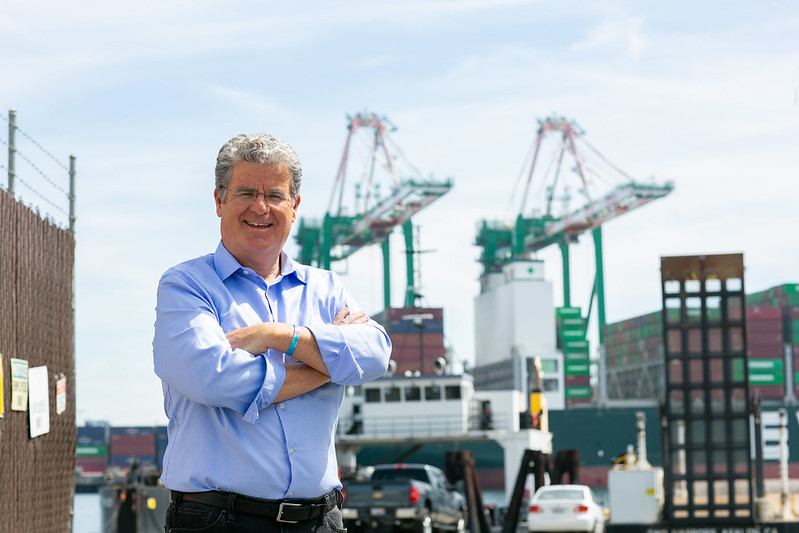
Ahead of the June primary election, the Southern California News Group compiled a list of questions to pose to the candidates who wish to represent you. You can find the full questionnaire below. Questionnaires may have been edited for spelling, grammar, length and, in some instances, to remove hate speech and offensive language.
Name: Tim McOsker
Current job title: Los Angeles City Councilmember, 15th District
Age: 63
Incumbent: Yes
Other political positions held: None
City where you reside: San Pedro, Los Angeles
Campaign website or social media: timmcosker.com
What are the top issues facing your district, and what would be your top priorities if elected/reelected? (Please answer in 200 words or less.)
I am focused on the greatest challenges facing Los Angeles: Supporting our working families, making our neighborhoods healthy and safe and delivering reliable city services. I work collaboratively with labor, business groups, non-profits, community leaders and stakeholders to advance policies that help the people of CD 15, or “One-Five” as I call it, thrive.
Supporting working families means strengthening local economies and creating pathways to good-paying jobs. I support small, family-owned businesses that hire locally, and I believe in investing in workforce training programs that prepare residents for opportunities in goods movement and emerging sectors like the blue and green economies.
Building healthy and safe neighborhoods requires investment in community programs that promote safety and well-being, including after-school programs, summer jobs and access to parks and libraries. I have been a strong advocate for environmental justice, addressing air and water quality issues in communities like Watts and Wilmington, holding polluters accountable and working to reduce harmful impacts from industrial activity.
Delivering reliable city services is essential, especially during uncertain fiscal times. As chair of the Personnel Committee, I prioritized preventing layoffs to maintain a strong workforce that keeps streets clean and services responsive. By staying disciplined and creative, we can meet today’s needs while planning for the future.
How would you approach addressing homelessness and housing affordability in Los Angeles? (Please answer in 200 words or less.)
Housing affordability and addressing homelessness have become two of the greatest missions we face as a city, and it is the moral challenge of our time. We need to build more housing at every income level, speed up approvals and ensure that the housing we fund actually gets delivered efficiently and responsibly. At the same time, we must continue bringing people indoors, holding ourselves accountable for results and making sure our neighborhoods remain livable as we tackle this crisis.
This requires a comprehensive approach that not only moves people indoors, but also keeps them housed and creates real pathways to long-term stability. That means close coordination with the county on mental health and social services, with the state on funding and regulatory reform and with the federal government on long-term housing support. It also means listening to service providers and neighborhood leaders who are doing this work on the ground every day, and making sure their insights help guide our response as we work toward lasting solutions.
What steps would you take to improve transparency and accountability at City Hall? (Please answer in 200 words or less.)
Improving transparency and accountability at City Hall starts with building trust and making government more accessible, responsive and results-driven. Transparency is not just a goal; it is a mandate. I am committed to ensuring residents receive accurate, timely information and have meaningful opportunities to engage in decisions that affect their communities.
One key step is restoring strong public oversight. That includes holding public hearings on major contracts, leases and spending decisions so residents can see how their tax dollars are being used and provide input. We also need clearer lines of accountability within city departments so when projects stall, there is a clear understanding of why and who is responsible for moving them forward.
I also support modernizing city systems by creating transparent digital tools, such as dashboards that track permits, projects and service requests in real time. Just as important, the government must meet people where they are. Expanding access to district offices and community engagement ensures residents do not have to navigate a distant bureaucracy to be heard.
Ultimately, the best way to rebuild trust is by delivering real, tangible results that show residents their voices lead to meaningful change.
What role should neighborhood councils and other community groups play in shaping local policy decisions, and how would you work with them if elected? (Please answer in 200 words or less.)
I am a strong proponent of neighborhood councils, and either a member of my team or I regularly attend each council in our district. Neighborhood councils and community groups should play a central role in shaping local policy decisions because they are closest to the issues and understand the needs of their communities better than anyone. Government works best when it is accessible, responsive and rooted in the neighborhoods it serves.
People should not have to travel downtown to feel heard, which is why I have focused on meeting residents where they are and bringing city services and decision-making closer to the community.
As a councilmember, I work to ensure that community voices are not only heard, but reflected in the policies we advance. That means engaging neighborhood councils, local organizations and residents early in the process, particularly on issues like housing, public safety, infrastructure and land use. It also means creating clear opportunities for public input on major decisions, including contracts, development projects and budget priorities.
I will continue working closely with neighborhood councils and community groups by maintaining open communication, attending meetings and ensuring city departments are responsive to local concerns.
Public safety remains a major concern for many residents. What policies would you support to improve safety while addressing community needs such as mental health and prevention services? (Please limit your answer to 200 words or less.)
Public safety is foundational, and every resident deserves to feel safe in their home, on their street and in their community. But safety must be approached in a way that reflects the full needs of our neighborhoods, including mental health and prevention.
I support a balanced approach that ensures our police and emergency services are properly staffed and able to respond when needed, while also expanding unarmed crisis response programs like CIRCLE and UMCR. These teams are critical in responding to nonviolent calls and helping individuals experiencing mental health crises receive the care they need, while allowing sworn officers to focus on serious and violent crime.
Prevention is just as important. I support increased investment in youth programs, after-school activities and job opportunities that give young people positive pathways forward. I also support funding for violence intervention efforts, including Peace Ambassadors and community-based organizations that can de-escalate conflicts and build trust in neighborhoods where it has been strained.
Henry Mantel, Los Angeles City Council District 5 candidate, 2026 primary election questionnaire
Katy Yaroslavsky, Los Angeles City Council District 5 candidate, 2026 primary election questionnaire
Barri Worth Girvan, Los Angeles City Council District 3 candidate, 2026 primary election questionnaire
Timothy Gaspar, Los Angeles City Council District 3 candidate, 2026 primary election questionnaire
William Scott, CA-26 candidate, 2026 primary election questionnaire