
Big companies seem to love standardization. How many brands sell the same set of products in stores that all look the same, all across the country? It’s a great strategy for controlling costs. The trouble is that all consumers are not the same. If given the option, we often prefer unique products and experiences that meet our individual needs.
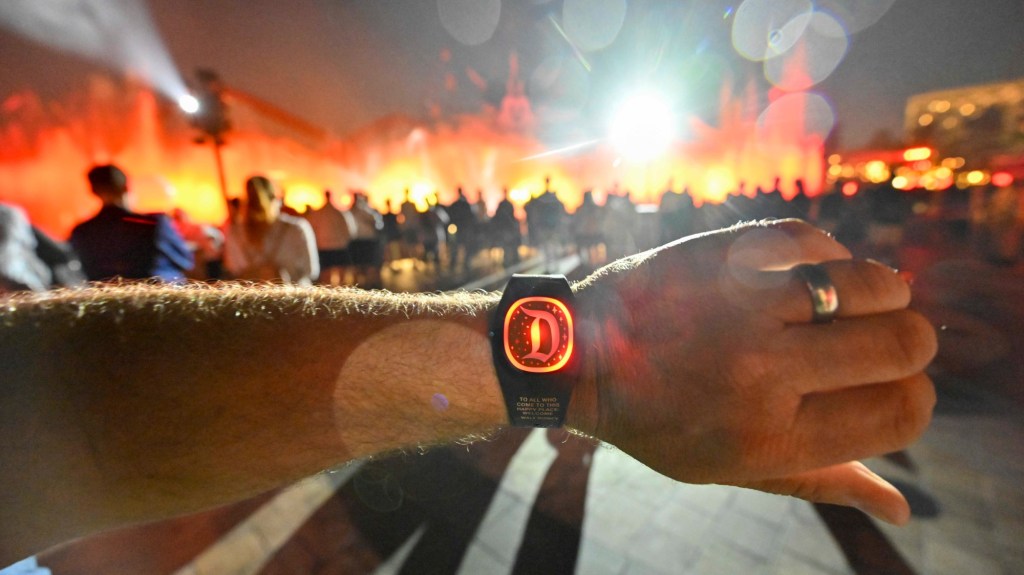
Disney recently showed that it learned that lesson. The Disneyland Resort has stopped selling MagicBands on site. Disneyland introduced the wearable devices in 2022, following nearly a decade of their use at the Walt Disney World Resort. It turns out that all Disney fans are not the same. What works on one coast does not necessarily work on the other.
MagicBands were part of Walt Disney World’s MyMagic+ program. Yes, Disney loves to standardize its branding by slapping a plus sign on product names. With MyMagic+, Disney World integrated its computer systems managing admission, hotel rooms, Fastpasses and purchases across the resort. The result was the ability to provide hotel guests with an RFID-enabled wristband that could be used to enter the park, Fastpass queues and their hotel rooms as well as to be used for ride photos and to buy stuff.
That sounds convenient. But Disney developed the MagicBand at the same time that cell phone companies were embracing RFID and NFC functionality, allowing phones and Apple Watches to do the things that a MagicBand could do. I also always kept losing my MagicBands since their flimsy plastic connections did not hold them on my wrist as securely as a watch.
At Disneyland, MagicBands could not open hotel room doors, which limited their usefulness. Most Disneyland visitors are not out-of-town guests on vacations but locals coming to the park for the day. No one is leaving their wallet and phone at home in favor of a MagicBand. For many Disneyland fans, the $45 devices were just another Disney toy — one that could be used to collect 70th anniversary souvenirs, play a “Marco Polo” game in Galaxy’s Edge and light up during select shows, just like Disney’s old “Glow With the Show” gear did.
There is a huge market – on both coasts – for upsell interactive devices that theme park visitors can use to roleplay on attractions. Universal has unlocked that market with its Harry Potter wands and Super Nintendo World wristbands in Hollywood and Orlando. But Universal did not design one generic device to work it all of its thematic worlds, like Disney did. Universal customized its interactive products for each land and its fans.
MagicBands will continue at Walt Disney World, as well as on the Disney Cruise Line, which is probably the ideal venue for their functionality. MagicBands will continue to function for their limited uses at Disneyland, even though the company will not sell the devices at the resort anymore.
Ultimately, facial recognition technology is going to do everything that Disney wanted the MagicBand to accomplish, from getting you into the park and Lightning Lanes to speeding up your purchases. Facial recognition works for the very reason that MagicBand did not succeed at Disneyland.
We are all unique people, with individual differences. One product does not fit all.