
Editor’s Note: The usage of Hispanic, Latino/a/e/x and Chicano/a/e/x is in accordance with the preference and language of the sources and/or organizations included in this story, in addition to the State Hornet Style Guide.
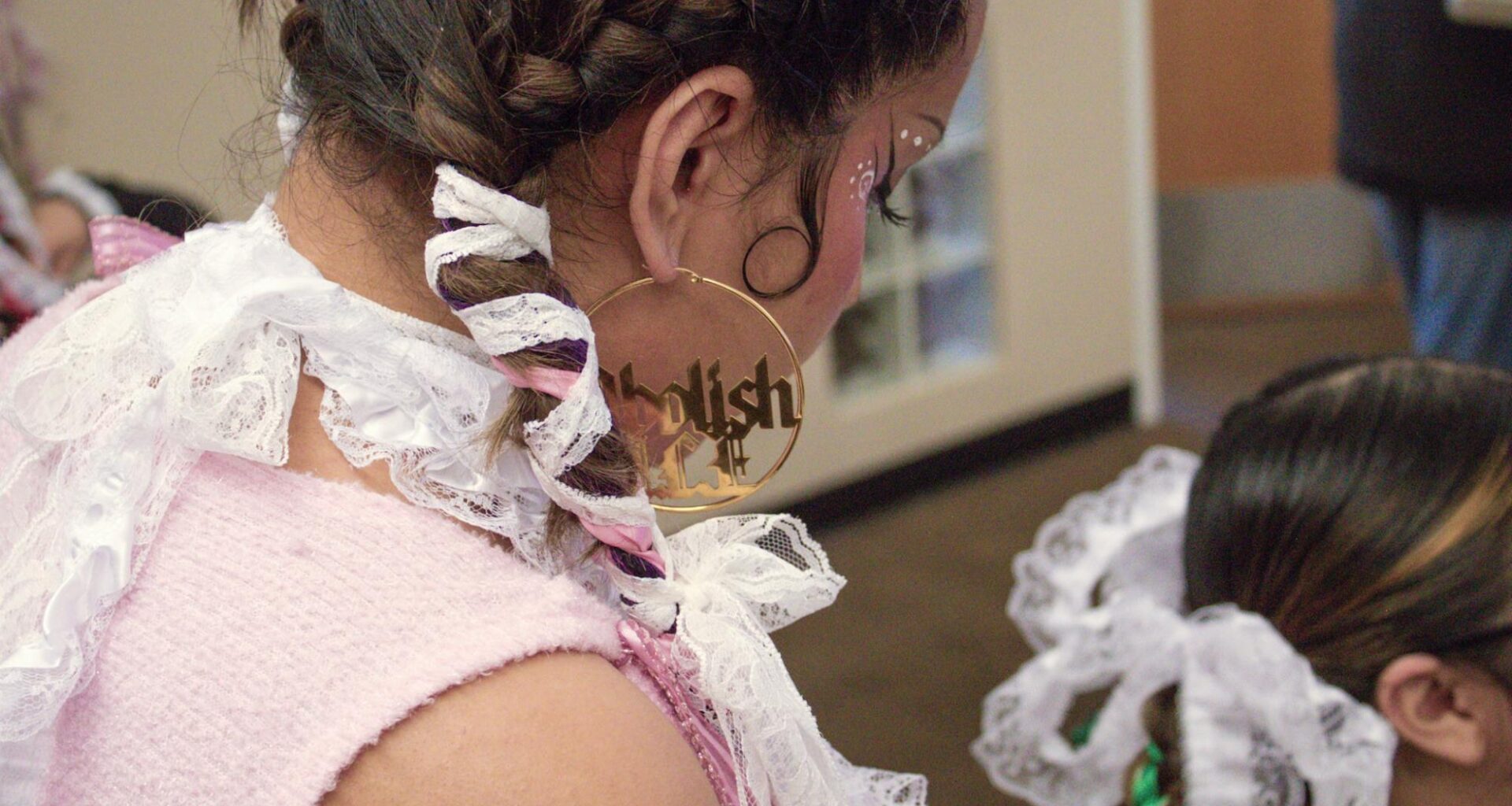
“Braids not Raids” uses the cultural practice of ribbon hair braiding to intertwine community pride and peaceful political resistance to raise money in support of those impacted by immigration policies and enforcement. Sacramento State’s take on this event was held in El Centro Serna on Wednesday, April 29, offering hair braiding with ribbons and lace to participants, with suggested donations ranging from $5 to $20 depending on the intricacy of the style.
All proceeds were donated to the Dreamer Resource Center with the organizers also looking for a local immigrant rights organization to potentially donate to. Nancy Huante-Tzintzun, assistant professor of ethnic studies and co-director of Chicanx and Latinx studies, and Valeria Murillo, a third-year architecture major with a minor in Chicanx and Latinx studies as well as MEChA’s co-president were the event’s organizers. They worked with campus organizations, such as MEChA, the Ethnic Studies Department and community partners, to foster a safe space for community engagement and conversations surrounding immigrant justice.
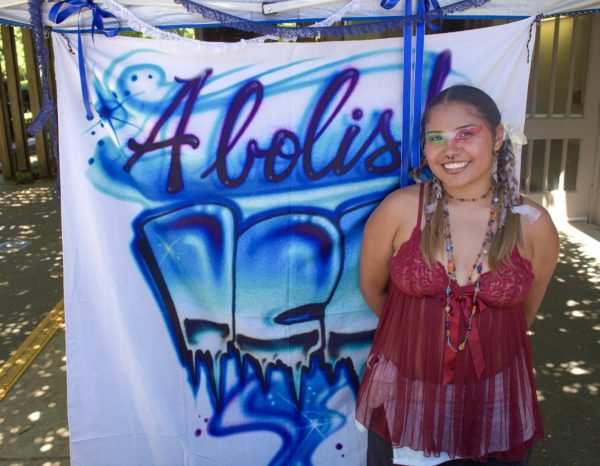 Valeria Murillo, third-year architecture major with a minor in Chicanx and Latinx studies and MEChA’s co-president, stands in front of an “Abolish ICE” background to display their message of immigrant justice Wednesday, April 29, 2026. Murillo co-organized the “Braids Not Raids” event to build community and raise funds by offering trenzas to participants. (Janelle Germain)
“It connects community practice with growing research in Chicana and Indigenous studies that understands braiding as cultural knowledge, identity and resistance,” Huante-Tzintzun said. “The message is about choosing community over criminalization and care over fear.”
The use of braiding has been utilized by women of color in the past in different cultures. In many Indigenous and Latin American cultures, trenzas are braids typically interwoven with cultural adornments such as ribbons, used as symbolic markers of identity and later a political statement, Huante-Tzintzun shares a study on the use of trenzas in displaying cultural identity and a visual resistance to assimilation.
The recent revival of this practice as a statement of resistance started in the Southern California Ponte your Moños community-driven project, created as a response to a hostile immigration climate that grew into a collective space integrating history and solidarity. A Braids Not Raids chapter in Sacramento was formed to spread the message of cultural unity and strength amid immigration uncertainties to other affected communities in California and to raise money for the cause .
Alex Zavala, a representative of the Braids Not Raids chapter, attended Sac State’s event as a volunteer braider to help curate this celebrative and informative space. Zavala said the unity of those in attendance displayed a silent form of resistance.
“With the current political climate, it feels like this administration is putting a lot of effort into erasing our contributions,” Zavala said. “Honestly, it also feels like our identities a little bit with trying to run us out of this country.”
Zavala said showing up for one’s community and embracing their identities creates a positive atmosphere where students foster an on-campus community of connection through heritage and shared mindsets. Additionally, allowing students a safe space to connect with their ancestral roots and family as many face uncertainties due to ICE raids.
“It highlights the contributions our ancestors had made to our story, we’re all here because of them,” Zavala said. “That’s the main message, families shouldn’t be torn apart.”
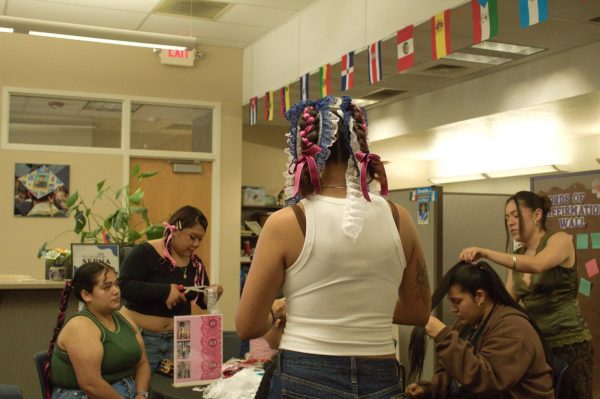 A group of volunteer braiders and participants gather in conversation to curate the cultural practice of trenzas in solidarity for those affected by ICE Wednesday, April 29, 2026. They all attended this event in support of immigrant justice and to foster a welcoming cultural community on Sacramento State’s campus. (Janelle Germain)
The event was opened with a presentation from Huante-Tzintzun encompassing a brief history of braiding practices and the anti-ICE efforts. The event strived to achieve and educate others about these topics.
Once the event kicked off, cultural music, a strong sense of female empowerment and the conversational bonding through braiding flooded the space. The primarily female audience worked together to create intricate braiding designs and a carefree space where attendees could build connections while maintaining serious conversations on the basis of their shared experiences.
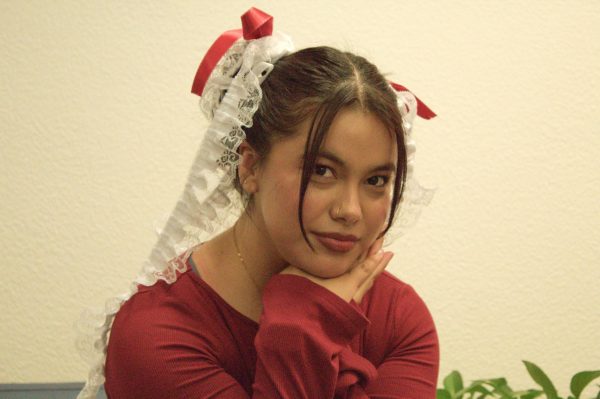 Lizabeth Rodriguez Ayala, a second-year clinical lab science major, poses with her trenzas style braids Wednesday, April 29, 2026. She attended the “Braids Not Raids” event as a symbol of support for immigrant justice and to bond with other participants. (Jose Leon)
Elizah Hernandez, a fifth-year biology major with a concentration in molecular and cellular, said she attended the event as an opportunity to show love for her people and get braided as a chance to reconnect with her childhood roots.
“I used to get my hair braided like this when I was younger,” Hernandez said. “I haven’t in so long, and it’s so cute. I just feel like I need to represent my culture.”
Hernandez emphasized the importance of the event in representing Sac State as a Hispanic-serving Institution. Hernandez said our campus needs to help serve all cultural communities and give them the resources needed to create spaces of inclusivity.
“[It is important] for [students] to feel represented and seen on campus in higher education, so they don’t feel imposter syndrome,” Hernandez said. “It can be hard to see yourself in these spaces, but I think this is a great way to show that.”
The lack of cultural representation and spaces of inclusivity in academic settings can have students feeling this sense of “imposter syndrome” as they struggle to feel supported. Creating communities where students can interact with people of similar experiences and backgrounds can present a sense of familiarity that is essential in curating a welcoming environment.
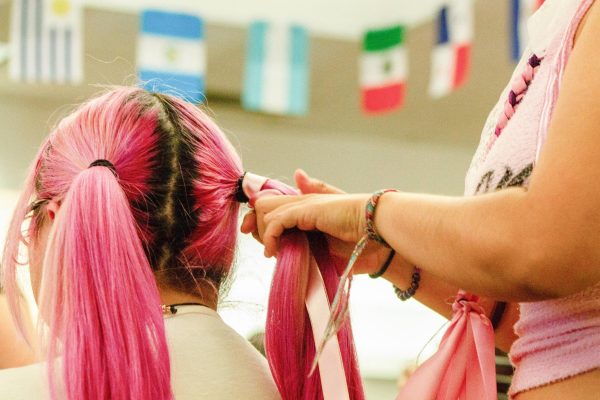 Elizah Hernandez, a fifth-year biology major, gets her hair braided in tranzas style at the “Braids not Raids” event Wednesday, April 29, 2026. In support of immigrant justice, she spent time with the braiders and other participants in casual conversation. (Jose Leon)
Natalia Aguirre, a third-year Chicano/a/x studies and psychology double major at UC Davis, attended as a volunteer braider in the similar hope of fostering a supportive and unified community.
“I decided to participate because I think it is important to be visible, especially in institutions like college campuses,” Aguirre said. “I’m really passionate about protecting my community and just making sure that we have each other in these hard moments because it’s really hard to feel supported.”
Aguirre said that, as someone living in an area with high U.S. Immigration and Customs Enforcement (ICE) activity, it’s hard to see a lot of representation for Latine and Mexican culture. This caused her to be passionate about collaborative events that raise awareness and curate support systems through self-expression.
“Creating events like this is important for creating a sense of community when it can feel so isolating to see all these events going on around you and feeling like you can’t do anything about it,” Aguirre said.
RELATED: ‘Café y Conversación’ ofrece una taza de café acompañada de un momento de comunidad
While some students attended to represent their community and heritage, others took the event as an opportunity to learn and support communities different from their own.
Ciara Wilson, a third-year communications major, attended in conjunction with the Multi-Cultural Center in accordance with her job on campus as unity ambassador. Wilson said in meeting with other participants and getting her hair braided, she was able to learn more about the practice.
“‘Braids not Raids’ is a really cool event because it has student volunteers engaging, and it’s been the students who have helped to really put it together,” Wilson said. “The event’s more than just the hair, it’s about the way that we show up for each other.”
Wilson said that college communities and the connections one makes is essential to gaining support, motivation and inspiration for one’s future.
“Having events like this on campus aren’t just important, but they’re really what make Sac State different,” Wilson said. “On this campus, to be able to have not only a sense of visibility, not just a place that you feel like you belong, but a place that you can really transform and evolve as a college student [is important].”
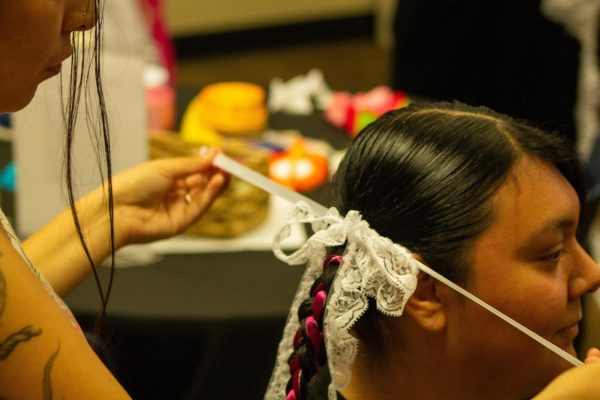 Vanesa Reyes, a fourth-year biology major and concentration in general bio, attends the event to show solidarity for immigrants affected by ICE and join her campus community Wednesday, April 29, 2026. The “Braids Not Raids” event incorporated the cultural style of trenzas braiding with community bonding to raise profits for immigrant justice. (Jose Leon)
As the congregation and conversations continued to flourish, the tables of scattered lace and ribbons lessened, a sign of a successful turnout.
The level of support and passion fostered at the event translated to a call of action in Latine community resilience and immigrant justice.
Murillo encouraged the continuation of conversation involving the impact of ICE and said student and faculty efforts in taking up space are necessary to keep a spotlight on these issues.
“I believe that the anti-ICE sentiment has not been vocalized enough by our institution,” Murillo said. “There is strength in these student and faculty-led events that counterpower the pain
and fearmongering caused by raids and instead allow for moments of love, healing,
solidarity and community building.”
Murillo said doing so through this outlet creates a supportive space where participants can enjoy each other’s presence with music, conversation, culture, bonding and braiding in a way that communicates allyship towards immigration rights. Huante-Tzintzun says Universities should not only teach about injustice but create spaces that actively respond to it. She says immigration is personal for many students, making these events essential in building awareness, connection and tangible support.
“Art can be a way to heal, and our cultural practices are a form of art. I think that’s a really powerful resistance that we have the power to do,” Aguirre said. “We all hear each other, we all see each other for who we are, and I think that’s really what we need right now.