
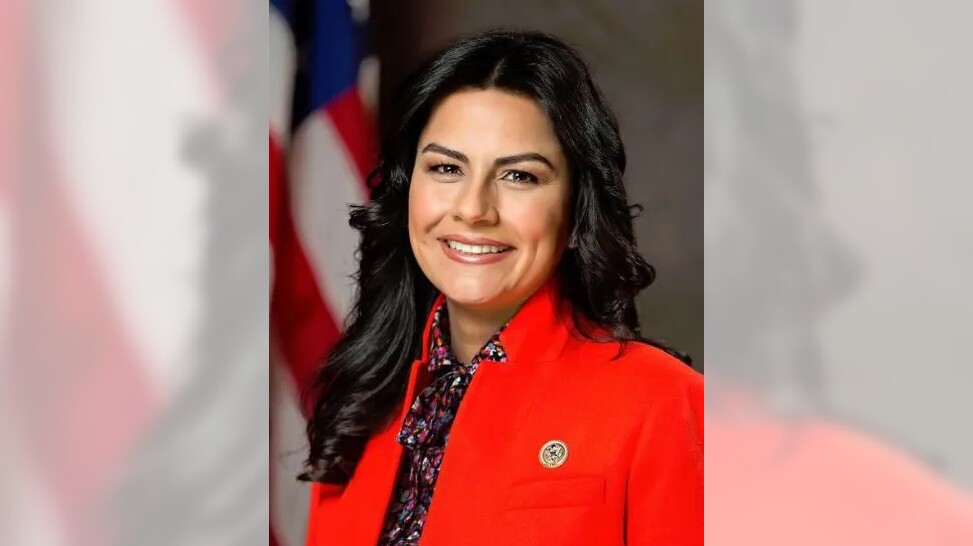
Ahead of the June primary election, the Southern California News Group compiled a list of questions to pose to the candidates who wish to represent you. You can find the full questionnaire below. Questionnaires may have been edited for spelling, grammar, length and, in some instances, to remove hate speech and offensive language.
Name: Nanette Barragán
Current job title: Congresswoman
Age: 49
Political party affiliation: Democratic
Incumbent: Yes
Other political positions held: Mayor – Hermosa Beach; Councilmember – Hermosa Beach
City where you reside: San Pedro
Campaign website or social media: barraganforcongress.com
From voter ID to war powers and from immigration to tariffs, Congress has tackled many issues over the past year. What do you, though, see as the top three issues impacting Californians, and what specifically could you do as a lawmaker to address these issues? (Please answer in 250 words or less, and keep your response to future proposals.)
1. Cost of housing. A few actions include: Fight to preserve federal housing funding that is under threat from Trump, and make it easier to build more affordable housing by passing the Housing for the 21st Century Act.
2. Cost of healthcare. Extend the Affordable Care Act premium tax credits to reduce insurance premiums, and reduce the amount of monopolies and consolidation in the health care industry, which has led to higher costs and less competition. Also, invest more in home care services so seniors can age in place and avoid more expensive institutional care.
3. Cost of energy. Build more clean energy to reduce the cost of electricity. Give people more options other than gas cars, such as investments in public transit and affordable electric vehicles. Reverse the Trump Administration’s tax hikes on clean energy projects that make energy costs more expensive for Americans.
Speaking of voter ID, the president has implored Congress to approve legislation that would require people to show proof of citizenship in order to vote. What role do you believe the federal government plays in telling states how to conduct their own elections, as dictated by the U.S. Constitution? (Please answer in 250 words or less.)
It is already illegal for non-citizens to vote in federal elections. The instances of non-citizens voting in federal elections has been found to be almost non-existent by the conservative Heritage Foundation. The legislation that Donald Trump and Republicans are pushing would make it harder to vote for married women, American citizens living overseas, members of the military, tribal members, young people, communities of color, senior citizens, and other Americans. I do not support making it harder for Americans to vote. The federal government’s role is to protect the fundamental right to vote by making sure there are no arbitrary barriers in place to prevent any eligible American citizen from voting in a federal election.
What, in your opinion, should the federal government focus on when it comes to immigration policy? For example, do you place a priority on border security, visas for high-skilled workers, refuge for asylum seekers, etc., and why? (Please answer in 250 words or less.)
Our system is broken. There is no “one” thing that will solve the problem. We need comprehensive immigration reform. There was an extensive, negotiated, comprehensive immigration reform bill introduced and passed on a bipartisan basis by the Senate in 2013. House Republicans refused to act on the bill and have blocked every serious effort since to reform our system.
A pathway to citizenship for those already in this country for years, enhanced border security and port of entry processing for asylum seekers, more judges and lawyers to handle immigration cases, an orderly and fair immigration and asylum process, address root causes of migration in foreign countries, humane treatment of immigrants throughout all engagements with the federal government, increased visas for essential workers, the list goes on. These issues are all so intertwined in our current immigration and border security systems that it requires a comprehensive solution.
It’s been over a year since Gov. Gavin Newsom asked the federal government for supplemental disaster aid to help Southern California communities rebuild after the devastating Palisades and Eaton wildfires, but neither President Donald Trump nor Congress has acted. What would you do to push for the funding, besides writing letters to the Trump administration or the leaders of Congress? (Please answer in 250 words or less.)
Democrats in Congress, in particular California Democrats, have repeatedly looked for ways and pushed for the Trump administration to provide federal disaster aid to help Southern California recover from the 2025 wildfires. Donald Trump and Republicans in Congress have refused to act for purely partisan reasons. Trump and his administration have slowed or refused federal disaster relief funding for several states led by Democrats as he continues to do what no president before him has done – use the disaster relief as a political weapon. We will continue to seek every avenue possible to get disaster relief funding for Southern California. Right now, the best way to do that is to win the House (and possibly the Senate) back in November so that we can work to force the administration’s hand to release the funds.
Do you support a ban or restriction on congressional lawmakers and their families from buying or selling individual stocks? Why or why not? And what would you propose to ensure lawmakers aren’t using their positions to engage in insider trading? (Please answer in 250 words or less.)
Yes. I am a co-sponsor of the Restore Trust in Congress Act that prohibits all Members of Congress, their spouses, dependent children, and their trustees from owning, buying or selling individual stocks, securities, commodities, or futures. The American people deserve to have confidence that their elected representatives are not using their positions to benefit themselves or their families financially. There are multiple avenues available to hold members accountable and prevent insider trading – from transparency requirements to House Ethics and SEC investigations. These enforcement mechanisms must be used.
Do you support stronger regulations on pollution and carbon emissions? If so, how would you ensure those regulations aren’t overly burdensome on small businesses or lower-income families? And if not, how do you propose lawmakers protect the environment and curtail the impacts of climate change? (Please answer in 250 words or less.)
I support stronger regulations. The question is: Who pays? Right now, our communities pay with their health when they breathe polluted air. Regulations need to make corporations pay to reduce pollution and hold them accountable when they violate the law.
We also need to make sure cleaner and more affordable energy options are available to people so they have a real choice. That is where public investment and planning come in, so as we require cleaner cars, cleaner port equipment, and cleaner power, we are making it possible for people at all income levels to be part of the change.
At the federal level, we need more consistent regulations, incentives, and investments to make these alternatives possible and easily accessible. We can have a strong economy and a clean environment — we do not have to choose.
President Donald Trump has significantly increased spending for the U.S. Department of Defense. Would you, as a member of Congress, approve additional dollars for the military if the president were to ask for more funding? How would you ensure that any military spending does not end up putting the American people or national security in harm’s way? (Please answer in 250 words or less.)
I have yet to see a scenario where I would approve additional dollars for the military’s foreign entanglements under Donald Trump. Congressional authorization and with minimal to no information being provided to Congress on strategic goals, length of operations, or specific military needs. Trump and his Administration believe Congress should rubber-stamp any request with few to no details or engagement – that is not something I will do.
Under what specific circumstances do you believe the U.S. should engage in a war? (Please answer in 250 words or less.)
The decision to go to war should be the last possible option after all diplomatic and other avenues have been exhausted. Even then, there are extremely limited circumstances — including defense of the United States or Americans and overseas allies. Any decision to go to war, and as a Congressmember to authorize engagement in a war, is so fact-specific and such a consequential decision that I would not lay out set criteria under which the U.S. should engage in a war.
Do you believe a president should seek congressional approval before engaging in military action overseas? Why, or why not? (Please answer in 250 words or less.)
Under almost all circumstances, a president should seek congressional authorization before engaging in military action overseas. There may be extremely limited circumstances where it is necessary for immediate military action due to an imminent threat to the United States – but even then, Congress should be made aware of the threat, the planned course of action, and the proposed duration of the military action. The Constitution gives Congress the authority to declare war, raise armies, and fund military operations. That means Congress should be involved in any potential major military engagement overseas.
Congress, in theory, is supposed to serve as a check on the president through budgetary, legislative and oversight powers. Do you believe Congress has fulfilled that obligation during the past two administrations, with one being a Democrat and the other a Republican? Why or why not? (Please answer in 250 words or less.)
We need to hold any administration accountable based on what they are doing, regardless of party. I believe Congress did hold the Biden Administration accountable and put our own imprint on important laws. We saw this with the Infrastructure Law and the Inflation Reduction Act, which involved many months of debate as members considered what the administration wanted and then created our own product. We were not a rubber stamp, but we were governing partners with shared goals.
That is not what we have seen with Republicans and the Trump Administration. Whether it’s Trump’s tariffs that are raising costs for working Americans, or his major cuts to Medicaid, some Republicans have raised concerns privately and in public letters. But then they went ahead and blocked our ability to vote to overturn tariffs. They voted to cut $900 billion in Medicaid, even when it will hurt their own constituents and hospitals. And they dragged their feet for months to block legislation to release the Epstein files, until a few Republicans finally joined with Democrats to force a vote.
Governments around the world are increasingly considering an age ban or other restrictions on social media use among young people, citing mental health and other concerns. Should Congress adopt such restrictions? If so, what specific restrictions do you propose? (Please answer in 250 words or less.)
We see more evidence and examples that social media use is having a negative impact on young people. We need more guardrails around how and when young people interact with these platforms. California has already started a discussion on possible age restrictions or limitations and that is a conversation that Congress needs to have as well so that we can determine the necessary guardrails to put in place.
Statistically, violent crime rates in California are on the decline, yet residents still don’t feel safe or at ease in their communities. How do you see your role in Congress in addressing the underlying issues that make Californians feel unsafe in their own neighborhoods? (Please answer in 250 words or less.)
Congress funds various programs for violence intervention, addiction treatment, mental health treatment, job training, after-school enrichment, homelessness, and other root causes that prevent or reduce violent crime. We also help fund federal, state and local law enforcement and legal systems to provide communities with the necessary resources to ensure community safety and to get criminals off of our streets. We can also pass laws that can be responsive to concerns about violent crime. For example, stricter gun regulations across the country would make it harder for certain individuals to purchase, transfer, or own guns – and we could ban dangerous weapons of war again by taking assault rifles off the market. This is supported by the majority of Americans, but Republicans in Congress refuse to act.
There are term limits to serve in the California Legislature, but none to serve in Congress. Would you advocate for term limits for House members? Why or why not? If you support term limits, how many years maximum should a House member be allowed to serve? (Please answer in 250 words or less.)
I do not support term limits. Voters have an opportunity to replace members who they believe are no longer up to the job or who they believe no longer represent their interests. Members of Congress have an obligation to continually evaluate their ability to represent their constituents and perform their duties – and step down or retire when they are no longer able to do so.
What’s a hidden talent you have? (Please answer in 250 words or less.)
Maybe not so much a hidden talent since we play in front of thousands of people – but I have played in the Congressional Baseball Game almost every year I’ve been in Congress.
Derek Tran, CA-45 candidate, 2026 primary election questionnaire
Genevieve Angel, CA-44 candidate, 2026 primary election questionnaire
David Sedlik, CA-43 candidate, 2026 primary election questionnaire
Myla Rahman, CA-43 candidate, 2026 primary election questionnaire
Christian Mendez, CA-43 candidate, 2026 primary election questionnaire