
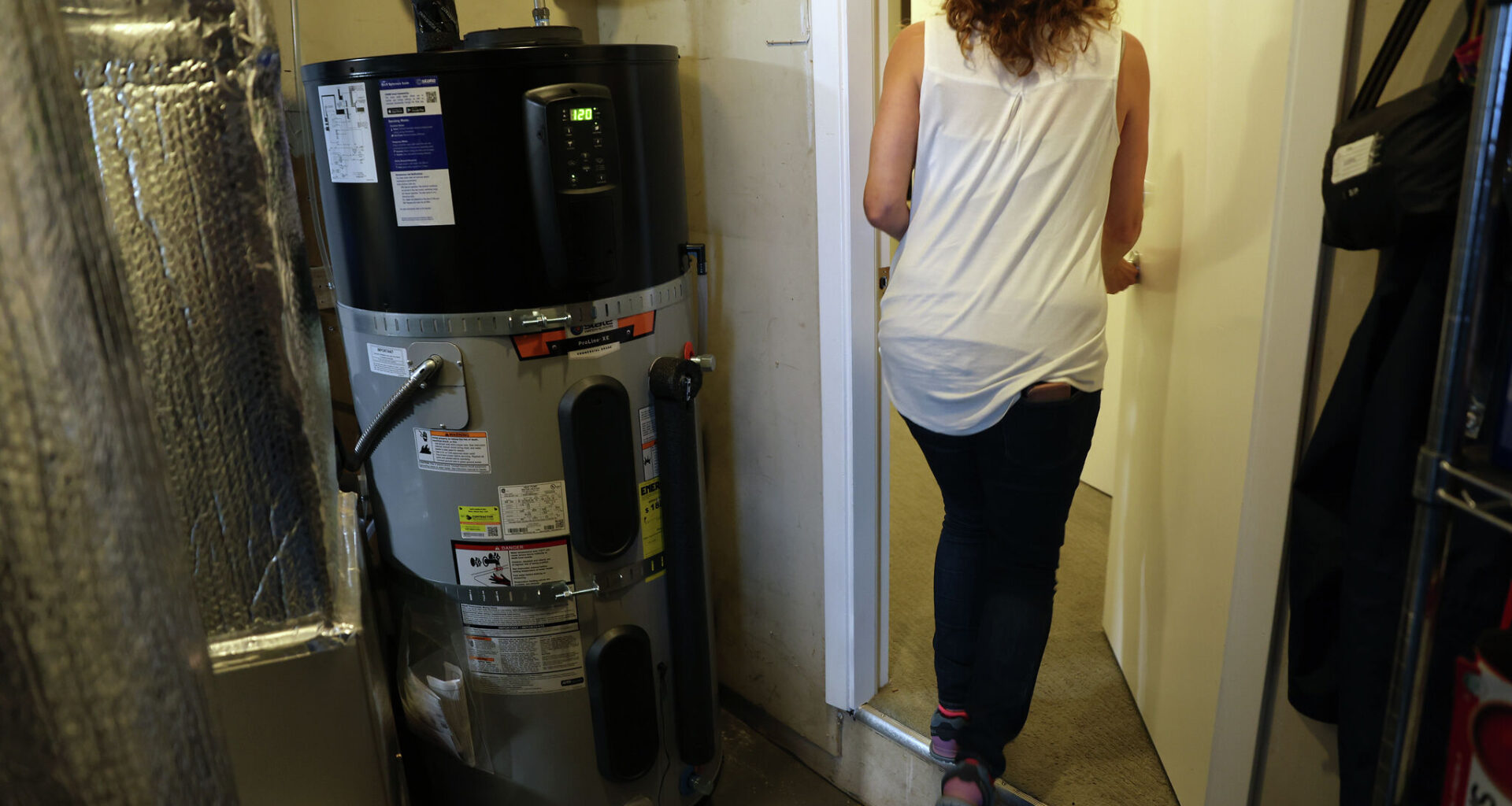
Heat pumps, like this one in San Francisco seen in 2024, will be required in the Bay Area next year, for households that need to replace their water heaters. The rules aim to reduce air pollution but will add significant expense for homeowners.
Scott Strazzante/S.F. Chronicle
A broken water heater will soon become thousands of dollars more expensive to replace in the Bay Area, as regulators move to phase out gas-powered models.
Starting next year, many homeowners will be required to replace broken gas-powered water heaters with electric heat pump models, a swap that is on average $3,500 more expensive, according to a recent report by the Bay Area Air Quality Management District.
The rule is a part of a broader push to curb pollution from buildings, which the air district says generate significant emissions.
Article continues below this ad
But the costs could be higher for some. Frans Cartwright, the owner of San Jose-based Better Water Heaters, estimated that installing a heat pump can cost as much as $8,000, whereas installing a gas unit tops out at around $3,000.
District staff found the installation of a heat pump could reach as high as $38,800 in extreme cases, though it could also be as low as $2,900.
San Francisco Chronicle Logo
Make us a Preferred Source to get more of our news when you search.
Add Preferred Source
The cost difference can be so stark because, in addition to higher equipment costs, many homes need new electrical wiring, which requires a licensed electrician. Heat pumps, which take longer to heat water, also typically need to be up to 15 gallons larger, potentially triggering structural changes to accommodate bigger appliances, according to the district.
“Switching out a gas tank is about a two-hour job, and then putting in a heat pump water heater is more like an eight-hour job,” Cartwright said. “One technician can put in four gas water heaters in a day, or they can put in one heat pump water heater in a day.”
Article continues below this ad
On Wednesday, the air district is set to decide whether to allow property owners to apply for one-time exemptions that would give them more time to comply. Households with low incomes, small water heaters, or homes requiring major electrical or structural upgrades could qualify.
That could mean up to 38% of water heater replacements could qualify for exemptions — but nearly two-thirds would not.
While the upfront costs for a heat pump can be high, many customers offset them with rebates, which have averaged about $3,000 for Cartwright’s clients. Available incentives change by ZIP code. One San Francisco ZIP code, for example, has seven rebate options from state, regional and local entities.
Many high-usage customers would break even or save money — it’s unclear how much — on utility bills, while customers who use less water could pay around $2 more per month, according to the air district report. However, Cartwright said that heat pumps could result in considerable savings: They cost about $100 per year to run, he said, versus roughly $400 per year for a gas water heater. Those who use rebates should see savings after a few years, he believes.
But as heat pump installations become more widespread and more households apply for rebates, funding may become harder to secure. Cartwright said that two years ago, some clients were able to get incentives to cover the full cost of a heat pump system — or even make a small profit — thanks to more generous incentives at the time.
Article continues below this ad
“I think definitely the rebate monies are diminishing over time, and will continue to do so,” he said.
At the same time, Cartwright said, the price of units and installation has gone up.
“The wholesalers that sell the heat pumps to the plumbers have been increasingly asking for more money over the last two years, and I think that will continue,” he said. “And as there’s more demand for the plumbers to install these, they will raise their prices also.”
The air district governs nine counties surrounding San Francisco Bay — Alameda, Contra Costa, Marin, Napa, San Francisco, San Mateo, Santa Clara, southwestern Solano, and southern Sonoma counties. It also plans to phase out gas-fired furnaces starting in 2029.
Article continues below this ad
A similar effort to phase out gas water heaters in Southern California stalled last year, when the South Coast Air Quality Management District voted to reject the new rules after officials raised concerns about costs to homeowners.
Still, the California Air Resources Board is developing similar appliance emissions regulations that could apply to the entire state if passed.